





India’s most valuable real estate firm DLF’s Chairman Rajiv Singh remains the richest real estate promoter in the country, with a wealth of around Rs 1.28 lakh crore, largely linked to him and his family’s stake in the Gurugram-based developer that is valued at Rs 2.07 lakh crore, according to the 2025 Grohe-Hurun India Real Estate 150 report released on July 31.
Singh is followed by real estate magnate and politician Mangal Prabhat Lodha’s family, which owns Lodha Developers (formerly Macrotech Developers). The promoters’ stake is valued at Rs 92,340 crore, while the Mumbai-based developer is valued at around Rs 1.38 lakh crore.
The report also found that Adani Group Chairman Gautam Adani’s real estate wealth, valued at around Rs 52,320 crore, would make him the third wealthiest real estate promoter in India, This is despite a 7 per cent drop in his real estate wealth from June 2024 to June 2025, compared to the previous period.
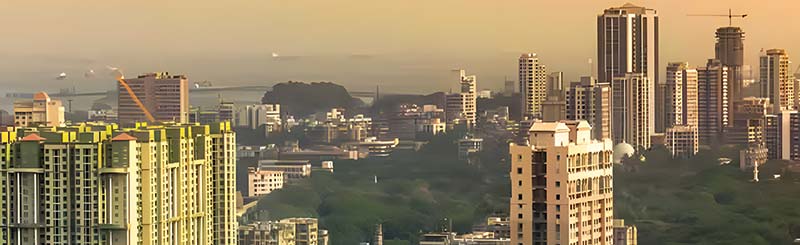
Gautam Adani’s family owns Adani Properties, which is developing multiple large, township-like projects in cities like Mumbai, most notably the Dharavi redevelopment project, as well as similar projects at Bandra Reclamation, and most recently in Goregaon’s Motilal Nagar. The company has also pursued group housing projects in areas such as Andheri, Ghatkopar, Kanjurmarg, and Bandra (East).
The company is planning other township projects near the under-construction Navi Mumbai International Airport as well, which is being built by the Adani Group and is scheduled to be operational later this year.
In the Grohe-Hurun India report, Adani Properties, which markets its projects under the Adani Realty brand, was reported to be the most valued unlisted real estate firm in India, valued at Rs 52,400 crore.
Unlike other new businesses of the Adani Group that are incubated by group flagship Adani Enterprises, Adani Properties is held directly by the promoters. Gautam Adani has publicly expressed a desire to become one of the top pan-India real estate developers, including in Mumbai, India’s largest residential real estate market.
In its home base of Ahmedabad, the company is also pursuing multiple group housing projects, and has also built the Shantigram development near its corporate headquarters in the city.
The company has built up significant land parcels in major markets like Mumbai, either through direct ownership, or by gaining development rights as per regulations in the Slum Rehabilitation Authority and the Maharashtra Housing and Area Development Authority.
The Indian real estate sector, valued at approximately $584 billion in 2024, is on a remarkable growth trajectory. It is projected to reach $845 billion by 2030 and potentially hit $5.8 trillion by 2047, a testament to its role as a key driver of India’s economic ambition. This growth is fuelled by rapid urbanisation, a burgeoning middle class, and a more formalised, regulated market under frameworks like Real Estate Regulatory Authority (RERA).
Here’s a comparative analysis of India with China, Brazil and Singapore. First two are peers with massive demographic and geographic similarities while the third is a hyper-efficient, high-value-density market.
China: The Chinese market, despite recent challenges with developer debt and government regulations, remains a global behemoth. Its sheer scale of construction and urban planning is unparalleled. The market is defined by a massive focus on high-density residential towers and sprawling, government-backed infrastructure projects.
While China’s market is much larger than India’s in absolute terms, India’s regulated growth and strong domestic demand are seen as more sustainable in the long run. Top Chinese developers like China Vanke and Poly Development command market caps that dwarf most Indian counterparts, though India’s giants like DLF and Lodha are rapidly expanding their footprint.
Brazil: Brazil’s real estate market is driven by a strong need for housing, much like India, and is highly sensitive to macroeconomic factors like inflation and interest rates. It is a market where government-subsidised housing initiatives play a crucial role. Developers such as Cyrela Brazil Realty focus on a mix of high-end and middle-income projects, while MRV Engenharia has built its business on providing affordable housing.
The challenges and opportunities in the Brazilian market — from a large urban population to a persistent housing deficit — mirror many of India’s own.
Singapore: Despite being a tiny fraction of India’s size geographically, Singapore’s real estate market is a powerhouse of high value, efficiency, and strategic urban planning.
Market size versus geographical footprint: Singapore has a land area of just over 700 square kilometers, making it a mere 0.02 per cent the size of India. However, its real estate market was valued at $59.08 billion in 2024, which is approximately 10 per cent of India’s total market size.
This is a staggering figure, highlighting Singapore’s extremely high value density. The value per square kilometer of real estate in Singapore is orders of magnitude higher than in India, a direct result of its limited land, strategic location as a global financial hub, and sophisticated urban planning.
Market drivers and quality: Singapore’s market is a masterclass in planned development. Driven by a proactive government and a highly formal and transparent regulatory environment, the market focuses on high-quality, high-tech, and sustainable developments.
The emphasis is on mixed-use projects, smart city technologies, and public-private partnerships. The residential market, with a strong public housing component through the Housing Development Board (HDB), ensures high homeownership rates and stability. This is in stark contrast to India’s more fragmented market, where informal housing and fragmented regulations in some areas still pose challenges.
Top companies and wealth: Singapore’s real estate sector is dominated by a few major, highly diversified companies that operate globally, such as CapitaLand, City Developments Limited (CDL), and UOL Group. These companies are involved in not just residential development but also managing vast portfolios of shopping malls, office buildings, and hospitality assets across the globe.
While Singapore’s richest individuals and families, like the Ng brothers (Far East Organization) and Kwek Leng Beng (Hong Leong Group), are immensely wealthy, their fortunes are built on a highly concentrated and efficient market, which offers a different model from the sprawling, multi-city approach of Indian developers like DLF’s Rajiv Singh.
While India is building a massive real estate market by volume, it has much to learn from a country like Singapore about maximising value per square foot, urban planning, and creating a highly transparent, high-value ecosystem. India’s journey is not just about building more, but about building smarter and more efficiently, a lesson that Singapore’s successful model powerfully demonstrates.