





Blitz Bureau
The Government is planning to introduce a new set of rules to control the temperature range at which air conditioners can run in the country. Announcing the new provision, Union Power Minister Manohar Lal Khattar said, “A new provision is being implemented soon regarding air conditioning standards. The temperature standardisation for ACs will be set between 20 degree celsius (C) to 28 degree C, which means we will not be able to cool below 20 degree C or heat above 28 degree C.” This is a first of its kind experiment, aimed at standardising temperature settings, Khattar said.
At present, AC temperatures can go down to 18 degree C (16 degree in some cases), with a maximum of up to 30 degree C. Once implemented, the AC temperature provision will restrict this temperature range to 20 degree C to 28 degree C. This means users will not be able to set their AC temperature below 20 degree C and above 28 degree C.
The new rules aim to standardise how air conditioners are used across the country and reduce the high electricity use caused by setting the temperature too low.
The Government says that it will keep track of how the new rules are followed. However, exact details of how this will be enforced, especially in different sectors, has not been specified yet.
According to Khattar, the new AC temperature provision is part of a larger effort to save electricity and manage India’s rising energy demand.
One of the main reasons behind the move is the need to save electricity, especially in summers when power usage is at its peak.
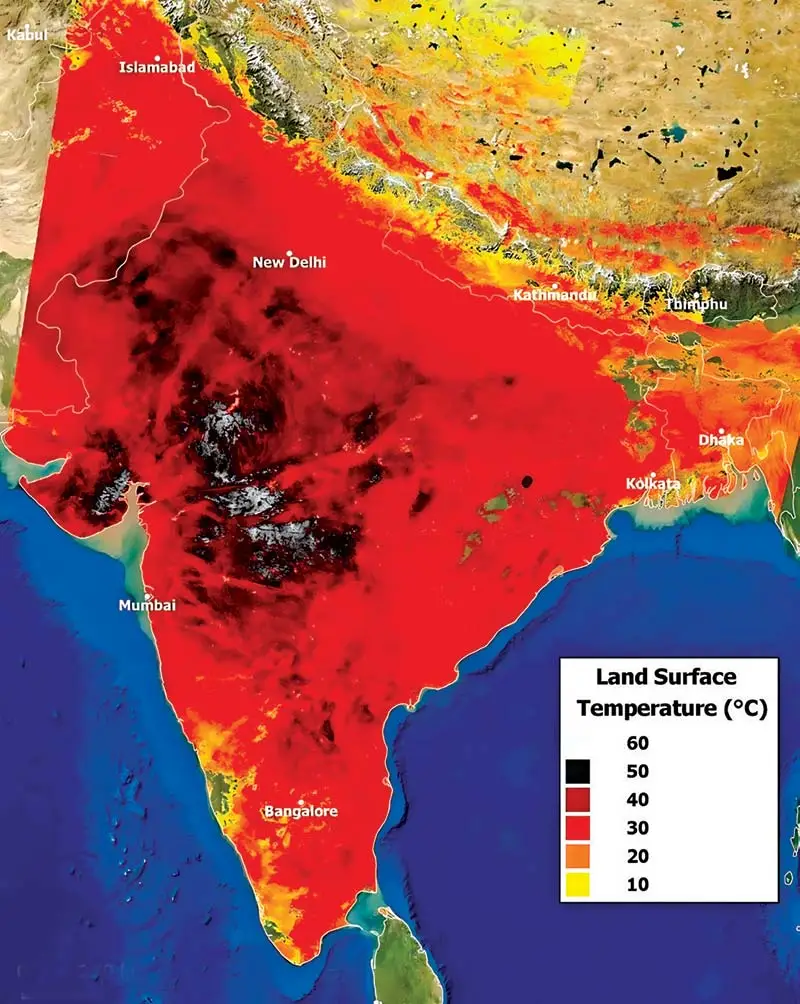
Many people set their ACs to very low temperatures, even as a low as 16 degree C, which puts a lot of pressure on power supply. Pankaj Agarwal, a senior official from the power and housing ministry told Bloomberg that air conditioners use about 50 gigawatt of electricity – that’s around 20 per cent of the country’s total power demand.
“Studies show that every 1 degree C increase in AC temperature cuts energy use by 6 per cent. That means if everyone sets their ACs just 1 degree higher, we can save about 3 gigawatt of power during peak times,” Agarwal said.
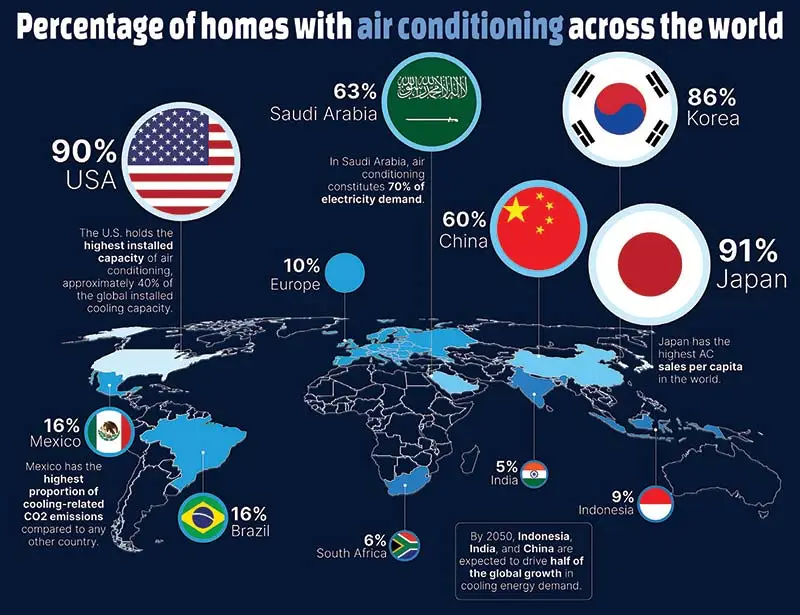
As quoted in the Bloomberg report, stricter energy rules for air conditioners could help save up to 60 gigawatt of peak electricity demand by 2035, according to a study by the University of California, Berkeley. This would also avoid the need to spend Rs 7.5 trillion (around $88 billion) on building new power plants and upgrading electricity grid.
According to the Bureau of Energy Efficiency (BEE), most Indians set their ACs at around 20–21°C, far lower than what is necessary for thermal comfort. This not only spikes electricity bills but also leads to higher emissions from coal-fired power plants that supply the bulk of India’s electricity.
By setting a minimum cooling threshold at 20°C and a maximum heating cap at 28°C, the Government aims to improve energy efficiency, reduce strain on the national electricity grid, lower greenhouse gas emissions, and bring about a behavioural shift in how people use cooling systems. The goal is not just compliance through technology, but a mindset change around responsible energy use.
Simply raising the temperature from 20°C to 24°C could lead to savings of up to 24 per cent. Over an entire summer season, this could translate into significantly lower electricity bills for households and reduced load on the national grid.
According to experts, what many people do not realise is that cooling a room to 16°C in a country as warm and humid as India is neither necessary nor healthy. Experts note that the optimal comfort zone for indoor spaces lies between 24°C and 26°C, especially when taking into account humidity, ventilation, and regular clothing. The new guidelines therefore align closely with actual comfort levels rather than imposing undue discomfort on users.
Thermascape
India’s new AC temperature norms echo a growing global trend of regulating indoor cooling to conserve energy and reduce emissions. Several countries have already implemented similar rules, some as government mandates, others as strong public guidelines, particularly targeting public and commercial buildings where energy use is concentrated.
In Japan, the Ministry of Environment recommends that air conditioners be set at 28°C during summer months, especially in offices. The policy is backed by public awareness campaigns and corporate compliance, though it remains advisory in nature.
Spain took a stricter route in 2022, passing legislation that mandates public buildings, offices, and commercial establishments maintain cooling temperatures no lower than 27°C. The rule is part of the country’s energy-saving plan amid rising electricity costs and climate concerns.
In the United States, while not a legal requirement, the Energy Star programme recommends households set air conditioners to 25.5°C (78°F) when occupied, supported by incentives and utility-driven awareness efforts.
China enforces a minimum cooling temperature of 26°C in government buildings, especially during peak summer months. The rule is mandatory and includes penalties for non-compliance in public sector buildings.
Australia regulates the energy efficiency of air conditioners, rather than how cold they can be set. Through Minimum Energy Performance Standards (MEPS), only air conditioners that meet specific efficiency benchmarks are allowed to be sold in the country. However, there is no national mandate on thermostat settings. While individual state agencies and workplace guidelines often recommend comfort temperatures of around 22°C to 24°C, especially in offices, these are advisory, not enforceable rules.
Italy mandates that public buildings, including schools and post offices, must not set cooling below 25°C. This measure was introduced to cut energy costs and curb emissions as part of the EU’s climate targets.
Belgium, like Spain and Italy, has set specific indoor climate rules for public buildings — cooling must not go below 27°C, while heating is capped at 19°C in winter. These are legally enforced and part of a broader effort to promote energy responsibility in public infrastructure.
India’s proposed range of 20°C to 28°C offers more operational flexibility than most of these examples. While countries like Spain and China impose limits only on public institutions, India is expected to apply the rule across residential, commercial, and industrial settings, making it broader in scope. By doing so, India is not just aligning with global best practices but potentially going a step further in creating a uniform, enforceable standard aimed at widespread behavioural change.
Mandatory or voluntary?
Unlike earlier advisories by the Bureau of Energy Efficiency (such as the 2018 suggestion to set AC defaults at 24°C), the latest announcement by Manohar Lal Khattar indicates that the upcoming rules will be mandatory. While the exact implementation roadmap has not yet been publicly detailed, the minister confirmed that a new provision “is being implemented soon”, signalling a shift from recommendation to regulation. Further clarity on enforcement, scope, and compliance is expected in the official guidelines.
At first glance, capping air conditioner temperatures may seem like a minor administrative change. But it carries far-reaching consequences for energy security, climate goals, and consumer savings.