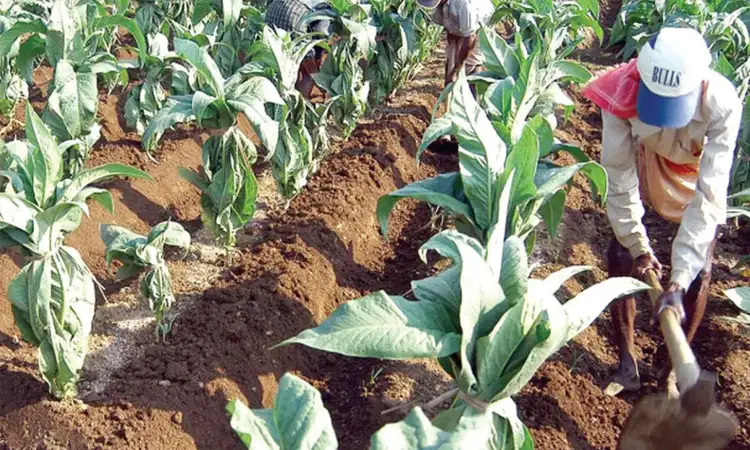
WHO shuts out Indian farmers from COP11 tobacco talks

Blitz Bureau

NEW DELHI:India’s tobacco farmers find themselves sidelined as the World Health Organisation (WHO) prepares for COP11, its major tobacco control conference in Geneva from 17 to 22 November.

The deliberate exclusion of farmer representatives by the WHO Framework Convention on Tobacco Control (FCTC) Secretariat has drawn sharp criticism from the Federation of All India Farmer Associations (FAIFA), stoking serious concerns over the fate of 36 million livelihoods nationwide.

• Cites “misalignment” with objectives
• Fate of 36 m livelihoods at stake

FAIFA, speaking for India’s vast rural tobacco community, calls the move undemocratic and discriminatory, especially as FCTC Articles 17 and 18 obligate global policymakers to safeguard the interests of tobacco farmers and promote viable alternatives.

Despite repeated appeals, requests for inclusion from India were rejected by COP11 organisers, who cited “misalignment” with FCTC objectives — a rationale FAIFA says ignores the realities of farming families in Andhra Pradesh, Karnataka, and Telangana.

“Farmers are not the problem; they are victims of policy decisions taken without their voice. It is deeply disappointing that COP11 once again shuts its doors on the farming community, whose livelihoods depend on tobacco crops and who deserve to be heard before any anti-farmer measures are adopted,” said FAIFA President P S Murali Babu.

FAIFA warns that decisions made behind closed doors risk undermining local economies, pushing growers into debt, and harming legal tobacco supply chains that support millions of rural Indians.

The situation highlights the wider problem of international policymaking without local context. As the world’s second-largest tobacco producer, India’s rural communities face destabilising pressure from restrictive global policies — while industry influence and global health ambitions remain at odds.

In a united call, FAIFA has urged India’s delegation in Geneva to ensure that COP11 does not lead to loss of livelihood, disruption of export-oriented trade, or unilateral decisions excluding the very people affected.
“The spirit of FCTC lies in cooperation and protection of livelihoods, not in coercion and exclusion,” FAIFA emphasised, demanding that farmer voices be recognised in all decisions shaping their future.
Indian tobacco farmers are watching COP11 closely, hoping for transparent dialogue, fair representation, and a sustainable roadmap that places their interests front and center.
******

Latest News

Forty-Five Per Cent Is Now Private

Blitz India Business NEW DELHI:India's defence production reached ₹1.78...

Twenty-Nine Gigawatts in Six Months

Blitz India Business NEW DELHI:India installed a record 29...

₹84,084 Crore Before a Single Barrel

Blitz India Business NEW DELHI:The Cabinet approved ₹84,084 crore...

Eighteen Per Cent, and Who It Rescues

Blitz India Business NEW DELHI:The effective United States tariff...

Imports Paid Three Times the Tax Growth

Blitz India Business NEW DELHI: Gross GST revenue was...

Topics

Forty-Five Per Cent Is Now Private

Blitz India Business NEW DELHI:India's defence production reached ₹1.78...

Twenty-Nine Gigawatts in Six Months

Blitz India Business NEW DELHI:India installed a record 29...

₹84,084 Crore Before a Single Barrel

Blitz India Business NEW DELHI:The Cabinet approved ₹84,084 crore...

Eighteen Per Cent, and Who It Rescues

Blitz India Business NEW DELHI:The effective United States tariff...

Imports Paid Three Times the Tax Growth

Blitz India Business NEW DELHI: Gross GST revenue was...

The Closing Price Is Now an Auction

Blitz India Business NEW DELHI: The Sensex closed Tuesday...
spot_img