Blitz India Business
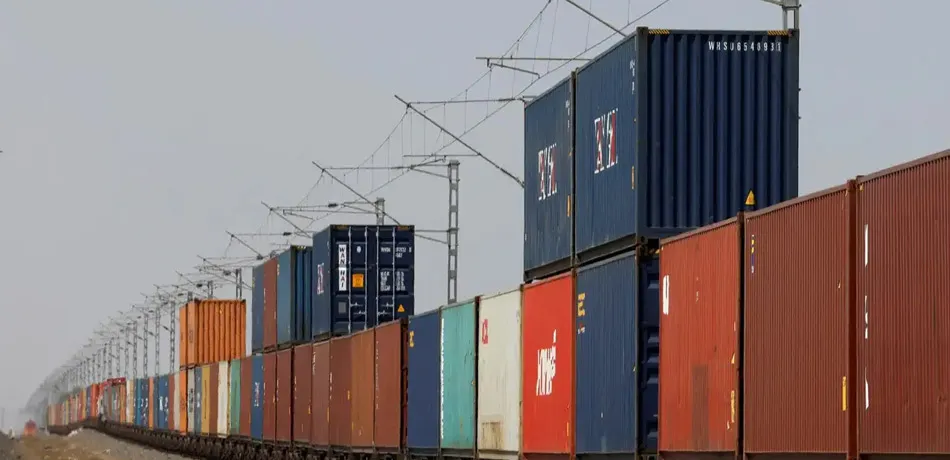
NEW DELHI: Container train operators may now run across all routes on a single all-India licence. For an industry whose economics are decided by how often a wagon rake travels empty, that is a bigger change than it sounds.
The reason is a piece of arithmetic every logistics operator knows and few outside the trade think about. A container rake earns money only when it is loaded, and the largest single cost in the business is the empty return leg. Under a route-restricted licensing regime, an operator that carried a load from a western port to a northern inland terminal could not always take the most economic back-haul, because the back-haul lay on a route it was not licensed for. The rake therefore returned empty, and the cost of that emptiness was priced into the outbound freight the shipper paid. Removing the route boundary does not add a single wagon to the national fleet. It raises the utilisation of the wagons that already exist, which is the cheaper way to add capacity.
The empty leg is the whole margin: a container rake that can take any back-haul carries fewer empty kilometres, and empty kilometres are what a shipper ultimately pays for.
A reform that adds no wagons and no track can still add capacity — by making the wagons that exist stop travelling empty.
At a Glance
• The change: container train operators may operate across all routes under a single all-India licence
• Stated purpose: ease of doing business for operators
• July freight loading: more than 141 million tonnes, 9 per cent above July 2025
• Capital expenditure: more than ₹1.14 lakh crore utilised to end-July 2026
• Against a grant of: ₹2.93 lakh crore for FY 2026-27 — about 39 per cent in four months
• Also notified this week: multi-layered coach fire-safety measures, and 19 Rail Neer plants supplying packaged drinking water
Set the licensing change beside the two operating numbers released alongside it and the picture is of a freight business being pushed on volume and on capital at the same time. Loading of more than 141 million tonnes in July, 9 per cent above the same month last year, is a strong monsoon-quarter figure — the quarter when coal stocks are being drawn down, construction slows and freight typically softens. And capital expenditure of ₹1.14 lakh crore by the end of July represents about 39 per cent of the ₹2.93 lakh crore FY27 grant in a third of the year. That is genuinely front-loaded. Railway capex has historically bunched in the final quarter, which is the worst quarter to be laying track and the reason commissioning dates slipped so often.
What to watch next is the interaction between the two. Higher wagon utilisation raises demand for line capacity, and line capacity is what the capital expenditure is buying — multitracking, terminal upgrades and electrification. If utilisation rises faster than paths become available, the constraint simply migrates from the licence to the timetable, and the shipper sees the delay somewhere else. The constructive answer is already visible in the project list, including approvals such as the ₹976 crore multitracking between Danapur and Fatuha in Bihar, and it is the unglamorous half of freight reform: terminals, loops and double lines rather than announcements. The useful metric for the rest of the year is not tonnage. It is average wagon turnaround time — the number that tells you whether the licence change reached the yard.


