




Blitz Bureau
NEW DELHI: India’s next big economic shock may not come from volatile oil markets, trade wars or monetary tightening. It may come from water — or the growing absence of it. For years, policymakers have treated water scarcity as a social and agrarian problem, not a business risk.
That mindset is now collapsing under the weight of reality. Industries across India’s major growth corridors — from Pune to Bengaluru and from Chennai to the Delhi NCR — are confronting an uncomfortable truth: Water is becoming the new factor of production that could define competitiveness, investment decisions and the viability of entire clusters.
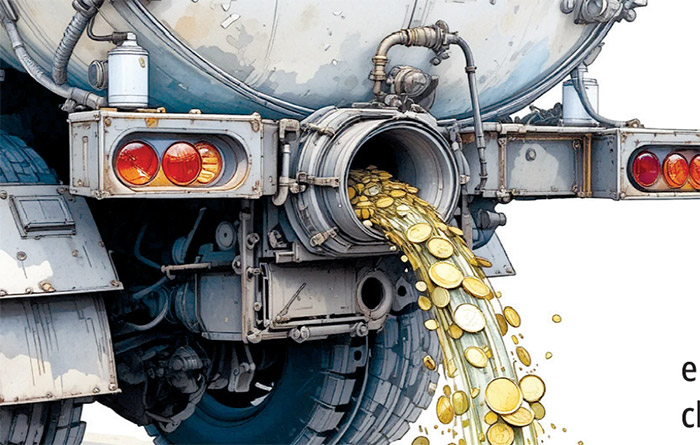
The signs are everywhere. The Pune industrial belt, home to auto and engineering giants, has already seen multiple shutdowns in the past two years due to severe water shortages. In Bengaluru, tech campuses are trucking water from 20-40 kilometres away during peak summer months.
Chennai’s manufacturing zones routinely rely on private tankers to meet daily operational needs. Meanwhile, NCR’s expanding industrial townships are drawing groundwater at unsustainable levels, pushing the region towards an irreversible deficit.
This shift is not temporary. Climate volatility has made monsoon patterns erratic, with longer dry spells punctuated by episodes of intense rainfall that run off quickly instead of recharging groundwater.
Added to this is India’s rising urban demand, the rapid expansion of water-intensive sectors like textiles, food processing and chemicals, and the chronic mismanagement of surface reservoirs. The result: industries are now competing with cities and agriculture for the same shrinking resource.
The economic implications are enormous. Water scarcity raises input costs, disrupts production cycles and creates uncertainty for investors. Over the next decade, several companies may be forced to relocate production from high-stress states like Karnataka, Tamil Nadu, Rajasthan and parts of Maharashtra.
Some sectors — such as beverages, semiconductors, steel and specialty chemicals — are particularly vulnerable because they require high volumes of processed water.
At a macro level, water scarcity threatens India’s manufacturing ambitions. The Government wants to raise manufacturing’s share of GDP to 25 per cent and position India as a global supply-chain hub.
But global firms evaluating India’s suitability are factoring in water availability as a key determinant. A few have already signalled preference for states with stable aquifer conditions like Odisha, Chhattisgarh and parts of the North-East.
Yet the crisis is also driving innovation. Several companies are now investing in zero-liquid-discharge systems, wastewater recycling, rainwater harvesting and AI-enabled consumption monitoring.
Real estate developers are designing integrated water-management systems into new industrial parks. Start-ups in the water-tech segment — from desalination to smart metering — have emerged as one of India’s fastest-growing deep-tech niches.
What India needs now is a coordinated national water-economy strategy that aligns industrial policy with hydrological realities. That means real-time groundwater mapping, rational pricing of industrial water, incentives for recycling, and a shift away from freshwater-dependent manufacturing.
Water scarcity is no longer a distant environmental concern. It is a business challenge, an industrial risk and a macroeconomic threat. How India manages this transition will determine not just growth rates, but the geography of its economic future.