




Shalini S Sharma
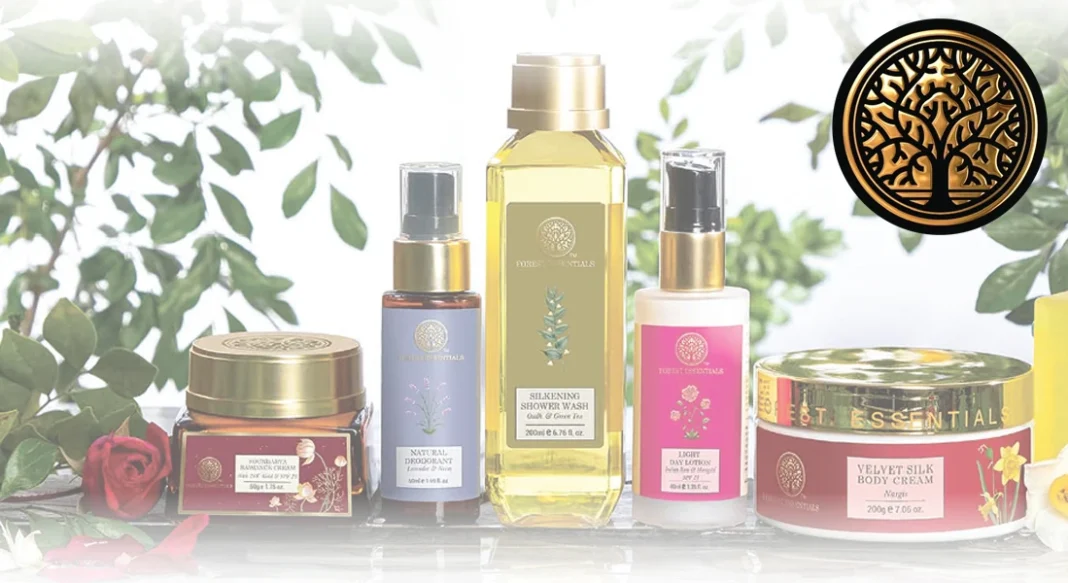
NEW DELHI: For scores of Indian men and women whose hearts have always swelled with nationalistic pride seeing a truly world class Indian brand and who have not thought twice, therefore, spending upwards of five grand on a 30 g bottle of Forest Essentials’s (FE) Advanced Sanjeevani Beauty Elixir, the news last week that American giant Estee Lauder Companies (ELC) had fully acquired it, came as a bit of a let-down.
However, emotions aside, looked at from a brand and business perspective, this acquisition marks a watershed moment for Indian luxury. It is a story of a home-grown brand, born in a small garage in 2000, finally becoming a full-fledged citizen of the global beauty empire.
While the transition feels like a loss of “Indianness,” it is actually a stepping stone on to the world stage for a brand which was created in India. By selling to ELC, FE has ensured that its ayurvedic wisdom reaches 150 countries.
For founders of FE such as Mira Kulkarni, selling to ELC isn’t about “falling prey”; it’s about “the ceiling of scale”. An Indian brand can conquer New Delhi and Mumbai with grit, but to occupy the primary real estate at Harrods or the Galeries Lafayette requires a logistical and regulatory muscle that only a handful of global titans possess.
In 2026, 70 per cent of e-commerce for beauty in India has moved to “quick commerce” (10-minute delivery). This has actually hurt luxury brands like Forest Essentials, which rely on a slow, sensorial “in-store” experience, making a global partner like ELC, which can manage complex omnichannel retail, even more necessary.
ELC is an American giant headquartered in New York. Its founder, Josephine Esther Mentzer, added the French accent and “Lauder” name specifically to tap into the “French allure” that has dominated the industry for centuries. In that sense, Forest Essentials isn’t just being bought by a company; it’s being adopted by the ultimate master of “prestige” branding.
While the deal value is private, prestige beauty acquisitions in 2025-26 have been fetching multiples of 6x to 8x revenue. Given FE’s presence in nearly 200 retail stores, the deal is estimated to be in the ₹2,500 – ₹3,500 crore range.
From ritual to revenue
The “sadness” many feel about this acquisition stems from a sense of cultural protective-ness. For decades, India was a “source” for the world — providing raw turmeric, sandalwood, and jasmine — while the “value” was added in labs in Grasse or New York. Forest Essentials was the first to flip that script, proving that Indian “Kshir-Sagar” rituals could be sold at a price point that rivalled La Mer, ELC’s popular skincare and makeup brand.
The psychology of the “exit” in India is also shifting. For founders of FE such as Mira Kulkarni, selling to ELC isn’t about “falling prey”; it’s about “the ceiling of scale”. An Indian brand can conquer New Delhi and Mumbai with grit, but to occupy the primary real estate at Harrods or the Galeries Lafayette requires a logistical and regulatory muscle that only a handful of global titans possess.
ELC first invested in FE in 2008. This is one of the longest “trial periods” in beauty history before a full acquisition. With this deal, India is officially set to become Estée Lauder’s largest emerging market, surpassing previous growth leaders like Brazil or Southeast Asia.
The American giant is exploring using FE’s infrastructure to localise production for other brands in its portfolio (like Clinique or M·A·C) to better serve the Indian market and reduce import duties.
In its massive financial engine, FE is a specialised “luxury niche” player. While it is the top-ranked prestige skin care brand in India, on a global revenue scale, FE sits in the “emerging” category rather than the “top earners” category. Globally, it is in the bottom third by absolute dollar amount. Total ELC revenue for FY2026 is projected to be around $15 billion. With FE’s revenue estimated at ₹578 crore ($70–$75 million) for FY25, it represents less than 00.5per cent of ELC’s global top line.
While its revenue is small, its growth rate is in the top five. ELC expects FE to deliver low double-digit net sales growth, which significantly outpaces the 1–3 per cent growth of more mature tier 1 brands.
FE is a “margin hero.” With net profits jumping to ₹123.5 crore in FY25 (a massive increase from previous years), it is one of the most efficient earners in the portfolio on a per-unit basis.
ELC’s goal isn’t just to sell FE in India; it’s to make luxury ayurveda a globally respected pillar of modern beauty, much like they did with Le Labo in fragrance.
Under the “beauty reimagined” strategy, ELC is leveraging FE’s vertically integrated model — the R&D, botanical sourcing, and manufacturing stay in India (New Delhi / Uttarakhand), while ELC provides the “global passport.”
Key products for global expansion
Soundarya Radiance Cream: Positioned as the ayurvedic competitor to “Crème de la Mer.”
Advanced Age Defying Serum: Targeting the global “pro-aging” and wellness-focused consumer.
Tejasvi Brightening Emulsion: Tapping into the global demand for “glass skin” and natural radiance.
Even for mass-brands like Patanjali, rural demand in 2026 is outpacing urban growth (5.7 per cent vs 2.5 per cent). This suggests that the “ayurvedic identity” is a mass-market powerhouse, while Forest Essentials remains the “crown jewel” for the urban elite.