




Blitz Bureau
NEW DELHI: The US-Israel strikes on Iran claimed the life of Iran’s intelligence minister Esmail Khatib on March 18, the nineteenth day of the Middle East conflict.
It comes a day after Israel announced it had killed Iran’s top security official, Ali Larijani, and head of the paramilitary Basij force, Gholamreza Soleimani, in strikes.
Since the assassination of Supreme Leader Ayatollah Ali Khamenei on the first day of the war on 28 February, multiple senior Iranian officials and commanders have been killed in efforts by Israel and the US to weaken the regime’s leadership.
*Iran’s top leaders killed *Drone strikes continue in Gulf *Hormuz Strait still shut
More than 1,300 people have been killed in Israeli and US strikes on Iran since the start of the war, including 226 women and 204 children, according to the Iranian government.
The US-based Human Rights Activists News Agency (Hrana) puts the death toll higher – at least 1354 civilians and 1138 military personnel have been killed since the war began, as well 622 others who it could not classify.
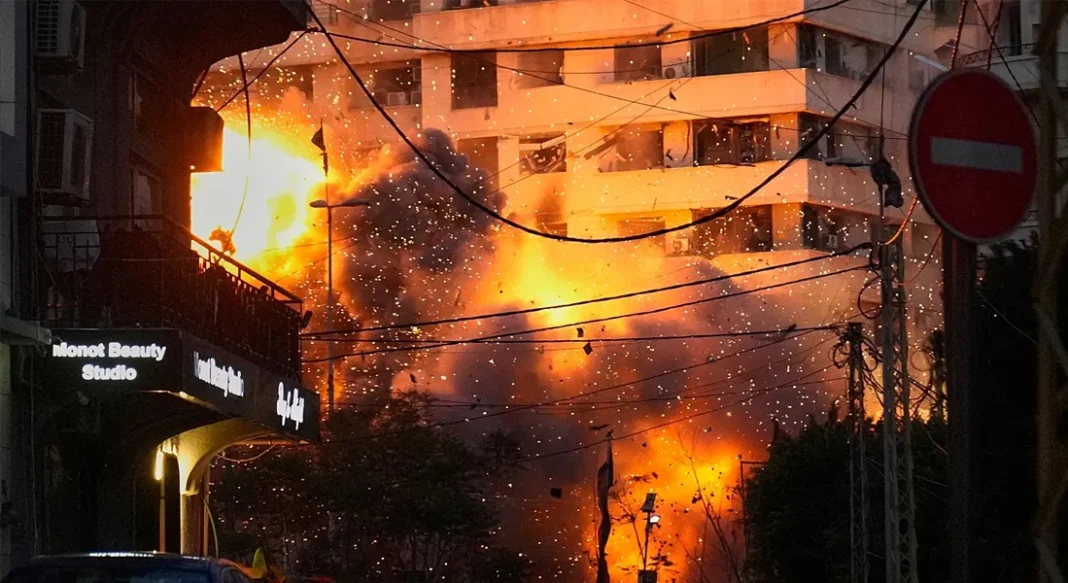
Iran has retaliated with strikes across the Middle East. On March 18, two people were killed in a strike on Israel, and blasts and drone interceptions were reported in Dubai, Qatar, Kuwait, Iraq, Bahrain and Saudi Arabia.
Qatar’s state oil giant QatarEnergy reported “extensive damage” after the Ras Laffan Industrial City, an energy-industry hub, was hit by Iranian missiles. Saudi Arabia said it had intercepted and destroyed four ballistic missiles launched toward Riyadh on March 18 and an attempted drone attack on a gas facility in the east of the country.
Supply disruption
The escalation adds to the unprecedented disruption of global energy supplies.
Diesel prices in the US have already risen above $5 a gallon for the first time since 2022.
The conflict quickly spread to neighboring countries and has already halted shipping from the world’s most important energy-producing region, and could now bring lasting damage to its infrastructure. Benchmark Brent crude prices rose around 5% to above $108. Stock markets veered lower.
Iran has already effectively shut the Strait of Hormuz, which handles 20 per cent of global oil and liquefied natural gas supply, but consuming nations have hoped the disruption would prove short-lived as long as production infrastructure was spared.