Blitz India Business
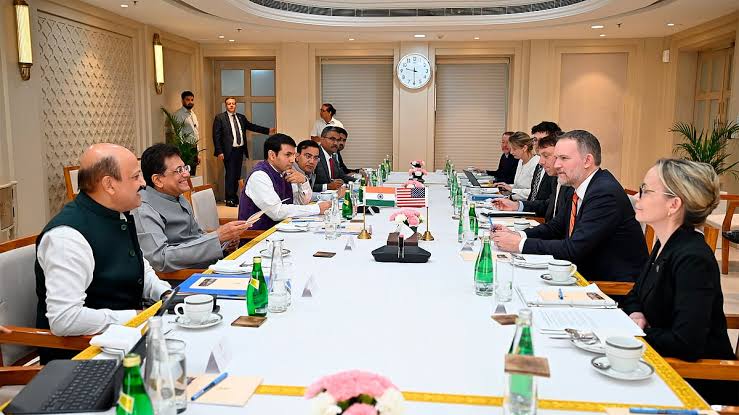
With a temporary 10% US baseline tariff set to expire on July 24, India and the United States are in the closing stretch of talks on an interim deal, which a senior US official has called “very, very close” — the first tranche of a pact anchored by “Mission 500”: $500 billion in two-way trade by 2030.
Washington has already cut its reciprocal tariff on Indian goods from 25% to 18%. New Delhi’s line is consistent: it is negotiating for terms, not to a deadline, and wants an edge over rivals such as Vietnam and other ASEAN exporters before it signs. Market access, digital trade, supply-chain resilience and non-tariff barriers remain open, with agriculture among the toughest; Piyush Goyal and USTR Jamieson Greer are steering the talks.
Down to the wire: A framework awaits signature before a late-July tariff deadline.
The anchor number is $500bn of two-way trade by 2030 — but the prize for exporters is predictable, durable access, not any single tariff line.
By the Numbers
- Deadline: Temporary 10% US tariff lapses July 24
- Status: “Very, very close”; tariff eased 25%→18%
- Target: “Mission 500” — $500bn two-way trade by 2030
- Hard yards: Farm access; digital trade; non-tariff barriers
The urgency sits inside a broadening trade architecture: the UK CETA live July 15, the New Zealand upgrade this weekend and a concluded India–EU deal moving toward signature. For exporters, a spread of preferential markets is the best hedge against any single partner’s policy swings.
The constructive priority is a balanced deal over a hurried one — predictable tariffs, clear rules and firm-level support to meet them — converting a framework into orders and steadier access to one of India’s largest markets.


