A $26 Billion Market, a 6.6% Share, and Twelve Percentage Points of Tariff Removed Overnight

Blitz India Business

NEW DELHI: Two weeks into the India–United Kingdom trade agreement, the size of the opportunity is set not by the tariff cut but by the market it opens onto. The Comprehensive Economic and Trade Agreement entered into force on July 15, 2026, and more than fifty consignments worth over $140 million left India for Britain under its terms on the first day alone. The United Kingdom imported nearly $26 billion of textiles and apparel in calendar year 2025. India’s share of that was about 6.6%.

The tariff change is unusually clean for a trade agreement. The United Kingdom’s import duty of up to 12% on Indian textiles and apparel has been removed outright, with duty-free access extended across apparel, leather, footwear, and gems and jewellery. In a category where net margins for a contract manufacturer typically run in single digits, a twelve-point tariff is not a marginal cost — it is frequently the entire difference between winning and losing an order against a competitor operating under a preferential arrangement. India’s share is projected to move toward roughly 12% over three to five years, worth an estimated $1.6 billion in additional annual exports over the medium term.

Where the margin sits: in contract garment manufacturing, a twelve-point tariff is usually larger than the net margin on the order it applies to.
Market access is granted in a treaty. Market share is won on delivery windows, audited compliance and the ability to take an order twice the size you are used to.
At a Glance
• In force: July 15, 2026
• Day one: 50-plus consignments worth over $140 million
• UK textile and apparel imports, 2025: nearly $26 billion
• India’s current share: about 6.6%
• Projected share: around 12% over three to five years
• Tariff removed: UK import duty of up to 12% on Indian textiles and apparel
• Also duty-free: leather, footwear, gems and jewellery
• Medium-term estimate: about $1.6 billion in additional annual textile exports
• Competitors affected: China, Bangladesh, Vietnam, Pakistan, Cambodia
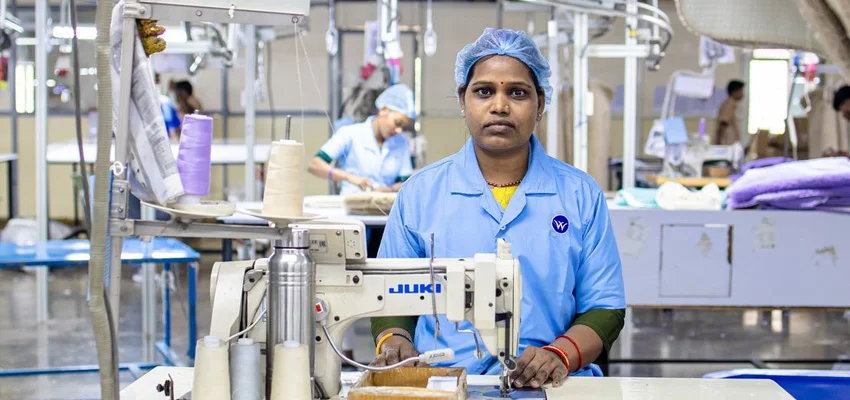
For anyone assessing which Indian firms actually capture this, the constraint is operational rather than commercial. British retail buyers award multi-season contracts on the basis of order size, audited social and environmental compliance, accredited testing and certification, and delivery reliability measured in days. Indian exporters have the cost position and, increasingly, the design capability; what limits many of them is scale of a single order and the working capital required to carry it. That points investors and lenders toward a specific set of beneficiaries: the larger vertically integrated units able to take a doubled order without subcontracting away their margin, and the cluster-level infrastructure — effluent treatment, testing laboratories, certification — that turns a small unit into an acceptable supplier.
There is a quieter operational detail that will determine how much of the headline benefit is realised, and it is worth watching closely. A tariff preference is only captured if the exporter files rules-of-origin documentation correctly; where that paperwork is complex relative to the size of the shipment, small exporters routinely pay the standard duty by default rather than claim the preference. Utilisation rates well below 100% are common in the first years of trade agreements for exactly this reason. Simple, digital, well-explained origin procedures and active outreach in the Tiruppur, Panipat, Ludhiana and Surat clusters are therefore the cheapest available lever on the agreement’s actual value. The tariff is already gone. The remaining work is making sure every exporter who is entitled to that fact knows how to use it.

Latest News

4.5 Crore Students and 0.8% Growth: India’s Education System Has Run Out of Easy Expansion

Blitz India Business NEW DELHI: For an economy whose...

Sixteen Releases, ₹343.94 Crore: July’s Crowded Calendar Is a Live Test of Indian Exhibition Economics

Blitz India Business NEW DELHI: The Indian exhibition business...

$30.43 Billion: The Deficit Is a Five-Month High, and Two-Thirds of It Is Crude, Chips and Gold

Blitz India Business NEW DELHI: India's June trade release...

Topics

spot_img