Global-scale Modi vision

PM exhorts industry to aspire to be world giants

Blitz India Business

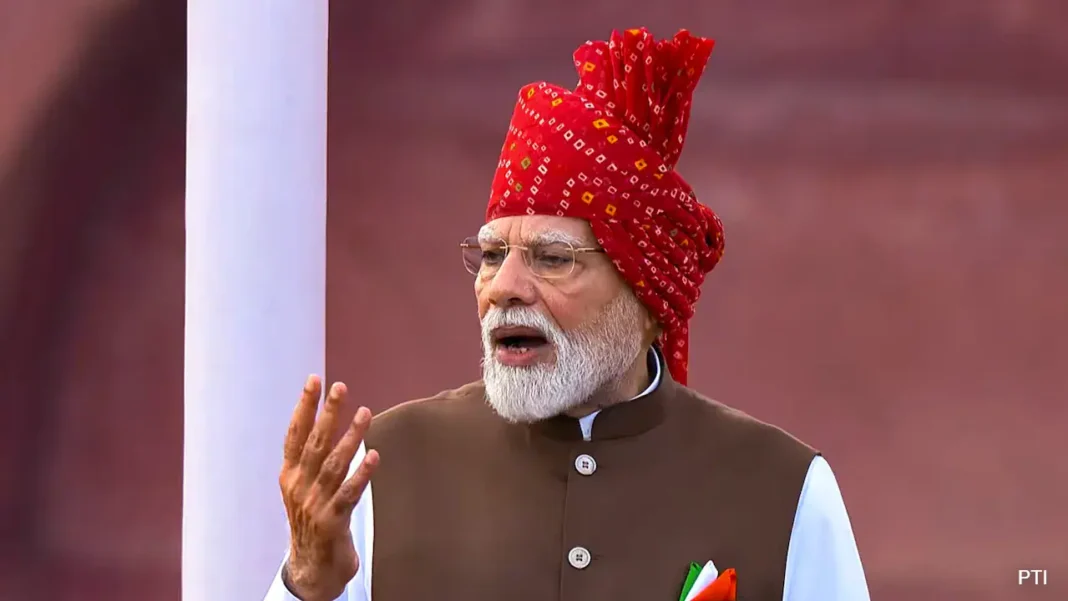
NEW DELHI: Prime Minister Narendra Modi has put a new marker on India’s economic rise: India must demonstrate its economic muscle not merely through GDP numbers, but through Indian companies powerful enough to compete with global giants.

In his Independence Day address, Modi set ambitious targets: 50 Indian companies in the Fortune Global 500, one Indian bank among the world’s five largest and Indian pharmaceutical companies among the global top five.

The message was unmistakable. India’s ambition can no longer stop at becoming a major market for global corporations. It must become a country whose companies shape global markets, command brands and compete with the biggest banks, pharmaceutical companies and technology firms.

India’s ambition can no longer stop at becoming a major market for global corporations. It must have companies that shape global markets, command brands and compete with the biggest banks, pharmaceutical companies and technology firms

But the Prime Minister’s call goes beyond numerical targets. It is a call for scale, competitiveness, innovation, quality and internationalisation.

“We have to reach the world. Everything that India produces should reach the world market,” Modi said, urging businesses to use India’s free trade agreements to expand overseas. He made clear that global competitiveness would depend on quality and international standards rather than protection.

The objective can no longer simply be to capture India’s expanding domestic market. Companies must ask whether their products, technologies, brands and business models can win customers in global markets.

First is scale. India has successful companies, but few have the scale and global footprint to compete with the world’s largest corporations. Businesses will need to invest more aggressively in capacity, technology, acquisitions and overseas expansion rather than remain focused on incremental domestic growth.

The second is innovation and intellectual property. India’s traditional advantages of low-cost manufacturing, engineering talent and relatively inexpensive services are no longer sufficient. Countries such as China and Vietnam are competing aggressively on cost. Sustainable global leadership will require proprietary technologies, stronger research and development and products that command global pricing power.

Third is global brands. India exports increasingly large volumes of goods and services, but often captures less value than the global brands that ultimately sell them. Building internationally recognised Indian brands must therefore become a strategic priority. This requires sustained investment in design, marketing and distribution. Companies must compete on quality and brand value rather than price.

The fourth pillar is professional services. Modi’s reference to technology, consulting, accounting, law and rating firms is significant. India’s services advantage has largely been built around IT and business-process outsourcing.

The next phase must see Indian firms becoming global advisers, financiers, lawyers, consultants and knowledge providers.

Indian technology companies have already demonstrated that global leadership from India is possible; the challenge is to replicate that success across a wider range of services.

Fifth is to use free-trade agreements more effectively. India has expanded its network of trade agreements with major economies, and businesses should use them to establish overseas distribution networks, integrate into international supply chains and develop local manufacturing and service capabilities.

This also places a responsibility on the Government. If Indian companies are expected to compete globally, the domestic business environment must enable growth. Easier regulation, predictable taxation, efficient logistics, infrastructure, deeper capital markets and investment in skills and research will be essential.

For decades, the Indian corporate mind-set was shaped by the size and complexity of the domestic market. Indian businesses now need to think of the world as their market from the beginning, building global management teams, understanding foreign consumers and adopting governance standards that can withstand scrutiny.

There is also a message for investors. Capital allocation will increasingly have to favour companies capable of building global scale and intellectual property rather than those whose growth depends primarily on protected domestic markets. The winners could be companies combining India’s huge home market with the discipline of global competition.

The Prime Minister’s ambition, therefore, is not simply about producing 50 Fortune Global 500 companies. It is about creating an Indian corporate sector capable of shaping global commerce.

This will require a fundamental shift in corporate ambition: from protecting domestic market share to pursuing global market leadership, from exporting commodities to exporting intellectual property, brands and capabilities.

For businesses, the takeaway is straightforward: India’s next economic phase will be measured not only by how much the country produces, but by how much of the world market Indian companies can win. The challenge is to turn India’s demographic scale, entrepreneurial energy, technological capabilities and expanding domestic market into globally competitive companies — and, ultimately, globally recognised Indian brands.

Latest News

Dubai airport takes a hit

Blitz India Business NEW DELHI: The Dubai International Airport...

World’s busiest airport

Blitz India Business NEW DELHI: South Korea’s Incheon airport...

From hope to a troubling new reality

Anoop Saxena NEW DELHI: In 2003, two years after...

The unseen web

Blitz India Business NEW DELHI: If one wants to understand...

CHURNING Ocean for Energy

Blitz India Business NEW DELHI: Energy powers every aspect...

Topics

Dubai airport takes a hit

Blitz India Business NEW DELHI: The Dubai International Airport...

World’s busiest airport

Blitz India Business NEW DELHI: South Korea’s Incheon airport...

From hope to a troubling new reality

Anoop Saxena NEW DELHI: In 2003, two years after...

The unseen web

Blitz India Business NEW DELHI: If one wants to understand...

CHURNING Ocean for Energy

Blitz India Business NEW DELHI: Energy powers every aspect...

India emerging as Global Space Hub

Blitz India Business NEW DELHI: The space sector in India...

Egoistic encounters paralyse Parliament

Prabhu Chawla Democracy does not die only when elections...

Census 2027: 40 Questions notified

Blitz India Business NEW DELHI: The Centre has notified...
spot_img