




Blitz Bureau
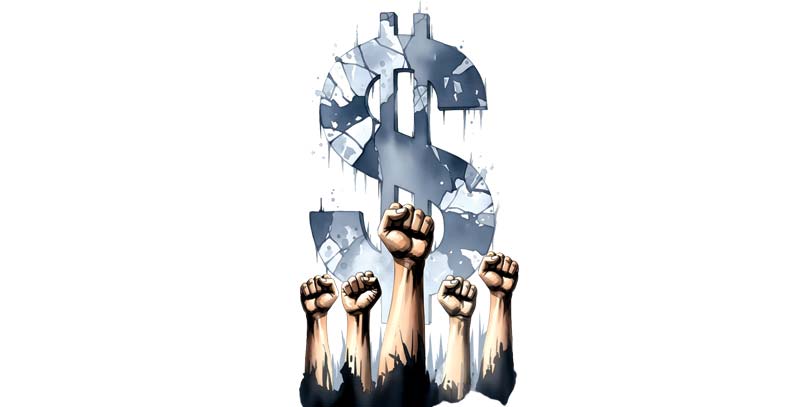
US President Donald Trump has once again seized the geopolitical spotlight — this time by sounding the alarm over the future of the US dollar. In a sharp and provocative statement, Trump warned that losing the dollar’s global reserve currency status would be akin to “losing a world war.”
His remarks come as the BRICS bloc — comprising Brazil, Russia, India, China, and South Africa — steps up its campaign to challenge the dollar’s supremacy by promoting financial alternatives. Trump, never one to shy away from nationalist rhetoric, declared that such a scenario would fundamentally alter America’s identity. “We would not be the same country any longer,” he said. Doubling down, he threatened sweeping tariffs of up to 10 per cent on BRICS countries if they persisted with their de-dollarisation agenda.
Calling BRICS a “little group fading fast,” Trump sought to belittle the bloc’s ambitions. But behind the bravado lies a growing trend the US can’t afford to ignore. BRICS may not yet have a unified currency, but it is actively developing frameworks to bypass Western-controlled financial infrastructure. From exploring alternatives to the SWIFT payment system to floating the idea of a real assets-backed BRICS currency, the group is laying the groundwork for a new financial order — albeit a fragmented and slow-moving one.
Recent BRICS expansion into Africa, Asia, and Latin America has further accelerated the shift. Increasing volumes of trade are being settled outside the dollar ecosystem. Central banks in several emerging economies have begun trimming their US Treasury holdings and boosting gold reserves.
Meanwhile, energy deals — long the bastion of the petrodollar — are now being negotiated in yuan, rubles, or euros, a trend that would have seemed unthinkable just a decade ago.
At home, the dollar faces headwinds of its own. In 2024, it suffered one of its sharpest declines in decades, losing ground to the euro, yen, and even the Mexican peso. While this isn’t the first time the dollar has taken a hit, the broader context is different. America’s fiscal position is more precarious, its political landscape more fractured, and its global alliances increasingly tested.
Yet, it would be premature to predict the dollar’s downfall. The greenback still dominates global reserves and trade invoicing. It remains the preferred safe haven for investors and central banks alike. Even within BRICS, consensus is elusive. India, for instance, has distanced itself from calls for a joint currency and remains wary of China’s financial ambitions.
Financial analysts caution against exaggerating the threat. “The dollar isn’t going anywhere fast,” one global economist noted. “But the ground is clearly shifting.” It’s a slow erosion, not a sudden collapse. And that distinction matters.
Trump’s threats of tariffs may resonate with parts of his political base, but they ignore the deeper structural shifts under way in global finance. Weaponising tariffs won’t reverse de-dollarisation — it may, in fact, accelerate it.
The world is not abandoning the dollar en masse, but it is increasingly hedging against it. The era of uncontested dollar dominance may not be over, but the cracks are starting to show. BI