




Blitz Bureau
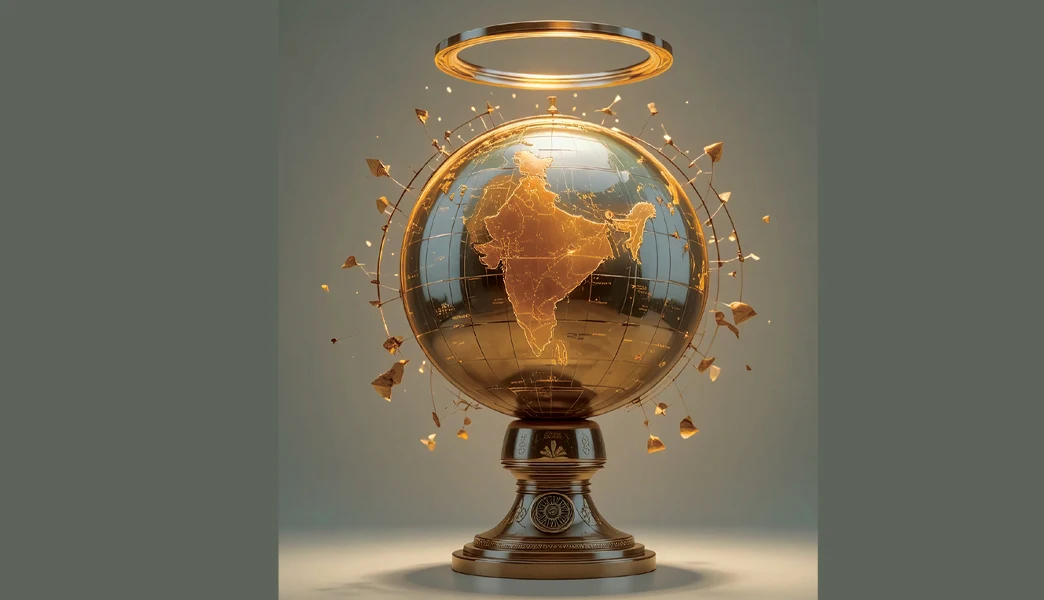
NEW DELHI: A new vocabulary is entering global power politics. It is no longer enough to count aircraft carriers, GDP size or semiconductor fabs. The recently released Responsible Nations Index, developed by the World Intellectual Foundation (WIF), a Delhi-based research organisation, places India ahead of the United States, China and Russia on parameters of governance and global conduct.
For decades, India has been described as an ‘emerging power,’ a phrase that implies potential but not arrival. Ranking high on a responsibility index shifts that frame. It suggests India is not merely catching up economically or militarily, but shaping norms. In a fractured world order, that distinction matters.
Index by World Intellectual Foundation places India ahead of China, Russia
The 21st century’s geopolitical contest is as much about legitimacy as leverage. Trade alliances, supply-chain partnerships and technology coalitions are increasingly filtered through values — sustainability standards, digital governance rules and multilateral engagement. Countries perceived as predictable and law-bound enjoy lower political risk premiums. Investors reward them. Strategic partners trust them.
India’s positioning as a responsible actor — from climate commitments to digital public infrastructure sharing, from vaccine diplomacy to multilateral participation — has helped cultivate that perception. The question is whether moral positioning can now be converted into tangible economic advantage.
For decades, India has been described as an ‘emerging power,’ a phrase that implies potential but not arrival. Ranking high on a responsibility index shifts that frame. It suggests India is not merely catching up economically or militarily, but shaping norms. In a fractured world order, that distinction matters.
There is precedent. The European Union has translated regulatory norms into trade power through standards that shape global markets. The United States has leveraged institutional credibility to anchor the dollar’s dominance. Norms, when institutionalised, become instruments of influence.
For India, the opportunity lies in three areas.
First, trade negotiations. In an era of friend-shoring and de-risking, supply chains are migrating toward jurisdictions seen as stable and rules-based. If India is viewed as a responsible democracy with transparent regulation, it strengthens its case as an alternative manufacturing and technology hub. Ethical capital can reduce friction in trade agreements and deepen integration with like-minded economies.
Second, digital governance. India’s experience with large-scale digital public infrastructure — from identity systems to payments architecture — positions it as a template for the Global South. If that model is associated with accountability and inclusion, India can export both technology and governance frameworks, shaping standards rather than merely adopting them.
Third, geopolitical mediation. In a polarised environment marked by US-China rivalry and regional conflicts, countries trusted by multiple blocs gain diplomatic relevance. A reputation for responsible conduct enhances India’s ability to act as a bridge — whether within the G20 or across the Global South.
However, moral capital is fragile. It must be reinforced domestically and internationally. Economic resilience, judicial credibility, regulatory consistency and institutional autonomy all feed into perceptions of responsibility. Any slippage erodes the asset the index celebrates.
Rankings are snapshots, not entitlements. Translating ethical positioning into strategic capital requires deliberate policy alignment — integrating governance standards into trade deals, highlighting rule-of-law advantages to investors, and projecting coherence between rhetoric and action.
Moving from ‘emerging power’ to ‘norm-shaping power’ demands confidence without triumphalism. In today’s multipolar order, influence accrues not only from size but from trust. If India can sustain the qualities underpinning its Responsible Nations ranking, moral power could become strategic capital.