




Blitz Bureau
NEW DELHI: India’s economic outlook is facing a fresh and more immediate test after US President Donald Trump dramatically escalated his rhetoric against Iran on April 5, issuing perhaps his bluntest warning yet.
In a post on Truth Social, Trump demanded that Tehran reopen the Strait of Hormuz, warning that failure to do so would leave Iran “living in hell,” and ominously adding that “Tuesday will be power plant day and bridge day all wrapped in one” — signalling the possibility of targeted strikes on critical infrastructure.
This comes on top of his earlier prime-time address from the White House, where he said Iran could be “decimated” and pushed “back to the stone age.”
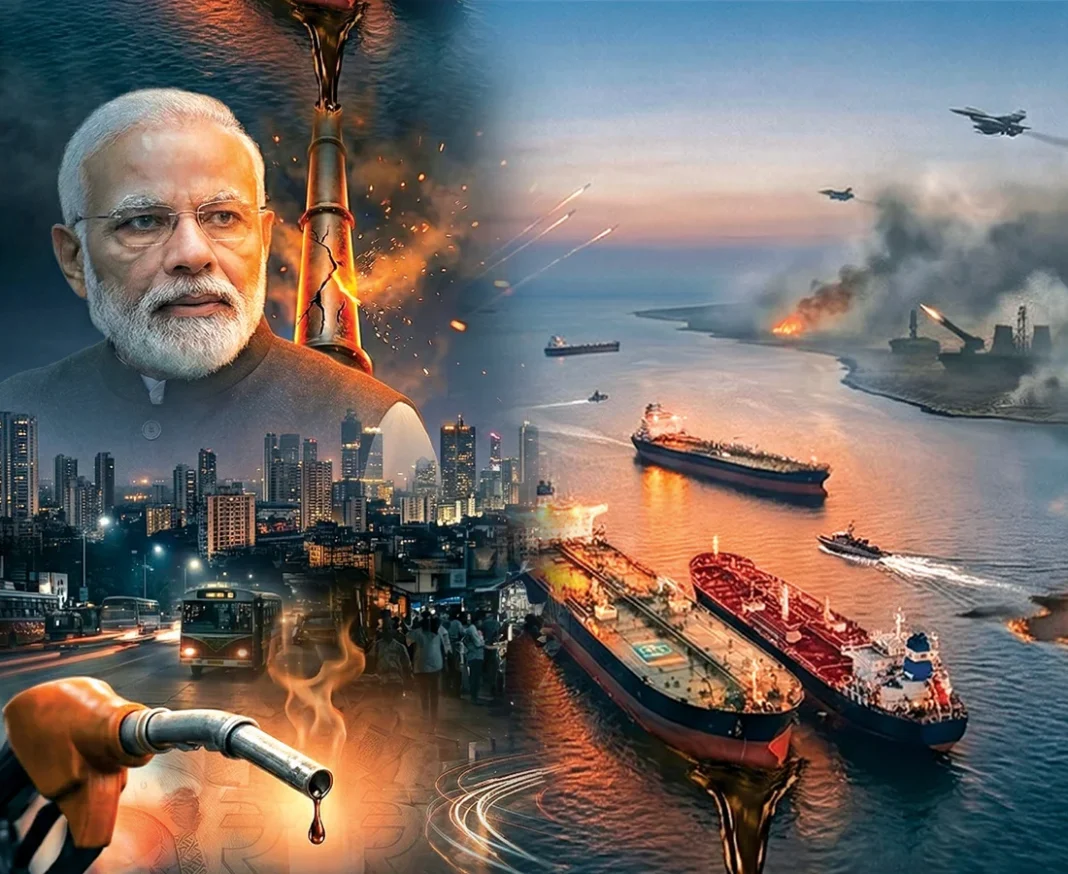
The sharp escalation in Trump’s tone and the implied shift from deterrence to potential action has heightened fears of a wider conflict in West Asia, with the Strait of Hormuz emerging as the critical flashpoint, and India among the most exposed major economies.
India’s deep dependence on imported crude makes it particularly vulnerable to such geopolitical shocks. The country imports over 85 per cent of its oil needs, with a significant share sourced from the Gulf and transiting through the narrow Hormuz corridor.
Any disruption — whether physical through conflict or even perceived through heightened risk — can quickly translate into higher import bills, currency pressure, and inflationary spikes. In effect, what happens in Hormuz has a direct and immediate bearing on India’s macroeconomic stability.
Trump’s remarks have raised the probability of an intensification of hostilities. A military campaign that targets Iran’s energy and logistical infrastructure could provoke retaliation, including attempts to choke critical shipping lanes.
Iran has both the incentive and the demonstrated capability to disrupt maritime traffic through Hormuz, making the waterway the most vulnerable link in the global energy supply chain. Even limited skirmishes or threats to shipping can drive insurance costs sharply higher, discourage tanker movement, and constrict supply without a formal blockade.
For India, the consequences of such a disruption could be swift and severe. A sustained spike in crude prices beyond the $100 per barrel mark would widen the current account deficit, exert downward pressure on the rupee, and complicate fiscal management.
Higher oil prices would feed directly into transport and food costs, stoking inflation and eroding household purchasing power — at a time when private consumption remains the backbone of economic growth. The pass-through effect could be uneven but persistent, particularly affecting lower- and middle-income households.
To its credit, India has built a degree of resilience over the years. Policymakers have diversified crude sourcing, tapped opportunistic supplies at discounted rates, and adopted calibrated domestic fuel pricing mechanisms to absorb some of the volatility. Strong foreign exchange reserves and proactive central bank intervention have also helped contain currency fluctuations during periods of stress. The experience of managing previous oil shocks has improved institutional preparedness.
Yet, a prolonged disruption centred on Hormuz would test these defences in ways not seen in recent years. Unlike earlier episodes of temporary price spikes, a sustained geopolitical premium on crude could force difficult policy trade-offs.
The Government may be compelled to cut fuel taxes or expand subsidies to shield consumers, placing pressure on fiscal balances. Simultaneously, efforts to contain inflation through tighter monetary policy could dampen growth, creating a delicate balancing act for policymakers.
For India, the challenge is no longer just managing cyclical oil price fluctuations, but navigating a more unstable geopolitical environment where such shocks may recur with greater frequency and intensity.
Corporate India is equally exposed to such a scenario. Sectors such as aviation, logistics, chemicals, and paints are particularly sensitive to crude price movements. Rising input costs would squeeze margins, while higher borrowing costs — if interest rates rise — could further dampen investment sentiment. Export competitiveness could also be affected if the rupee weakens sharply in response to external pressures, especially for sectors operating on thin margins.
Globally, the fallout from an escalation would be significant, but India’s exposure is uniquely acute. Advanced economies often have greater buffers in the form of strategic reserves or domestic production, whereas India’s high import dependence makes it more susceptible to sustained price shocks.
There are, however, mitigating levers. Strategic petroleum reserves can provide temporary relief, and coordinated diplomatic efforts to keep Hormuz open may help prevent worst-case disruptions. Over the longer term, India’s push towards renewable energy, electric mobility, and diversification of energy sources offers a structural cushion, though such transitions take time to yield meaningful insulation. The expansion of refining capacity and improved logistics also provide some operational flexibility.
In addition, India may need to accelerate policy responses if the crisis deepens. This could include building larger strategic reserves, expanding long-term supply contracts with non-Gulf producers, and strengthening domestic energy efficiency measures to reduce demand pressures.
Another layer of risk lies in currency dynamics. A sustained rise in oil prices typically puts pressure on the rupee, as higher import bills increase demand for dollars. This, in turn, can trigger capital outflows or make foreign investment more volatile, particularly if global risk sentiment deteriorates. The Reserve Bank of India may be forced to intervene more aggressively, potentially tightening liquidity conditions at a time when growth needs support.