




Blitz India Business
NEW DELHI: As world leaders gathered in New Delhi on January 27 this year to ink the historic India–European Union Free Trade Agreement — hailed globally as the “mother of all deals” connecting a free market of two billion people — and as commercial corridors buzzed following the operationalisation of the India–UK Comprehensive Economic and Trade Agreement (Ceta) in July, India’s trade diplomacy reached a fever pitch. With framework pacts with the United States (interim pact announced in February), fresh compacts with New Zealand (signed in April), and economic partnerships with Oman either newly minted or actively in the works, New Delhi sits squarely at the epicenter of a modern commercial realignment.
Yet, this high-velocity contemporary matrix did not materialise overnight. India became a powerhouse of modern trade architecture on the basis of foundational building blocks of regional integration.
It begins with the philosophy
At its heart, international trade is driven by a fundamental economic truth: no nation is entirely self-sufficient. Every country possesses distinct endowments — whether it is raw mineral wealth, fertile soil, technical capital, or a specialised labour force. The core philosophy of trade agreements rests on the principle of comparative advantage, first conceptualised by classical economists like David Ricardo. By specialising in what they produce most efficiently and trading for the rest, nations can collectively maximize global output and consumer welfare.
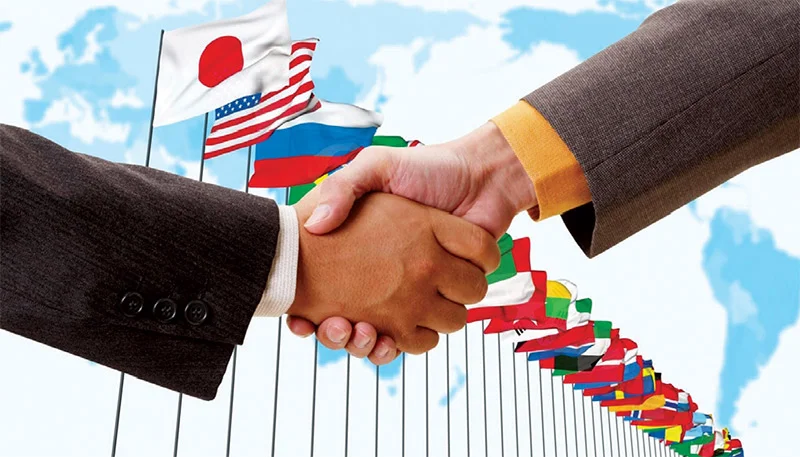
However, unbridled trade has historically collided with domestic protectionism — the desire of governments to shield local industries and jobs from foreign competition through tariffs, quotas, and regulatory hurdles. Trade agreements serve as legal bridges across these geopolitical divides. They operate on the philosophy of reciprocity and rules-based predictability: countries bind themselves to lower barriers mutually, ensuring that commerce is governed by stable, transparent legal frameworks rather than arbitrary political whims or sudden protectionist impulses.
Modern trade deals are increasingly designed to secure trusted, friendly supply chains (“friend-shoring”) for critical items like semiconductors, rare earth minerals, and green energy equipment.
History of trade agreements in India
India’s journey with trade agreements mirrors its broader economic evolution — shifting from post-Independence inward-looking self-reliance to an expansive, outward-looking integration with the global economy.
The early decades (1950s–1980s): Following Independence, India prioritised import substitution. Trade policy was heavily restricted, aimed at conserving foreign exchange and building domestic heavy industry. India’s early participation in trade arrangements was largely multilateral and non-reciprocal, such as the Asia-Pacific Trade Agreement (APTA) (then the Bangkok Agreement) in 1975 and the Global System of Trade Preferences (GSTP) in 1988, which fostered basic South-South cooperation without extensive domestic market opening.
The post-1991 liberalisation paradigm: The sweeping economic reforms of 1991 dismantled the licence raj and forced India to look outward. Recognising that multilateral negotiations under the World Trade Organisation (WTO) were often slow and cumbersome, New Delhi adopted a dual-track strategy, actively pursuing bilateral and regional preferential pacts.
The regional and bilateral wave (late 1990s–2010s): This era marked India’s first modern free trade agreements. It began with the India–Sri Lanka FTA (1998), followed by pioneering comprehensive agreements with Singapore (CECA, 2005), South Korea (CEPA, 2009), Asean (2009 / 2015), Japan, and Malaysia (2011). These pacts aimed to anchor India firmly within Asian value chains.
The modern strategic pivot (2020s): Moving away from defensive hesitation, recent years have seen India execute high-velocity, high-standard agreements with developed economies and strategic partners — culminating in landmark modern deals spanning the UAE, Australia, the EFTA bloc, the UK, and the European Union.
Trade agreements globally
Globally, the architecture of trade agreements has transformed dramatically over the past century.
The Gatt era: Following the devastation of World War II and the protectionist tariff wars of the 1930s, 23 nations signed the General Agreement on Tariffs and Trade (Gatt) in 1947, laying the groundwork for predictable multilateral tariff reductions. This culminated in the birth of the World Trade Organization (WTO) on January 1, 1995, which provided an institutional framework for global trade governance and dispute resolution.
Proliferation of PTAs: As multilateral negotiations at the WTO (such as the stalled Doha Round) grew increasingly complex due to a bloated, multi-polar membership, nations shifted focus toward Preferential Trade Agreements (PTAs) and bilateral FTAs.
Mega-regionals and supply chain blocs: Modern global trade is increasingly shaped by “mega-regional” pacts — massive agreements linking multiple economic powerhouses. These agreements go far beyond simple tariff cuts, harmonising behind-the-border issues like digital commerce, labour standards, environmental rules, and intellectual property.
To understand the sheer magnitude of trade agreements in the modern world, it is useful to look at the following structural indicators:
WTO notifications: The WTO has received notifications for over 600 regional trade agreements since its inception, with well over 400 actively in force today.
Share of global trade: Over half of all global merchandise trade now moves under the preferential tariff umbrellas of some form of regional or bilateral trade agreement rather than standard Most-Favoured-Nation (MFN) WTO rates.
Depth of modern pacts: While 20th century agreements averaged roughly 5 to 10 distinct policy areas (primarily tariffs and customs), modern 21st century agreements frequently cover 30 to 40 legal areas, incorporating deep integration provisions on investment, competition policy, state-owned enterprises, and data localisation.
Agreements and Indian trade and commerce
Trade agreements act as strategic multipliers for India’s economic aspirations, fulfilling several critical functions:
Market access and diversification: Pacts eliminate or sharply reduce tariff walls, giving Indian manufactured goods, agricultural products, and IT services a competitive edge in foreign markets against rivals who still face standard duties.
Integrating into global value chains (GVCs): Modern comprehensive pacts allow Indian industry to import raw materials, intermediate goods, and high-tech components duty-free or at concessional rates. This enables domestic manufacturers — particularly in electronics, pharmaceuticals, and engineering goods — to plug seamlessly into global assembly lines.
Catalysing foreign direct investment (FDI): Comprehensive agreements signal regulatory stability and institutional trust. Modern frameworks with partner economies incorporate binding investment protection and facilitation guarantees, channelling billions of dollars in foreign capital into Indian industrial corridors and clean energy sectors.
Services mobility: Unlike traditional goods-only treaties, India’s modern bilateral partnerships emphasise professional services, making it easier for Indian IT professionals, nurses, accountants, and educators to work abroad through simplified visa regimes and mutual recognition of qualifications.
Changing contours of trade agreements
The tectonic plates of geopolitics and economics are shifting, and trade agreements are evolving in lockstep:
From hyper-globalisation to “de-risking” and resilience: For decades, global trade was driven entirely by the pursuit of the lowest possible cost (just-in-time manufacturing). Supply chain disruptions — sparked by pandemic lockdowns and escalating geopolitical tensions — have replaced pure efficiency with resilience and diversification (just-in-case manufacturing). Modern trade deals are increasingly designed to secure trusted, friendly supply chains (“friend-shoring”) for critical items like semiconductors, rare earth minerals, and green energy equipment.
Geo-economics fragmentation: The rise of strategic competition between major superpowers has made multilateral consensus at the WTO difficult. Consequently, nations are favouring “minilateralism” — steering trade through trusted networks of allies who share similar democratic, security, or environmental values.
Green transition and digital economy: Modern agreements are no longer just about steel and textiles. Today’s geopolitical landscape has injected new priorities into trade text: carbon border adjustment tracking, sustainable energy corridors, cross-border data flows, cybersecurity standards, and artificial intelligence governance. Trade agreements have effectively transformed from commercial tariff sheets into comprehensive strategic charters.
BOX
The 88-day sprint: The negotiations for the India-UAE Comprehensive Economic Partnership Agreement (Cepa) were completed in a blistering 88 days, making it one of the fastest comprehensive trade pacts ever negotiated globally.
Pioneer of bilateralism: India’s tryst with modern bilateral trade began quietly with the India-Sri Lanka FTA signed in December 1998, a framework that served as the experimental laboratory for India’s future commercial diplomacy.
Universal reach: With agreements spanning from the snowy peaks of the European EFTA states to the deserts of West Asia and the island economies of the Indian Ocean, India’s trade network touches continents across the globe, balancing South-South solidarity with advanced North-South economic integration.