Blitz India Business
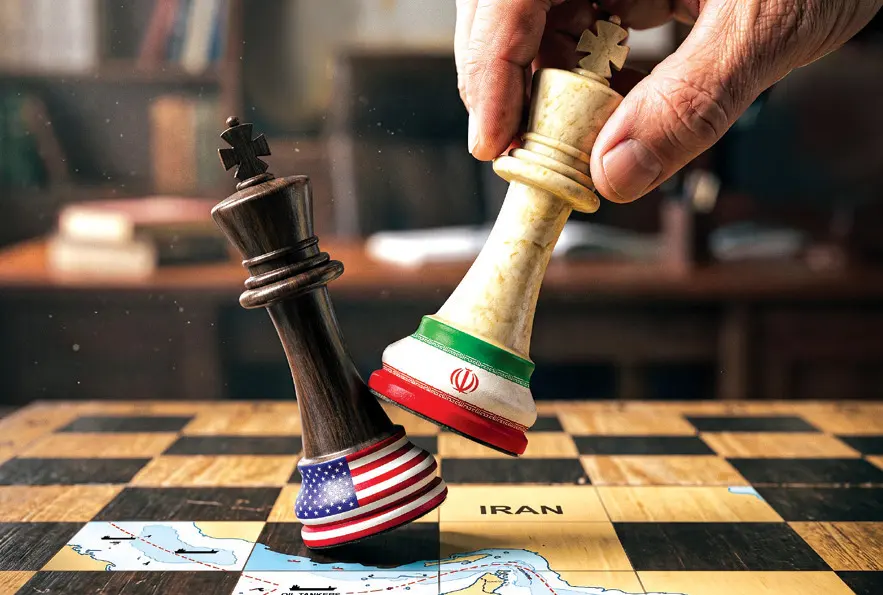
NEW DELHI: The most striking development in the US-Iran confrontation may no longer be the missiles, sanctions or military strikes. It is the shift in negotiating posture. Iran, the militarily weaker power, is increasingly behaving as though Washington — not Tehran — must now prove its case for ending the conflict.
That does not mean Iran has defeated the United States. American military superiority remains overwhelming, and Iran has suffered extensive damage. But wars are not decided by battlefield strength alone. They are also decided by who can endure longer, impose costs and shape the terms of an eventual settlement.
The Strait of Hormuz is the key. Iran has made reopening the waterway conditional on demands on the US including an end to hostilities, withdrawal of American forces, sanctions relief and compensation for war damage. Iranian officials have gone further, declaring that the strait would remain closed until Washington accepts what Tehran describes as defeat.
Washington, predictably, is refusing to accept that framing. President Donald Trump has threatened further pressure and even spoken of declaring the Strait of Hormuz US territory. He has also warned Americans to accept higher gasoline prices as the price of confronting Iran.
If the United States eventually accepts a settlement that reopens Hormuz while providing Iran with significant concessions, Tehran will claim vindication. Washington will describe the outcome as a negotiated peace achieved through pressure
Yet that warning itself reveals Tehran’s leverage. The longer Hormuz remains disrupted, the greater the pressure on global energy markets, shipping costs and consumers. The crisis is becoming an economic problem far beyond West Asia, raising the political cost of an open-ended conflict.
Iran’s strategy is not necessarily to defeat America militarily. It is to make victory prohibitively expensive and politically complicated.
Tehran may be seeking a negotiated victory: survival of the regime, preservation of its strategic capabilities, sanctions relief and recognition that it cannot be compelled to surrender on American terms.
For Washington, the dilemma is equally clear. Trump cannot easily accept Iranian demands without appearing to have surrendered. But neither can he indefinitely sustain a confrontation that pushes up energy prices, disrupts global trade and risks a wider regional war. Every additional week creates a difficult calculation between military objectives and political sustainability.
If the United States eventually accepts a settlement that reopens Hormuz while providing Iran with significant concessions, Tehran will claim vindication. Washington will describe the outcome as a negotiated peace achieved through pressure.
Iran has not won the war. But it may have ensured that America cannot easily dictate how the war ends. In geopolitics, denying a vastly stronger adversary the ability to impose its preferred outcome can itself be a form of victory — and a powerful demonstration of strategic resilience under pressure.


