




SUKUMAR SAH
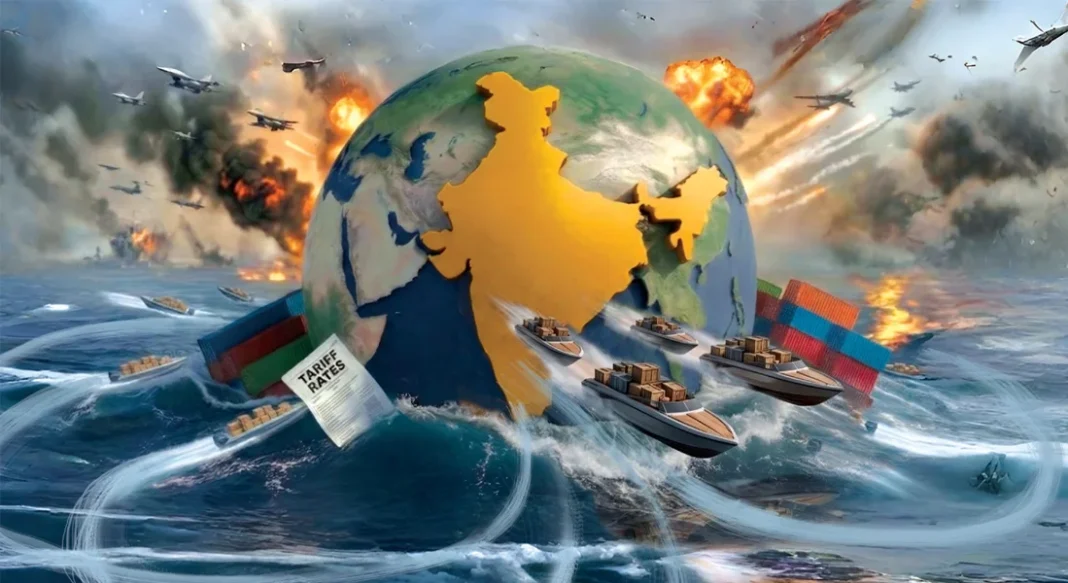
NEW DELHI: The era of seamless globalisation is visibly fraying. What was once an article of faith – that open markets, integrated supply chains and free trade would drive prosperity – is now being steadily replaced by a more cautious and fragmented approach. Geopolitics, not efficiency, is increasingly shaping trade flows. The question for India is no longer whether this shift is underway, but whether it is prepared to navigate a world where trade is divided into strategic blocs, each guided as much by politics as by economics.
From the US-China rivalry to the economic aftershocks of the Russia-Ukraine conflict, global trade is being reconfigured along political lines. Countries are prioritising ‘trusted partners’ over the lowest-cost suppliers, and terms like ‘friend-shoring’ and ‘de-risking’ have entered the policy lexicon. Multilateralism, once the backbone of global trade, is weakening, with institutions like the WTO struggling to enforce consensus and maintain relevance in an increasingly polarised world.
Opportunity & Challenge
For India, this churn presents both an opportunity and a challenge. On the positive side, the ‘China plus One’ strategy adopted by global companies offers India a chance to position itself as an alternative manufacturing hub. Government initiatives such as the Production Linked Incentive (PLI) schemes and infrastructure push are aimed at leveraging this moment. There is also a renewed thrust on signing bilateral trade agreements, reflecting a shift from multilateral to more flexible arrangements.
However, the constraints are equally stark. India’s integration into the global value chains remains limited compared to competitors like Vietnam or Mexico. Logistics costs are high, regulatory processes uneven, and policy unpredictability continues to be a concern for investors. Moreover, a fragmented trade environment demands agility – something that India’s policy ecosystem has not always demonstrated consistently.
There is also a deeper structural issue. India’s export basket is still dominated by a mix of traditional sectors and services, with manufacturing yet to achieve the scale and competitiveness required to fully exploit shifting supply chains. In a world where trade blocs may prioritise strategic alignment over pure economics, India will have to balance its long-standing commitment to strategic autonomy with the need for deeper economic partnerships.
Domestic market cushion
At the same time, fragmentation could carry hidden risks. Protectionist tendencies among major economies may limit market access, while supply chain disruptions could increase input costs for Indian industry. For a country that relies on imports for critical sectors such as energy and electronics, this creates vulnerabilities that cannot be ignored.
Yet, India is not without strengths. Its large domestic market provides a cushion against external shocks, while its growing digital infrastructure and services sector offer alternative growth engines. The challenge lies in aligning these strengths with a coherent trade strategy that is both pragmatic and forward-looking, and responsive to rapidly changing global realities.
Ultimately, the post-globalisation world is not one of retreat, but of recalibration. Trade will continue, but under new rules shaped by power, politics and resilience. For India, readiness will depend not just on policy intent, but on execution – on its ability to reduce costs, enhance competitiveness and build trust with global partners.
In a fragmented world, the winners will not be those who resist change, but those who adapt fastest and respond with agility to shifting global realities. India’s moment may well have arrived – but only if it can shift its focus from potential to preparedness, backed by consistent policy execution.
India’s export basket is still dominated by a mix of traditional sectors and services, with manufacturing yet to achieve the scale and competitiveness required to fully exploit shifting supply chains