




Blitz Bureau
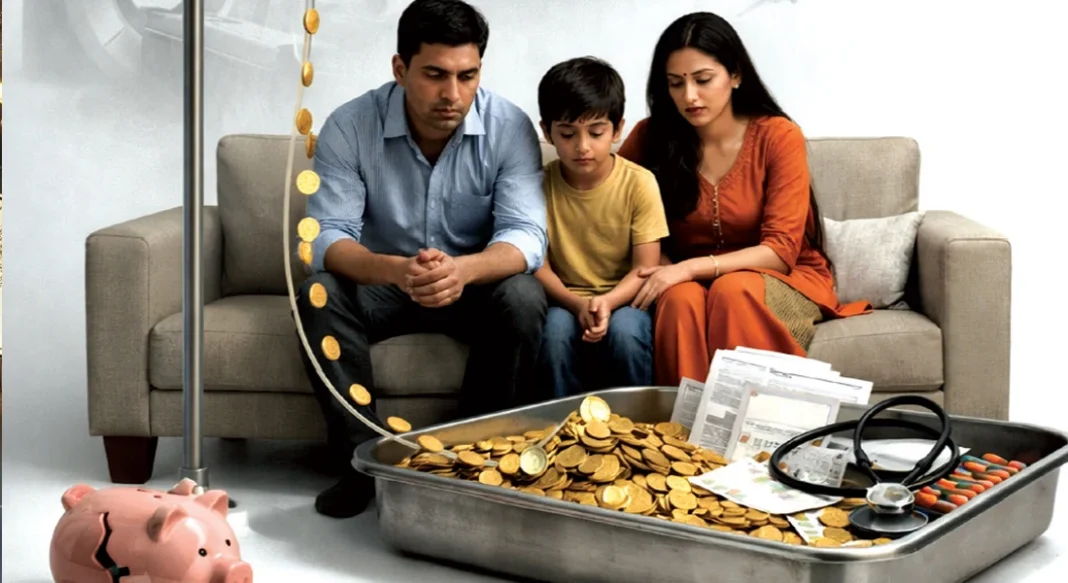
NEW DELHI: Health inflation has emerged as one of the most under-recognised threats to India’s middle class. While headline inflation figures appear broadly manageable, the cost of staying healthy — or simply surviving illness — is rising at a pace that far outstrips income growth. The result is a quiet but corrosive squeeze on household finances, one that rarely makes it to economic barometers but is deeply felt across families.
Unlike food or fuel, healthcare expenditure is unpredictable and often unavoidable. A single hospitalisation can wipe out years of savings. Data over the past decade consistently show medical inflation in India hovering well above general inflation, driven by rising input costs, increased use of advanced diagnostics, and a growing burden of lifestyle diseases such as diabetes and hypertension. As longevity increases, so does the cumulative cost of managing chronic conditions.
The problem lies in India’s heavily privatised healthcare system. Public health infrastructure, though improving, remains overstretched and uneven in quality. This has led to the dominance of private providers, from standalone nursing homes to large corporate hospital chains. While these institutions have brought world-class capabilities, they have also contributed to a steady escalation in treatment costs, often with limited price transparency.
Insurance, which should act as a financial buffer, remains patchy in both coverage and depth. Schemes like Ayushman Bharat have expanded access for the economically vulnerable, but the middle class sits in a precarious gap — earning too much to qualify for subsidies, yet often underinsured against major medical expenses. Even among those with private insurance, low coverage limits, exclusions, and rising premiums mean that out-of-pocket expenses remain high.
This creates a dangerous cycle. Faced with high costs, many households delay or avoid treatment, allowing conditions to worsen and eventually require more expensive interventions. Others resort to dipping into savings, selling assets, or taking high-cost loans. Over time, this erodes financial resilience and reduces discretionary spending, with broader implications for consumption-driven growth.
Health inflation also has a structural dimension. Advances in medical technology, while improving outcomes, come at a cost. Diagnostic tests, specialised procedures, and imported equipment add layers to hospital bills. At the same time, defensive medicine —where doctors prescribe additional tests to avoid litigation — further inflates costs. In the absence of robust regulatory oversight on pricing, the burden ultimately falls on patients.
The economic consequences extend beyond individual households. A workforce burdened by poor health or financial stress is less productive. Companies face higher insurance premiums and absenteeism, while the broader economy absorbs the cost of reduced efficiency. In this sense, health inflation is not just a social issue but a macroeconomic concern.
For India’s middle class, the fear is no longer just about falling sick; it is about the financial consequences of illness. Until that fear is addressed, health inflation will remain a silent income killer.
Addressing it requires a multi-pronged approach. Strengthening public healthcare is essential to create a credible, affordable alternative to private providers. Insurance penetration must deepen, with products that are both affordable and comprehensive.
Greater transparency in pricing and standardisation of treatment costs can help curb excesses. Preventive healthcare — through early screening, lifestyle changes, and awareness — must become a central policy focus rather than an afterthought for long-term sustainability, affordability, equity, and improved population health outcomes nationwide overall.