


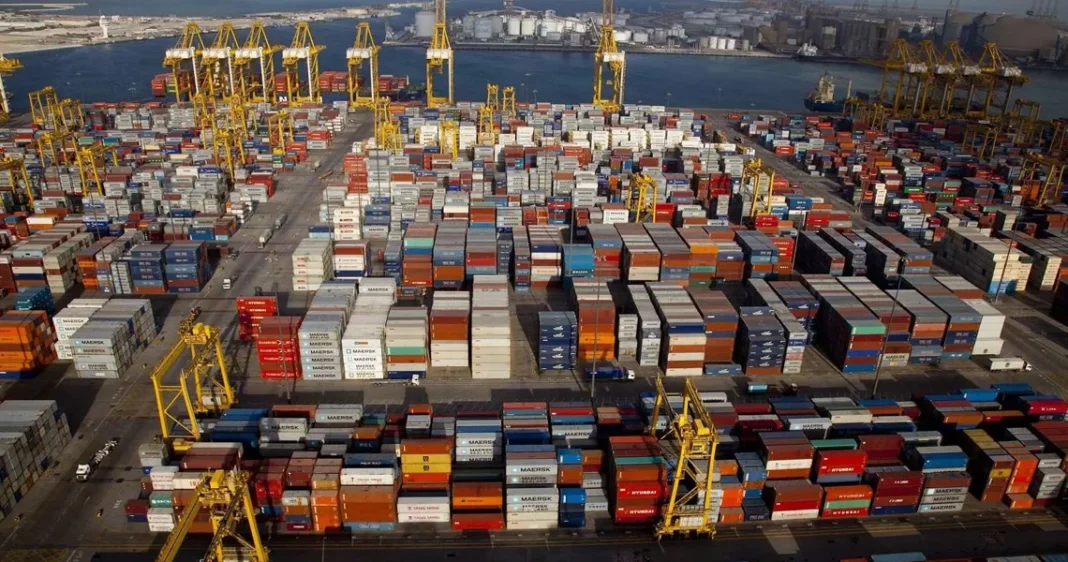


A concessional customs route built in 1986 to speed capital goods into Indian projects has never had a deadline written into it. An audit presented to Parliament this month sets out what forty years without one has cost, and what eleven fixes would look like.
The Project Imports Scheme is one of the quieter instruments of Indian industrial policy. It allows all the machinery and equipment for a single sanctioned project to be imported under one classification at a concessional rate, instead of being assessed item by item across dozens of tariff headings. For a power station, a fertiliser plant or a metro line, that is the difference between a manageable customs process and an unmanageable one.
The Performance Audit Report of the Comptroller and Auditor General of India on the Project Imports Scheme, Union Government, Department of Revenue (Indirect Taxes — Customs), Report No. 27 of 2026, for the year ended 31 March 2024, was presented to Parliament on 12 August 2026. It examines whether the statutory provisions support the simplified procedure they were written for, whether the procedure is complied with, and whether internal controls work. It carries 36 audit observations and 11 recommendations, a revenue implication of ₹128.58 crore, and procedural irregularities involving ₹2,979.33 crore. The report records that responses from the Central Board of Indirect Taxes and Customs and its field formations were received and have been included in it.
Source: CAG Report No. 27 of 2026, paragraphs as cited in the text. Photograph note: an audit report is a document and not an event; no copyright-clean photograph exists, and a symbolic picture of a port would breach Circular BIMG/CIR/2026/02. This in-house data card runs instead.
The finding at the centre of it
The first and largest observation is an absence rather than a lapse. The Project Import Regulations, 1986 prescribe no timeline — not for registering a project, and not for completing imports under a registered contract. The audit records that the want of defined timeframes affects project implementation schedules, reflects procedural inefficiency, weakens control over import compliance, and may lead to duty evasion, goods going unaccounted for and loss of revenue. (Paras 2.1 and 2.2)
Everything downstream follows from that. Audit observed substantial delays in clearing goods under a scheme whose entire purpose was expeditious cargo movement, ranging from three days to 1,149 days — delays the report ties to coordination, document processing and system-level approvals, and which it says work against the targets set in the National Trade Facilitation Action Plan. (Para 3.1)
Of 383 finalised cases examined, 57 across eight Commissionerates were finalised without the mandatory Installation Certificate, without the prescribed Plant Site Verification, or without reconciliation statements, bills of entry, invoices and final payment certificates. (Paras 2.11 and 2.12) Bank guarantees and bonds were not always renewed where finalisation remained pending. (Para 4.1) And project import benefits were in some instances extended to projects not notified and to ineligible machinery, which the audit puts down to verification at the assessment stage. (Paras 2.4 and 2.7)
The remedy, which is largely software
What lifts this report above a list of lapses is that its eleven recommendations are overwhelmingly mechanical. The auditor is not asking for more inspectors. It is asking for validation rules inside the Indian Customs EDI System.
The CBIC is asked to prescribe a time frame for completing registration once a complete application is in; to amend the 1986 Regulations to set a time limit for completing imports and closing projects, with system-based alerts in ICES flagging registrations where no import activity has occurred beyond a prescribed period; to embed automated document validation so a registration cannot be made without mandatory documents; to make finalisation impossible in the system unless the Installation Certificate and Plant Site Verification report are uploaded and verified; to monitor dwell time for all project-import bills of entry and analyse delays across field formations; to link finalisation of a contract to validation of its associated bills of entry so that no bill closes in isolation or prematurely; to institute system alerts on bonds and bank guarantees nearing expiry; to flag related-party transactions automatically for reference to the Special Valuation Branch; to maintain a centralised digital tracker of confirmed demands and recovery action; and to have the Directorate General of Performance Management build an ICES-linked dashboard consolidating pendency across Commissionerates in real time.
Ten of the eleven are configuration changes to a system that already exists. That is an unusually cheap set of remedies for an unusually specific set of findings.
Where the file stands
The report records that the CBIC and its field formations responded and that those responses are carried in it. What this desk cannot establish from the primary document is whether an Action Taken Note has been filed on the eleven recommendations, or whether the Public Accounts Committee has taken the report up. That is stated as a gap rather than assumed either way, and it will be reported when the position is on the record.
The constructive point is simply timing. A performance audit whose recommendations are almost entirely automation of an existing system is the easiest kind to implement and the easiest kind to let slide, because nothing visible breaks if it slides. Publishing a dated implementation schedule for the eleven — which ICES change, in which release, by when — would convert a report into a project, and would let the next audit measure something. The scheme itself remains a sensible piece of policy; it has simply been running for four decades without a clock, and one can now be fitted in code.