




Blitz India Business
Beneath the day’s tape sits one of the largest and most durable capital-allocation stories anywhere: India’s build-out of clean power. The country’s installed renewable-energy capacity has reached about 288 GW including large hydro, with solar alone past 150 GW — the single biggest slice of the renewable mix. The question that will outlast any one month’s data is structural: can India keep financing, building and integrating clean energy at this pace, and turn a national target into a self-sustaining industry?
The momentum is real and measurable. India added on the order of 45 GW of solar in the last financial year, and now ranks among the world’s top three nations by installed renewable capacity. Solar makes up roughly 55% of the renewable base, followed by wind near 20% and large hydro close to 19%. Each gigawatt is a magnet for capital — module and cell factories, wind supply chains, grid upgrades, storage and the transmission lines that carry power from sun-rich states to demand centres. This is infrastructure investing at national scale.
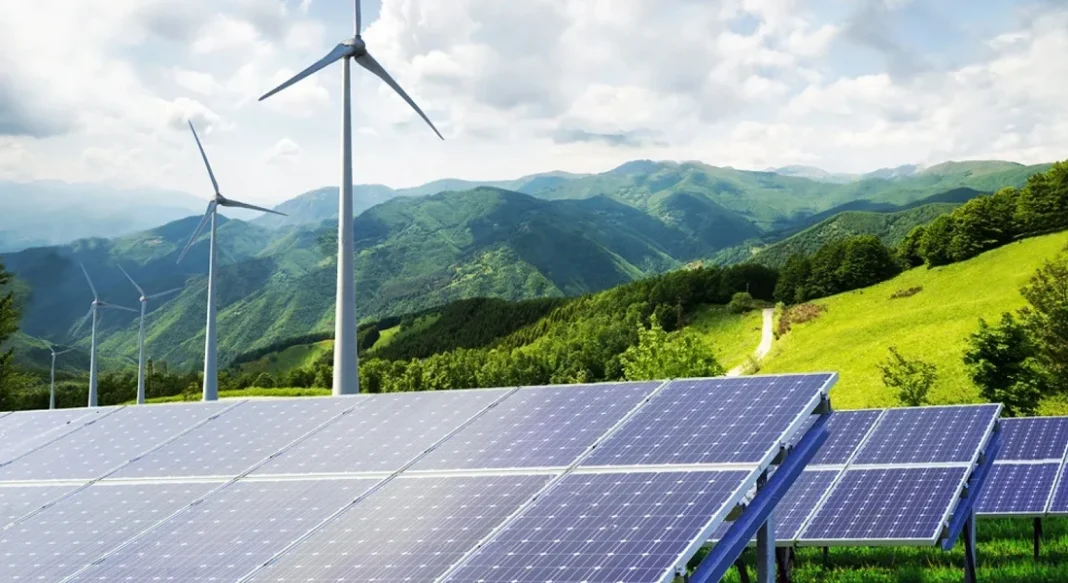
[ PHOTOGRAPH ] Solar panels, representing India’s renewable-energy build-out
An investment class, not just a target: With ~288 GW of installed renewables and solar past 150 GW, India’s energy transition is a multi-decade capital story spanning modules, grids and storage.
A gigawatt is a promise until it is dispatchable. The next phase of India’s energy story is less about adding panels than about storing, moving and firming the power they make.
The Long View
• Installed RE: ~288 GW including large hydro
• Solar: past 150 GW; ~55% of the renewable mix
• Additions: ~45 GW of solar in the last financial year
• The frontier: storage, grid capacity, transmission, domestic manufacturing
The honest account names the distance still to travel. Renewable output is variable, so the binding constraints are shifting from generation to integration — battery and pumped-hydro storage to firm up supply, transmission to move it, and a grid modern enough to absorb it. Domestic manufacturing of cells and modules must keep deepening so the build-out is not import-dependent, and project financing needs to stay cheap and abundant. None of these is a reason to doubt the direction; each is where the next tranche of capital and policy is heading.
The constructive, long-view read is that the energy transition is India’s largest infrastructure investment of the era — a multi-decade compounding story that also buys energy security and cleaner air. The way forward is to pair capacity with dispatchability: scale storage and transmission alongside generation, deepen the home-grown supply chain, and keep the capital flowing. Handled with that discipline, 288 gigawatts is not a finish line but a milestone on the way to an energy system that is cleaner, cheaper and increasingly India’s own.