




Blitz Bureau
NEW DELHI: More than 100 million vaccine doses have been delivered to 18.3 million children worldwide since 2023 under a global drive to reverse pandemic-related declines in childhood immunisation, the World Health Organization and vaccine alliance Gavi said on April 23.
The organizations had launched “The Big Catch-Up” during the World Immunisation Week in 2023. The initiative, focused on children aged 1 to 5 years and spanning 36 countries, concluded in March this year.
About 12.3 million children who were previously “zero-dose” and had never received a vaccine were immunized against diseases such as diphtheria and polio, the agencies said. Around 15 million children had not received a measles shot before the drive.
While final data is still being compiled, the global initiative is on track to meet its target of reaching at least 21 million un- and under-immunised children, the agencies said.
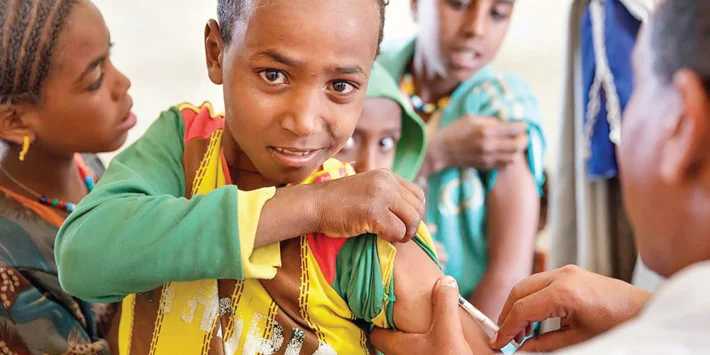
Under the ‘The Big Catch-Up’ programme during the World Immunisation Week 18.3 million children were vaccinated worldwide
The push comes at a time when some traditional backers such as the US are scaling back aid even as millions of infants still miss routine immunisation every year, leaving them vulnerable to preventable diseases such as measles, diphtheria and polio.
Ephrem Lemango, Chief of Immunization at UNICEF, said recent sharp funding cuts to global health have “seriously affected delivery of immunization services” and could “likely reverse hard earned progress”.
Last year, US Health Secretary and long-time vaccine skeptic Robert F Kennedy Jr cut financial support for Gavi, a group that helps buy vaccines for the world’s poorest countries. He claimed the group ignores safety issues with the immunisations it provides.
The COVID-19 pandemic triggered one of the largest backslides in routine immunisation in decades. Healthcare disruptions, lockdowns, supply chain interruptions and vaccine hesitancy all contributed to declining coverage.
Over 100 countries experienced declines in immunisation rates leaving millions of children unprotected against life-threatening disease. Outbreaks of measles and other vaccine-preventable diseases surged globally.
Future challenges
Despite its success, global health agencies caution that challenges remain. Millions of children still miss routine immunisations each year, particularly in fragile and conflict-affected regions.
Experts emphasise that catch-up campaigns are not a substitute for strong routine immunisation systems. Sustained investment, better healthcare access and community engagement are essential to ensure long-term protection.
Additionally, declining global health funding and vaccine hesitancy pose ongoing risks to maintaining progress.
Despite all the challenges, the WHO-led Big Catch-Up initiative marks a historic step in restoring global childhood immunisation. The programme has helped close critical immunity gaps and prevent potential outbreaks.
Doses delivered
Twelve countries — Burkina Faso, Democratic People’s Republic of Korea, Ethiopia, Kenya, Madagascar, Mauritania, Niger, Pakistan, Somalia, Tanzania, Togo and Zambia — reported reaching more than 60 per cent of all zero-dose children under age 5. The numbers are calculated based on how many children missed their first dose of the diphtheria.
In Ethiopia, more than 2.5 million previously zero-dose children received DTP1 through the catch-up campaign; the country also delivered nearly 5 million doses of inactivated polio vaccine (IPV) and more than 4 million doses of measles vaccine, among other key vaccines, to un- and under-vaccinated children.
In Nigeria, 2 million previously zero-dose children were reached with DTP1, and 3.4 million doses of IPV were administered alongside millions of doses of other vaccines.