




Blitz Bureau
NEW DELHI: In the high-stakes theater of global economics, the most potent currency is no longer just oil, data, or traditional capital. It is the specific brand of cognitive resilience forged in the high-pressure corridors of India’s premier institutes.
As we cross the first quarter of 2026, a seismic shift in the global hierarchy of influence has become undeniable: the Indian Institutes of Technology (IITs) and the Indian Institutes of Management (IIMs) have transitioned from being regional centers of excellence to becoming the primary architects of the world’s new economic operating system.
The “brain drain” narrative that defined the late 20th century — a story of India’s best and brightest leaving for the safety of Western corporate ladders — has matured into a far more sophisticated phenomenon: Brain circulation.
Today, the “IIT-IIM brigade” doesn’t just hold high-ranking jobs; they hold the keys to the world’s most significant repositories of capital, innovation, and institutional power.
From the leadership of the World Bank to the foundational engineering of Silicon Valley’s AI revolution, the “Indian academic seal” has become the global gold standard for leadership in complexity.
The C-suite hegemony
The ascent of individuals like Sundar Pichai (Google) and Arvind Krishna (IBM) was merely the opening act. By 2026, the influence of these graduates has permeated the very bedrock of global governance and finance.
The World Bank, under the presidency of Ajay Banga (IIM Ahmedabad), and the top tiers of IMF are now steered by alumni who view global crises through the lens of Indian-style “frugal innovation”— the ability to achieve exponential results with finite resources.
According to the landmark IIT Delhi Alumni Impact Report 2026, released this January, the institute alone has produced over 2,500 founders who have generated roughly 4.8 lakh (480,000) direct jobs globally.
But the prestige goes beyond numbers. A 2025 longitudinal study by Global CEO Watch revealed that over 24 per cent of the world’s Fortune 500 companies now have at least one IIT or IIM alumnus in their top three executive positions.
The reason lies in the “crucible effect.” The Joint Entrance Examination (JEE) and the Common Admission Test (CAT) act as the world’s most rigorous filters. By selecting the top 0.01 per cent from a population of 1.4 billion, these institutes identify high-functioning outliers capable of navigating extreme ambiguity.
In 2026, where global markets are defined by volatility, this mental agility is the most sought-after asset on Wall Street and in Sand Hill Road.
A network without borders
The economic footprint of these alumni is staggering. If one were to aggregate the market capitalisation of companies founded or led by IIT-IIM graduates in 2026, the figure would exceed $5.5 trillion — a number that surpasses the GDP of most G7 nations.
Today, the “IIT-IIM brigade” doesn’t just hold high-ranking jobs; they hold the keys to the world’s most significant repositories of capital, innovation, and institutional power.
But the true impact is found in the “network effect.” In 2026, the IIT-IIM diaspora functions as a decentralised global sovereign wealth fund.
The venture capital stronghold: Roughly 38 per cent of venture capital partners in Silicon Valley and London now hail from these institutes. This “alumni trust” creates a preferential loop, where Indian-led deep-tech startups receive faster mentorship and more aggressive funding, creating a self-sustaining cycle of wealth and innovation.
The India stack export: Alumni are the primary drivers behind the global expansion of the “India stack” — UPI, Aadhaar, and ONDC. As nations across South-East Asia and Africa adopt these digital public infrastructures, it is often IIM-trained consultants and IIT-trained engineers who are designing the implementations, effectively exporting India’s economic blueprint as a global standard.
Atoms over bits
The most significant development in the last two years has been the shift from “service-led” to “IP-led” dominance. For decades, these institutes were criticised for producing “glorified managers” for Western firms. That era is definitively over.
Today, the IITs have become the nerve centers for sovereign technology. From the laboratories of IIT Madras and IIT Delhi, companies are emerging that don’t just build apps, but build atoms.
The “semicon India” initiative has been fueled almost entirely by IIT faculty and alumni, aiming to decouple global supply chains from traditional dependencies.
Whether it is Skyroot Aerospace (IIT Kharagpur roots) challenging the cost-per-kilogram launch metrics of SpaceX, or Agnikul Cosmos (IIT Madras) perfecting 3D-printed rocket engines, the “premier institute” brand is now synonymous with the hardware frontier.
In the world of 2026, if a technology is deemed “impossible,” there’s likely an IITian working on the prototype. This was evidenced at the Gujarat Semiconnect Conference 2026, where it was revealed that 315 Indian universities are now using IIT-designed tools to enable students to design chips that are manufactured and validated as final products.
The financial architects
While the IITs build the technology, the IIMs are managing the world’s capital. In the QS Global MBA Rankings 2026, three Indian institutes — IIM Bangalore, Ahmedabad, and Calcutta — secured positions in the global top 100. This academic excellence translates into raw financial power.
At firms like Goldman Sachs, McKinsey, and BCG, IIM graduates are no longer just “the analysts”; they are the “principal partners” shaping global mergers and acquisitions.
In the 2026 placement cycle at IIM Ahmedabad, the “private equity, venture capital, and asset management” cohort recorded a 19 per cent increase in offers, highlighting the global appetite for Indian management expertise.
These graduates are the ones advising sovereign wealth funds in West Asia and pension funds in Europe on where to deploy the next trillion dollars of capital.
Powering the $10 trillion dream
While the global impact is visible in Manhattan and London, the domestic impact has been transformative for the Indian economy. The IIT Delhi 2026 report highlights a staggering multiplier effect: For every one IITian who enters the entrepreneurship ecosystem, hundreds of indirect jobs are created.
This isn’t just about high-end coding. When an IIM-led logistics firm like Delhivery or an IIT-founded unicorn like Zomato scales, it creates a massive economic “long tail” that supports millions of delivery partners, warehouse workers, and small-scale vendors.
These institutes have moved from being ivory towers to being the primary engines of India’s middle-class expansion. They are the backbone of the Government’s vision to reach a $10 trillion economy by the end of the decade.
A legacy of “institutional trust”
As we look toward the 2030s, the evolution of the IITs and IIMs is taking a “Stanford-esque” turn. They are no longer just teaching centers; they are special economic zones of intellect. With alumni endowments reaching record highs — such as the landmark pledges seen from the class of 2000 in late 2025 — these campuses are now self-sustaining ecosystems.
The global economy of 2026 is complex, volatile, and data-driven. It requires leaders who are comfortable with ambiguity and masters of logic. In this landscape, the IIT-IIM graduate isn’t just a participant; they are the architect, the arbiter, and the accelerator of the new world order.
From the code that runs the world’s AI to the capital that funds it, the road to the future is paved with the grit and brilliance of India’s premier institutes.
Dorm-to-decacorn pipeline
While the corporate world celebrates the global CEOs, the true “street cred” of India’s premier institutes in 2026 lies in the campus incubator. The dream of an IITian or IIM graduate has fundamentally shifted: A seven-figure salary in a multinational is now a “plan B.” Plan A is a seed-funded start-up born in a dorm room.
The unicorn factory
As of March 2026, the IIT-IIM ecosystem has birthed more than 120 unicorns, i.e., start-ups valued at over $1 billion.
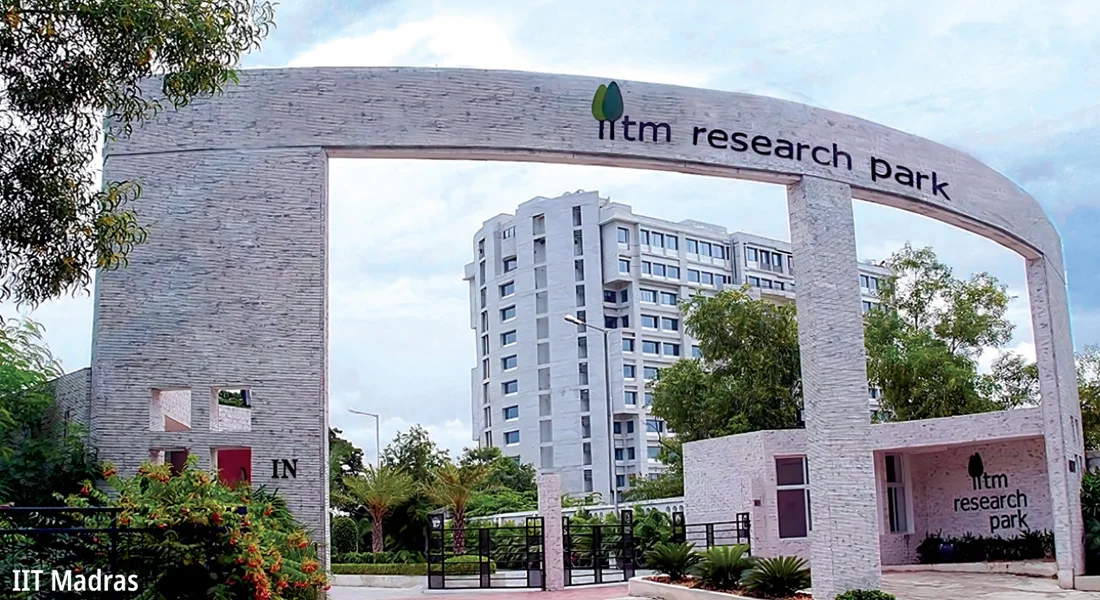
IIT Madras Incubation Cell: The undisputed leader in deep-tech. In December 2025, it crossed the landmark milestone of incubating 511 start-ups with a cumulative valuation exceeding $6.4 billion (₹53,000 crore). It has become the global benchmark for hardware incubation, filing over 700 patents last year alone.
IIM Bangalore (NSRCEL): The premier hub for business-led innovation, having mentored over 600 ventures that have collectively raised over $2.5 billion in the last five years.
The secret sauce
Why are these institutes such fertile ground? It’s the peer-to-peer pressure. When your roommate is building a satellite and your neighbour is coding a new consensus algorithm for a Central Bank Digital Currency (CBDC), the baseline for “success” shifts.
This environment, combined with the “alumni batphone”— where a junior can get a mentorship call with a Silicon Valley legend within 24 hours — makes the IIT-IIM start-up ecosystem the most efficient wealth-creation machine in Indian history.
The shift to “hard” tech
The start-up lineage of these institutes is legendary — Zomato, Flipkart, and Ola are household names. However, the 2025-26 cohort is focused on “hard tech” that solves global existential crises.
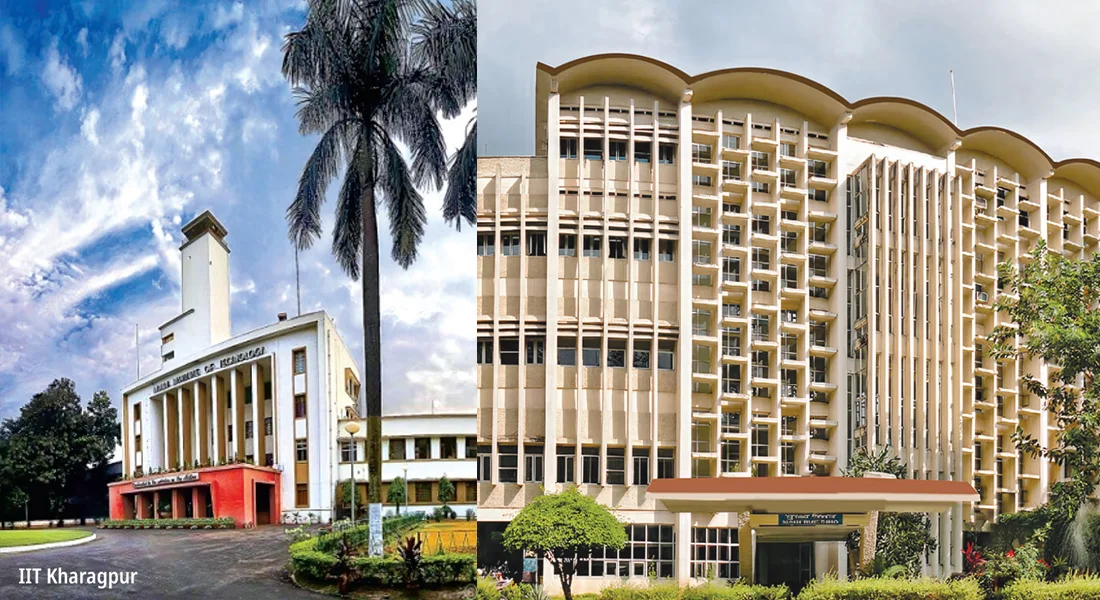
Skyroot Aerospace & Agnikul Cosmos: (IIT Kharagpur / Madras) are now global leaders in private space-tech.
Ather Energy: (IIT Madras) has proven that India can design world-class EV hardware from scratch.
Pixxel: (IIT Madras) is building a “health monitor” for the planet using hyperspectral satellite constellations.