




Anoop Saxena
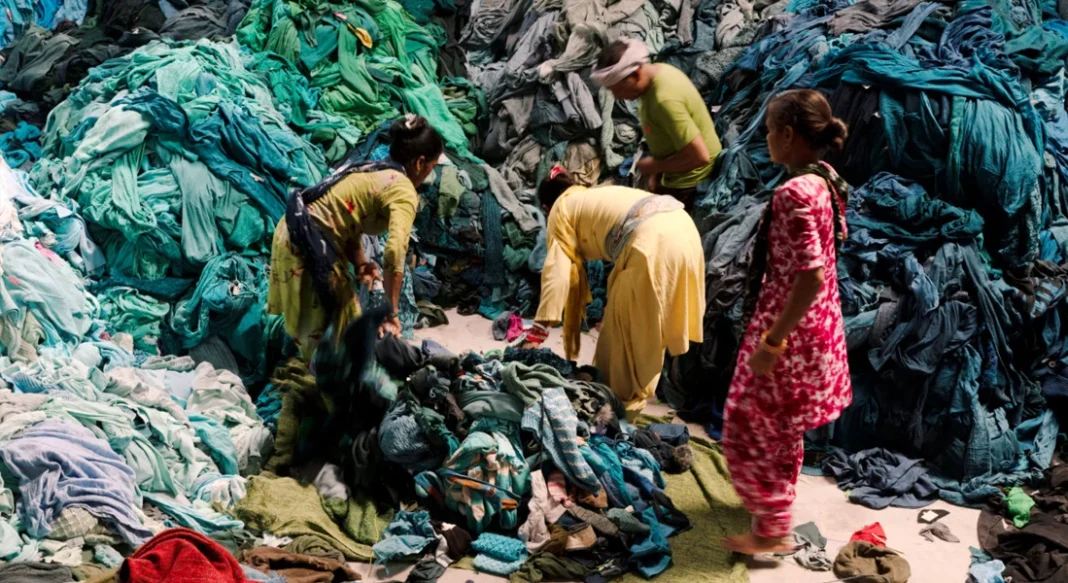
NEW DELHI: In the industrial outskirts of Panipat, the air is thick with the scent of petrichor and polyester. Here, the rhythm of the city is dictated by the mechanical thrum of the ‘Garnett’ machines — giant, toothy rollers that tear apart the world’s discarded dreams.
For decades, Panipat was known as the ‘Cast-off Capital of the World’. It was the final destination for the West’s ‘shoddy’ wool — the moth-eaten sweaters and discarded overcoats that were shredded into low-grade yarn for blankets. But in 2026, a high-stakes ‘ploy’ is underway. Panipat is no longer just recycling; it is upcycling.
Panipat has been the ‘handloom heart’ of India for centuries. It is a city of two halves. One half is where the machines run, shredding clothes for fibre. The other half is where the rhythmic clack-clack of thousands of high-end looms produces the ‘kosher’ fabrics that line the shelves of Ikea, Walmart, and luxury hotels from Dubai to New York.
Meet Rajesh Khanna, a third-generation factory owner whose lineage in textiles predates the recycling boom by decades. On his desk lies a sample of a ‘barrack blanket’, the heavy, grey, 100-pc wool staple of the Indian Army. “People think we only deal in trash,” he says, “but Panipat provides 90 per cent of the blankets for the Indian armed forces. That isn’t ‘shoddy’ work; that is precision engineering in wool.”
The ‘kosher’ backbone
Beyond the recycling bins, Panipat is a $4-billion-plus hosiery and home-textile juggernaut. It is the city that essentially ‘dresses’ the modern Indian home. If one has bought a tufted carpet, a heavy jacquard curtain, or a high-GSM bathmat in a Delhi mall, chances are it was birthed in a Panipat industrial estate.
The city’s hosiery sector has quietly evolved to compete with the giants of Ludhiana and Tirupur. While Ludhiana dominates the fashion knitwear market, Panipat has carved a niche in functional hosiery— thermals, industrial-grade socks, and heavy winter-wear.
“In 2026, the ‘kosher’ side of our business has gone high-tech,” says Amit Batra, an exporter of hand-tufted rugs.
“We aren’t just weaving; we are innovating. We’ve integrated anti-microbial treatments and fire-retardant fibres into our traditional handloom durries. We are taking the skills of the 18thcentury weaver and applying them to 21st century safety standards.”
Export or extinguish
The urgency behind Panipat’s 2026 transformation isn’t just environmental; it’s existential. In early 2026, the European Union’s Carbon Border Adjustment Mechanism (CBAM) and Extended Producer Responsibility (EPR) laws finally came into full effect. Indian exporters now face heavy ‘carbon taxes’ unless they can prove their products – both recycled and virgin – are made with sustainable energy and ethical labour.
This has triggered a ‘Green Arms Race’ in the city. Between 2024 and 2026, the cluster underwent a Rs 5,000-crore technology upgrade. The old mechanical shredders, which shortened fibre lengths and produced weak yarn, have been replaced by chemical recycling units and high-speed shuttle-less looms.
This allows Panipat to blend its traditional ‘kosher’ virgin wool with high-quality recycled fibres, creating a ‘hybrid yarn’ that meets European strength standards while hitting the SDG 12 goals for circularity.
Changing social fabric
This shift has fundamentally altered the social fabric of the city. Traditionally, the ‘rag-picking’ and sorting industry was the domain of the most marginalised. In 2026, under the Pradhan Mantri Kaushal Vikas Yojana (PMKVY), thousands of these workers have been upskilled into ‘fabric technicians’.
The transformation is being fuelled by an unprecedented partnership between Panipat’s micro, small and medium enterprises (MSMEs) and global fashion giants. In 2025, a consortium of brands – including H&M, Inditex, and Aditya Birla Fashion – launched ‘Project Re-Spun’.
Rather than just donating to ‘green causes’, these corporates are investing their CSR funds directly into Panipat’s common facility centres. They have funded decarbonisation plants that provide green hydrogen to the textile mills, ensuring the recycling and weaving processes are carbon-neutral. This investment has turned Panipat into a ‘testing ground’ for circular fashion globally.
While the recycling story is flashy, the real ‘gold’ of Panipat remains its floor coverings. The city is the global hub for hand-knotted and hand-tufted carpets. Unlike the silk carpets of Kashmir, Panipat’s carpets are built for the heavy-duty demands of global hospitality.
Traceability triumph
The secret weapon in the ‘Panipat ploy’ is the India Circularity Blockchain. Every bale of yarn or carpet leaving the city is geo-tagged. A buyer in Paris can trace a rug back to its specific loom in Haryana, verify the exact amount of water saved in its production, and even see the digital ‘Health Certificate’ of the weaver.
As the global textile industry pivots from ‘fast’ to ‘forever’, Panipat has positioned itself as the world’s most efficient ‘circular hub’. As factory-owner Khanna puts it: “The world thought we were a graveyard for old clothes. They didn’t realise we were actually a womb for the future of fashion.”
Global powerhouse
The garment sector is the highest value-add part of the chain. In 2026, the domestic apparel market in India crossed the $100-billion mark for the first time, driven by a surging middle class and the ‘premiumisation’ of ethnic wear.
The hosiery (innerwear, socks, and leisurewear) market is growing at a CAGR of 12 per cent, significantly higher than the global average of 4-5 per cent. This is largely due to the shift from unbranded to branded products in Tier-2 and Tier-3 cities.
India is one of the few countries with a ‘fibre-to-fashion’ vertical integration – it grows the cotton, spins the yarn, weaves the fabric, and stitches the garment, all within the same geography.
Panipat is no longer just a regional cluster; it is a global powerhouse for home textiles and sustainable recycling.
It is the city that essentially ‘dresses’ the modern Indian home. If one has bought a tufted carpet, a heavy jacquard curtain, or a high-GSM bathmat in a Delhi mall, chances are it was birthed in a Panipat industrial estate
Fabric of GROWTH
Global rug hub: Panipat accounts for nearly 75 per cent of India’s total exports of hand-tufted carpets and highend durries.
Blanket king: It produces over 90 per cent of the blankets used by the Indian Railways and the Indian armed forces.
Circular economy giant: Panipat processes over 1,00,000 tonnes of discarded wool and cotton monthly. It is the only cluster in the world capable of converting ‘shoddy’ waste into $50-designer hoodies for the European market.
Hosiery hub: While Ludhiana leads in fashion hosiery, Panipat has captured 35 per cent of the ‘functional hosiery’ market (industrial socks, thermal wear, and protective garments).