Eighty Per Cent of a World Market, on ₹79 Crore a Year

Blitz India Business

NEW DELHI: India dominates global makhana production more completely than it dominates almost any other agricultural commodity. The central scheme backing it is one of the smallest on the books.

The Government’s backgrounder on the makhana sector, issued on 19 August, restates a market position that is unusual in Indian agriculture: India is the world’s largest producer of makhana, with a share of global output put at close to 80 per cent, concentrated overwhelmingly in Bihar. The producing districts are Madhubani, Darbhanga, Sitamarhi, Saharsa, Katihar, Purnea, Supaul, Kishanganj and Araria.

Against that market share, the Central Sector Scheme for Development of Makhana carries an outlay of ₹476.03 crore for the six financial years from 2025-26 to 2030-31 — an average of ₹79.34 crore a year. The National Makhana Board that administers it was announced in the Union Budget for 2025-26, notified by gazette on 14 September 2025 and launched by the Prime Minister in Bihar the next day. For a business reader the ratio is the point: a commanding global share is being backed with an outlay smaller than a single mid-sized food-processing plant.

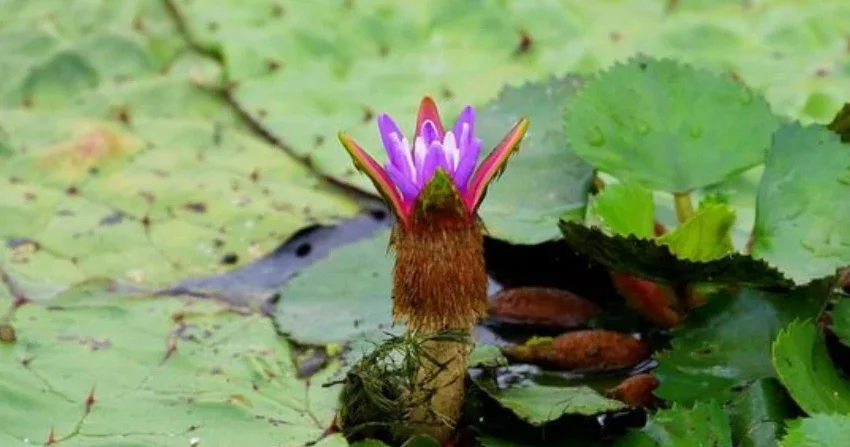
The asset base: Euryale ferox in cultivation. Makhana is grown in ponds and wetlands rather than on arable land, which is why the sector’s expansion into what the National Makhana Board calls non-traditional areas depends on water bodies rather than on acreage.

₹79.34 crore a year against roughly 80 per cent of world output. Read as a support programme the number is trivially small. Read as capital for seed systems and post-harvest processing, it is a leverage instrument — and it should be judged as one.

At a Glance

• Scheme outlay: ₹476.03 crore, 2025-26 to 2030-31
• Average a year: ₹79.34 crore
• India’s share of world output: about 80 per cent
• Board notified: 14 September 2025; launched in Bihar 15 September 2025
• First board meeting: 12 December 2025, Krishi Bhawan, New Delhi
• Chair: Secretary, Department of Agriculture and Farmers Welfare
• Seed supply: SAU Sabour and CAU Samastipur, Bihar
• Scheme components: research, quality seed, farmer capacity, post-harvest, value addition, branding, export promotion, quality control

The Board’s first meeting, held at Krishi Bhawan in New Delhi on 12 December 2025 and chaired by the Secretary of the Department of Agriculture and Farmers Welfare, is the best available guide to how the money is meant to work. It cleared state annual action plans and allocated budgets across components, but its substantive decisions were about supply chain rather than support price. It recorded the need to consolidate state seed requirements, to be met by the State Agricultural University at Sabour and the Central Agricultural University at Samastipur. It set the National Research Centre for Makhana at Darbhanga and the two universities to train state trainers in value-chain technology. And it named the infrastructure it wants built: grading, drying, popping and packaging.

That last list is a precise statement of where margin currently sits outside the farm gate. Makhana leaves the water as a hard seed and reaches a retail shelf as a light popped kernel in a printed pouch, and the transformation between those two states is where the branded price is made. A grower who sells raw seed captures the commodity price; a producer group that grades, dries, pops and packs captures a multiple of it. Financing that step close to the ponds — rather than in a distant processing town — is the difference between a rural value chain and a raw-material catchment.

The commercial opportunity is export, and the constraint is standardisation. A superfood category sells internationally on consistency, food-safety documentation and grade certainty, none of which a fragmented cottage-processing base delivers reliably. The scheme names quality control and export promotion as components, which is the right diagnosis. What would let investors and buyers act on it is data: published grade standards for makhana, district-level processing capacity, and an export series by destination and by value rather than volume alone. A sector with 80 per cent of a world market has the rarest thing in commodity trade — pricing power — and the transparency to use it is cheaper to build than the market share was.

Latest News

Digital Public Infrastructure Is India’s Quietest Export

Blitz India Business NEW DELHI: Eleven economies are comparing...

A Subsidy Paid in Molecules, Not Rupees

Blitz India Business NEW DELHI: The new piped-gas incentive...

Exports Grew Nearly Three Times Faster This Quarter

Blitz India Business NEW DELHI: April-June 2026-27 exports rose...

₹29,534 Crore of Steel Now Meets a Carbon Bill

Blitz India Business NEW DELHI: The Department of Commerce...

India Economy, Trade and Policy Highlights

Q1 Growth Is 2.7 Times the Full-Year Rate Cumulative merchandise...

Topics

Digital Public Infrastructure Is India’s Quietest Export

Blitz India Business NEW DELHI: Eleven economies are comparing...

A Subsidy Paid in Molecules, Not Rupees

Blitz India Business NEW DELHI: The new piped-gas incentive...

Exports Grew Nearly Three Times Faster This Quarter

Blitz India Business NEW DELHI: April-June 2026-27 exports rose...

₹29,534 Crore of Steel Now Meets a Carbon Bill

Blitz India Business NEW DELHI: The Department of Commerce...

India Economy, Trade and Policy Highlights

Q1 Growth Is 2.7 Times the Full-Year Rate Cumulative merchandise...

RRB Loan Book Crosses ₹5.78 Lakh Crore

Blitz India Business NEW DELHI: Regional Rural Banks grew...

Mauritius Widened India’s Export Basket More Than the UAE Did

Blitz India Business NEW DELHI: Measured by export value,...

Services Are Now Half of Everything India Sells Abroad

Blitz India Business NEW DELHI: India exported US$441.8 billion...
spot_img