




Blitz India Business
NEW DELHI: India’s political economy may be approaching an inflection point. For decades, electoral competition has revolved around welfare—free food, subsidised housing, cash transfers, farm support and other state benefits.
These programmes remain essential in a country where millions still face economic insecurity. But they are no longer sufficient to satisfy India’s largest and most politically consequential constituency: its youth.
The recent wave of student protests over examination irregularities, recruitment delays and the credibility of competitive examinations should not be seen merely as an administrative crisis. It signals something deeper. Young Indians are questioning whether the country’s institutions still provide a fair pathway from education to employment. Their frustration stems less from the absence of subsidies than from the absence of opportunity.
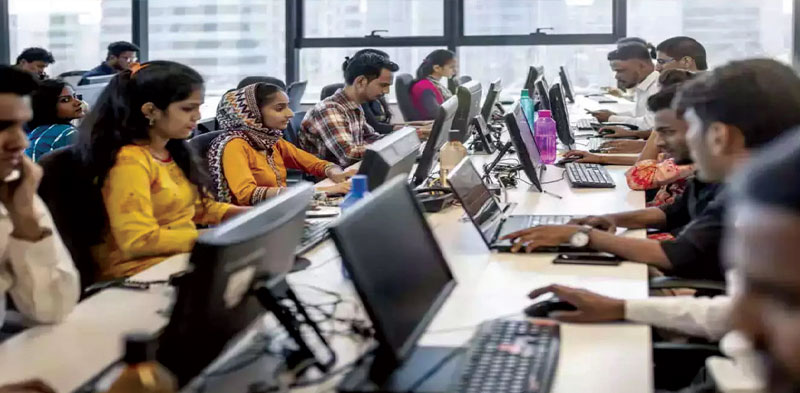
India’s demographic dividend has always rested on a simple assumption: a young population would translate into faster growth because education, skills and employment would reinforce one another. But that virtuous cycle is under strain. The economy continues to post robust GDP growth, yet quality employment has lagged behind. Labour force participation has improved and the headline unemployment rate has moderated, but these indicators conceal a more uncomfortable reality. Too many jobs remain informal, low-productivity and poorly paid. For millions of educated young Indians, the challenge is not simply finding work, but finding work that justifies years of investment in education.
Young Indians today are questioning whether the country’s institutions still provide a fair pathway from education to employment. Their anger is directed less at the absence of subsidies than at the absence of opportunity.
This disconnect is reshaping politics. Previous generations often viewed government primarily as a provider of welfare and public services. Today’s youth increasingly see it as the guarantor of a level playing field. They expect transparent examinations, timely recruitment, reliable public institutions and an economy capable of creating productive employment. When these expectations are not met, welfare offers only limited political consolation.
The economic implications are equally significant. A workforce trapped in low-productivity employment suppresses household incomes, weakens consumption and constrains long-term growth. India’s much-discussed middleclass squeeze cannot be understood without recognising the shortage of well-paying jobs.
The debate must therefore shift from welfare to productivity. The objective is not to roll back social protection but to complement it with reforms that expand opportunity. India needs labour-intensive manufacturing, deeper integration into global value chains, higher private investment, better urban infrastructure and an education system aligned with labour market needs.
India’s demographic dividend remains its greatest comparative advantage, but it is also a wasting asset. Demography creates potential, not prosperity. Without sustained job creation, rising p r o d u c t i v i t y and credible institutions, today’s dividend could become tomorrow’s discontent. The real choice before policymakers is not between welfare and reform. It is between managing economic vulnerability and creating economic opportunity.