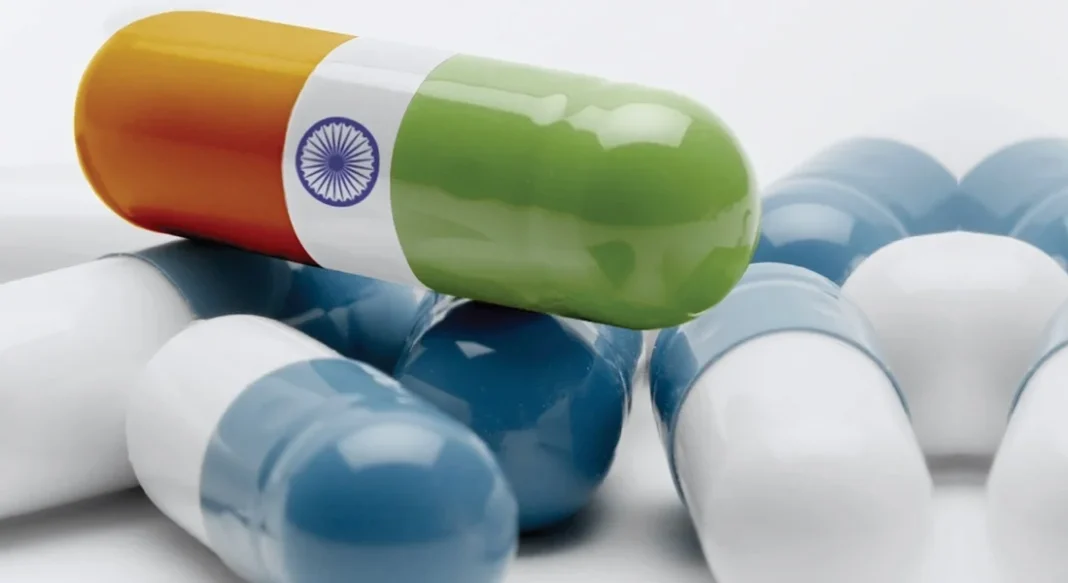
Pills progress : From purely synthetic & chemical generics to biosimilars, Indian pharma entering a new realm

For four decades, the global healthcare narrative regarding India was as predictable as it was vital: high-volume, low-cost, and chemically synthesised. India was the world’s “medicine cabinet,” filled with the affordable blue-and-white capsules that kept healthcare systems in the West from insolvency.

But as the sun rises over the sprawling R&D campuses of Hyderabad’s Genome Valley in early 2026, that old script is being shredded in real-time.

The Indian pharmaceutical industry is now executing its most daring manoeuver since the landmark Patent Act of 1970. Labeled “Pharmacy of the World 2.0,” this shift represents a strategic departure from the “copy-paste” model of simple generics toward the high-stakes, high-margin frontier of biologics, biosimilars, and next-generation mRNA vaccines.

Beyond the generic trap

The catalyst for this transformation is a harsh economic reality. For years, Indian drug makers have been squeezed in the US market by aggressive price erosion and a commoditised landscape where margins often dipped into the single digits. While Indian firms command 40 per cent of the US generic volume, they capture less than 15 per cent of the value.

“We reached a point where volume was no longer enough to sustain the R&D required for the next decade,” says Anirudh Sharma, a senior biotech analyst at a leading Mumbai brokerage. “To survive, India had to stop just making the pills and start mastering the cells. This isn’t just an upgrade; it’s an evolution from chemistry to biology.”
Biologics — medicines grown in living cells rather than synthesised in a test tube — represent the pinnacle of modern medicine. They are also notoriously difficult to manufacture. Unlike a simple aspirin molecule, a biologic is a massive, complex protein. Mastering this “living chemistry” is the heartbeat of the 2.0 movement.

Shakti: The billion-dollar blueprint

The backbone of this transition is the Government’s Biopharma Shakti (Strengthening Health and Knowledge Technology in India) Mission, a ₹10,000 crore ($1.2 billion) federal war chest unveiled in the 2026 Union Budget.

The mission is designed to bridge the “valley of death” between laboratory discovery and industrial-scale manufacturing. By establishing three state-of-the-art strategic biopharma hubs, the Government is providing the expensive “cold-chain” logistics and shared fermentation infrastructure that smaller biotech firms previously couldn’t afford.

Crucially, the mission has empowered the Central Drugs Standard Control Organisation (CDSCO) to implement the “biofast” track. This AI-integrated approval system has slashed the time-to-market for biosimilars by nearly 40 per cent, allowing Indian firms to hit global “patent cliffs” the moment they occur. This is essential, as biologics worth over $100 billion are set to lose exclusivity by 2028.

The ‘semaglutide’ moment

Nothing illustrates this new prowess better than the events of March. As patents for blockbuster weight-loss drugs like semaglutide (the engine behind Ozempic) began to expire in various jurisdictions, a consortium of Indian firms, including Biocon Biologics and Dr. Reddy’s, was ready.

While Western manufacturers struggled with supply chain bottlenecks for the complex peptide, Indian facilities, upgraded under the Shakti mission, scaled production in record time. This wasn’t just a win for the balance sheet; it was a signal to the world that India could now handle the most complex injectable biologics on the planet.

However, the road ahead is not without its “biologic wall.” Despite the hype, India’s R&D expenditure as a percentage of revenue still sits at a modest 4.3 per cent, compared to the 18 per cent to 22 per cent seen in the United States.

While the Shakti mission is a massive leap forward, critics argue that India must fix its “innovation deficit”, filing nearly nine times fewer biotech patents than the US, to truly wear the “innovation throne.”

Vaccine sovereignty 2.0

The lessons of the 2020-2022 pandemic have been institutionalised. India has moved from being a “fill-and-finish” site for Western vaccines to a global hub for mRNA and viral-vector platforms.

By mid-2026, India is expected to supply over 70 per cent of the world’s HPV vaccines, significantly lowering the cost of cervical cancer prevention in low-income countries. This shift from “emergency response” to “preventative powerhouse” is the cornerstone of India’s new diplomatic and economic leverage on the global stage.

The API renaissance

The API renaissance

The China+1 strategy is no longer a boardroom theory; in 2026, it is a visible industrial reality across India’s coastline. For 30 years, India’s dependence on China for Active Pharmaceutical Ingredients (APIs) — the “raw flour” of the drug world — was a glaring vulnerability, reaching 70 per cent for some critical life-saving drugs.

Today, the Production Linked Incentive (PLI) scheme 2.0 has turned the tide. As of March, over ₹4,800 crore in fresh investment has flowed into domestic API manufacturing.

The result is palpable: India has successfully restarted production of Penicillin G and 7-ACA, critical antibiotic intermediates that had been entirely ceded to Chinese competitors decades ago.

The emergence of Integrated API Mega-Parks in Andhra Pradesh and Gujarat has changed the math. By offering centralised effluent treatment and subsidised power, these parks have neutralised China’s traditional 20 per cent cost advantage.

While the global supply chain remains interconnected, India has effectively built a “fortress pharma” model. The goal is to reduce API import dependency to under 40 per cent by 2028 — a target that, for the first time, looks achievable.

By positioning itself as the “reliable alternative origin,” India is capturing massive contracts from Western firms seeking to insulate themselves from geopolitical volatility.

The Indian pharmaceutical industry is now executing its most daring manoeuver since the landmark Patent Act of 1970. Labeled “Pharmacy of the World 2.0,” this shift represents a strategic departure from the “copy-paste” model of simple generics toward the high-stakes, high-margin frontier of biologics, biosimilars, and next-generation mRNA vaccines.

Code over chemicals

Code over chemicals

In the labs of 2026, the most important tool isn’t a microscope — it’s a GPU. The convergence of silicon valley-style computing and “genome valley” biology has birthed a new era of AI-driven drug discovery in India.

The Government’s BODH (Benchmarking Open Data Platform) has finally unlocked the data silos of Indian hospitals and research centers. Using this anonymised “big data,” Indian firms are using generative AI to predict how new molecules will behave in the human body before they ever enter a clinical trial.

Major players like Sun Pharma have reported a 35 per cent reduction in the “design-to-synthesis” cycle for oncology molecules.

In February 2026, Dr. Reddy’s announced it had identified a promising new lead for neurodegenerative diseases in just 18 months — a process that traditionally takes over three years.

Meanwhile, the start-up ecosystem in Bengaluru is thriving; firms like Peptris are using AI “Oracle” systems to find new uses for old, discarded drugs, a process known as drug repurposing.

By shifting from “trial and error” to “digital prediction,” India is bypassing the multi-billion-dollar price tags of traditional Western R&D. In the world of pharmacy 2.0, the smartest molecule wins, and in 2026, that molecule is increasingly being designed by an Indian algorithm.

Comparative analysis of biopharma manufacturing & R&D

Metric India (Pharmacy 2.0) China (Strategic Rival) USA (Innovator Standard)
R&D intensity 4.3% of revenue 7.5% of revenue 19.5% of revenue
Manufacturing Cost Index 45 (baseline: US=100) 52 (Rising labour costs) 100 (high regulatory / labour)
Primary technology Biosimilars & mRNA Novel biologics & ADCs Gene therapy & cell medicines
Regulatory speed “BioFast” (12–18 months) NMPA priority (14 months) FDA-accelerated (10 months)
Government policy ₹10k crore Shakti Mission “Made in China 2025” (phase 2) TrumpRX / reshoring credits
Workforce 100k+ bio-engineers / year 150k+ PhDs / year High-cost expert talent

Latest News

Of digital Dr & silicon steths : Tech revolution has turned India into the world’s hospital

Blitz Bureau NEW DELHI: In a sun-drenched clinic in the...

IBC: Reform sans speed: Time-bound resolution of non-viable ventures still remains elusive

Blitz Bureau NEW DELHI: India’s ease-of-doing-business story was never meant...

The jewel of NCR gets a new airport in Noida; PM inaugurates UP’s upcoming mega logistics hub

MANOJ SAXENA NEW DELHI: In a historic moment for India’s...

SEA CHANGE : India emerging as a master of the ocean through tech adoption and port-led development

The salt-crusted air at Mundra Port in Gujarat carries...

Trust deficit widens at Tata Trusts: Srinivasan quits

Blitz Bureau NEW DELHI: The power struggle within the Tata...

Topics

IBC: Reform sans speed: Time-bound resolution of non-viable ventures still remains elusive

Blitz Bureau NEW DELHI: India’s ease-of-doing-business story was never meant...

Trust deficit widens at Tata Trusts: Srinivasan quits

Blitz Bureau NEW DELHI: The power struggle within the Tata...

DUNKED IN: Jubilant Food gives up on Dunkin’; will not renew its franchise licence

Blitz Bureau NEW DELHI: Dunkin’ (formerly Dunkin’ Donuts) is preparing...

Adani Ports targets 1 bn tn cargo by 2030 Crosses 500 mn tn milestone

Blitz Bureau NEW DELHI: Chairman of Adani Group Gautam Adani...

The long road from 17 to 25

Blitz Bureau NEW DELHI: For decades, global manufacturing operated on...
spot_img