




Blitz Bureau
NEW DELHI: India’s automobile industry is entering a decisive transition phase, moving beyond its long-standing dependence on internal combustion engine (ICE) vehicles towards a technology-led mobility ecosystem anchored in electrification, digital integration and advanced manufacturing.
The shift, driven by policy incentives, energy security concerns and global supply chain realignments, is steadily redefining the structure of one of India’s most critical industrial sectors.
The sector contributes about 6–7 per cent to the country’s gross domestic product and nearly 35 per cent of manufacturing output, according to the Ministry of Heavy Industries. It also supports a large employment base across manufacturing, services and ancillary industries.
While India remains one of the world’s largest producers of two- and three-wheelers, the future trajectory of the industry is increasingly being shaped by electrification and software-driven mobility.
While India remains one of the world’s largest producers of two- and three-wheelers, the future trajectory of the industry is increasingly being shaped by electrification and software-driven mobility.
Electrification gathers pace
Electric mobility has emerged as the central pillar of India’s automotive transition. Government policy, led by the NITI Aayog, targets 30 per cent electric vehicle penetration by 2030, with a clear focus on reducing oil imports and lowering emissions.
Multiple policy instruments have been deployed to accelerate adoption. These include the FAME incentive scheme, the Production Linked Incentive (PLI) scheme for automobiles and components, and the ACC battery manufacturing programme.
In addition, the PM E-DRIVE scheme, notified in 2024 with a multi-year outlay, aims to support electric two-wheelers, three-wheelers, buses and charging infrastructure.
Electric mobility adoption, however, remains uneven across segments. Penetration is highest in three-wheelers, where electrification has gained commercial traction, followed by two-wheelers. Passenger vehicles continue to see relatively slower adoption due to higher upfront costs and limited charging infrastructure.
Software-defined mobility
Beyond electrification, the industry is undergoing a deeper transformation towards connected and intelligent mobility systems.
Vehicles are increasingly incorporating telematics, embedded software, artificial intelligence and over-the-air update capabilities. This is turning automobiles into data-enabled platforms rather than purely mechanical products.
Industry observers note that the convergence of automotive engineering with electronics and software is likely to reshape value chains, with greater emphasis on semiconductors, embedded systems and digital services.
The transition aligns with India’s broader push to expand its electronics manufacturing and semiconductor ecosystem.
Localisation at the core
India’s policy approach has placed strong emphasis on localisation and value addition. The PLI scheme for the automobile sector, with a substantial financial outlay, is designed to incentivise investment in advanced automotive technologies, including electric and hydrogen-powered vehicles.
According to official data, dozens of manufacturers have been approved under the scheme, spanning original equipment manufacturers (OEMs) and component suppliers.
The parallel focus on battery manufacturing through the ACC PLI scheme is aimed at addressing a critical gap in the EV value chain, as India currently relies heavily on imported battery cells.
Government and parliamentary responses in the Parliament of India have acknowledged that localisation in EV components remains a work in progress, particularly in high-value segments such as battery chemistry and semiconductors.
Infrastructure gaps persist
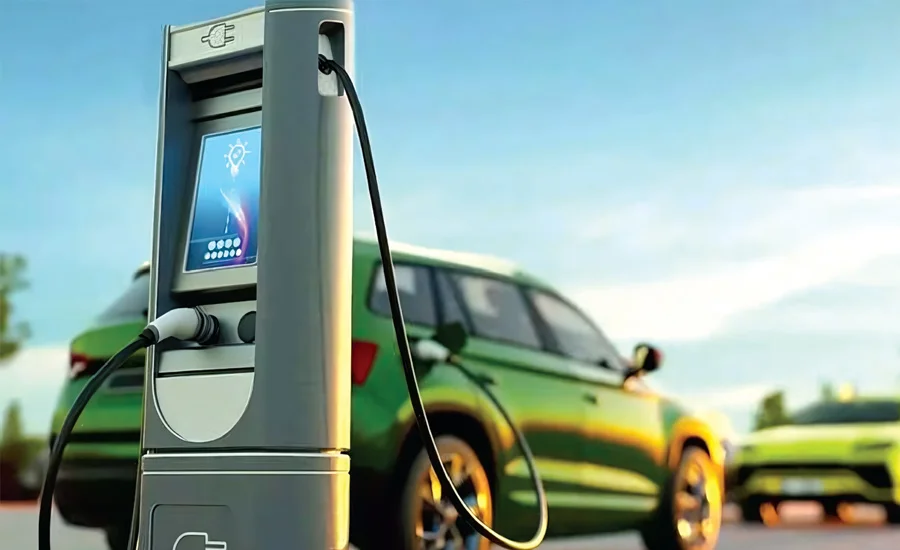
Charging infrastructure has expanded steadily in recent years, with installations increasing across urban centres and key highways. However, availability remains uneven, particularly in smaller cities and rural areas.
This has implications for passenger EV adoption, which remains sensitive to range anxiety and infrastructure access.
At the same time, India’s mobility structure — dominated by two-wheelers and shared transport — has enabled faster electrification in segments where usage patterns are more predictable.
Global supply chains
India’s transition is also being shaped by global developments. As companies seek to diversify manufacturing beyond China, India is emerging as a viable alternative for automotive and EV production.
The country’s advantages include cost competitiveness, a large domestic market, and a growing base of engineering talent.
Key manufacturing clusters are expanding in states such as Tamil Nadu, Gujarat, Maharashtra and Karnataka, with increasing investment in EVs and components.
Despite the momentum, several structural challenges continue to constrain the pace of transition.
These include dependence on imported battery materials, limited domestic semiconductor production, high EV acquisition costs, and evolving regulatory and infrastructure frameworks.
Industry participants also highlight the need for greater clarity on long-term policy support, particularly as global EV markets undergo rapid technological shifts.
India’s automobile sector is no longer defined solely by vehicle production. It is evolving into a broader mobility ecosystem that integrates manufacturing, technology and services.
The transition reflects a shift from fuel-driven transport to energy-efficient systems, and from mechanical engineering to software-enabled platforms.
If supported by sustained policy alignment and technological investment, the transformation could position India as a significant player in the global mobility landscape over the coming decade.
EVolving
India’s position in the global electric vehicle race remains distinct from that of China, Europe and the United States.
While advanced economies are driven by passenger EV adoption, India’s growth is concentrated in mass mobility segments, particularly two- and three-wheelers.
According to the NITI Aayog, the country is targeting 30 per cent EV penetration by 2030, supported by demand incentives and manufacturing policies.
India’s competitive edge lies in cost-efficient production and a large domestic market. However, it lags behind global leaders in battery manufacturing, advanced EV technologies and export scale.
Despite these constraints, India is emerging as a key market for affordable electric mobility and is expected to play an important role in supplying low-cost EV solutions to developing economies.
Hub for parts
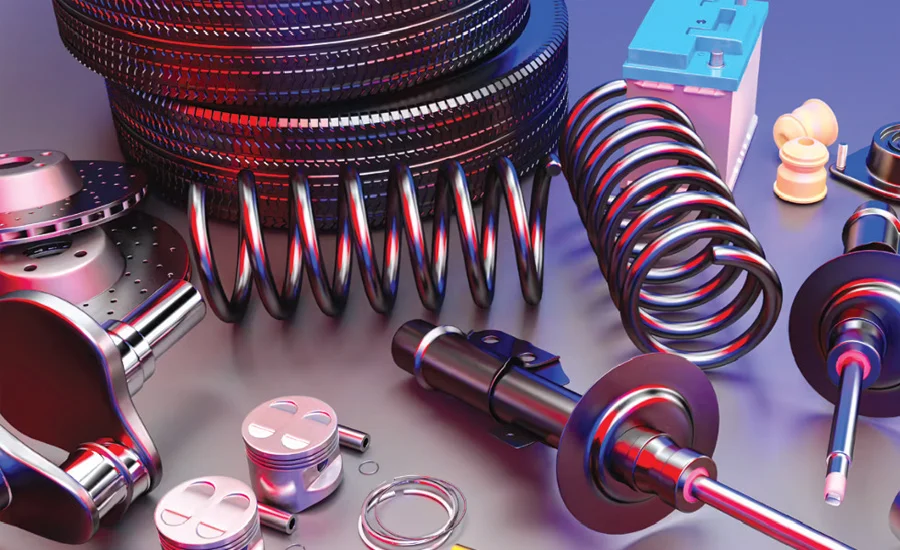
India is strengthening its position as a global hub for auto component manufacturing, supported by a mature supplier base and policy incentives.
The country produces a wide range of components, including mechanical systems, electronics and increasingly EV-specific parts such as power electronics and battery systems.
The Ministry of Heavy Industries has prioritised localisation through the PLI scheme, aimed at boosting domestic value addition and reducing import dependence.
Global manufacturers are increasingly sourcing components from India as part of supply chain diversification strategies.
With its cost competitiveness and engineering capabilities, India is well placed to expand its role in global automotive supply chains, particularly as the industry shifts towards electric and software-driven mobility systems.