




Blitz Bureau
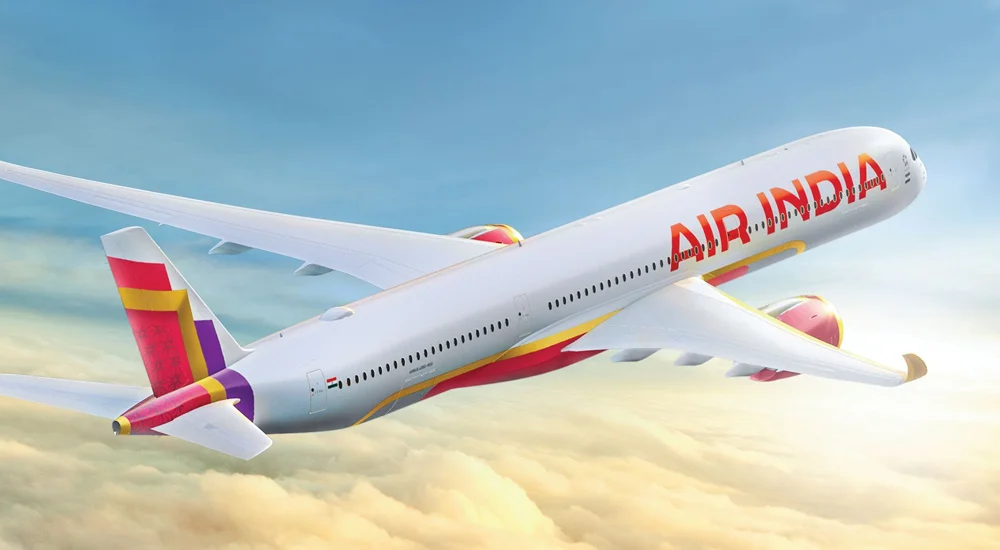
NEW DELHI:The skies over India have become a theatre of shifting fortunes. For years, the narrative was centered on the “Maharaja’s” grand return, but the latest OAG (Official Aviation Guide) data reveals a starkly different reality: a strategic retreat by Air India that has left the door wide open for foreign carriers to feast on India’s booming international demand.
The West Asia crisis, which escalated sharply in early 2026, has proven to be the ultimate stress test. With aviation turbine fuel (ATF) prices doubling and critical air corridors over the Gulf restricted, Air India has been forced to take a “back seat.”
Between March and May, the airline’s international capacity plummeted by 17.5 per cent, as it suspended or curtailed operations on 29 key routes. The “crown jewels” of its network — non-stop services like Delhi-Chicago, Delhi-Newark, and Mumbai-New York — have been sidelined to preserve operational stability and combat a staggering ₹22,000 crore loss.
While the Maharaja recalibrates, foreign rivals are aggressively moving in. According to OAG, the share of international scheduled flights from India operated by foreign airlines surged to 58.4 per cent this spring, up from 51.2 per cent a year ago.
These carriers are not just filling the gap; they are capitalising on a fundamental shift in passenger behaviour. As travellers grow wary of connecting through conflict-prone Gulf hubs, European and East Asian carriers are presenting themselves as the new “safe passage.”
Lufthansa & Swiss: The Lufthansa Group has been the most predatory, increasing its India-origin flights by 39 per cent. Swiss, in particular, saw a massive 76 per cent jump in its Delhi-Zurich frequency to capture US-bound traffic.
KLM: The Dutch carrier increased its footprint by 19.5 per cent, turning Amsterdam into a primary gateway for Indian professionals.
Cathay Pacific: With West Asian routes disrupted, Cathay is rerouting the “India-to-USA” flow through its Hong Kong hub, providing a stable alternative to the turbulent West Asian corridors.
A new equilibrium?
The irony is palpable. At a time when India’s outbound travel is reaching record highs, more than half of those passengers are now flying under foreign flags. For Air India, the crisis has delayed its “Vihaan.AI” transformation goals, turning a mission of global dominance into a battle for survival.
As the West Asia conflict continues to redraw the world’s flight paths, the OAG data suggests that for now, the sky belongs to those who had the capacity — and the geography — to pivot fastest.