




Blitz India Business
NEW DELHI: The Supreme Court’s direction to the Centre this week has a dimension that belongs on a business page as much as a national one. On Friday a Bench of Justices P S Narasimha and Alok Aradhe sought a detailed roadmap for permanent NEET-UG reform and asked specifically about progress on shifting the examination entirely to computer-based testing, together with the data-protection and cybersecurity safeguards such a move requires. The matter is listed again for July 27. Behind that judicial language sits one of the largest assessment-infrastructure questions any country has faced.
Consider the operational arithmetic. NEET-UG is sat by more than twenty million candidates, and a full CBT transition requires enough secure, invigilated, connected terminals to seat them within a workable window — along with calibrated question banks, biometric verification, encrypted delivery, resilient power and connectivity at district-level centres, and continuous third-party auditing. That is a national procurement and systems-integration programme, not a software purchase. It also imposes a psychometric requirement that is genuinely difficult: candidates drawing different question sets must face demonstrably equivalent difficulty, or the reform trades one fairness problem for another.
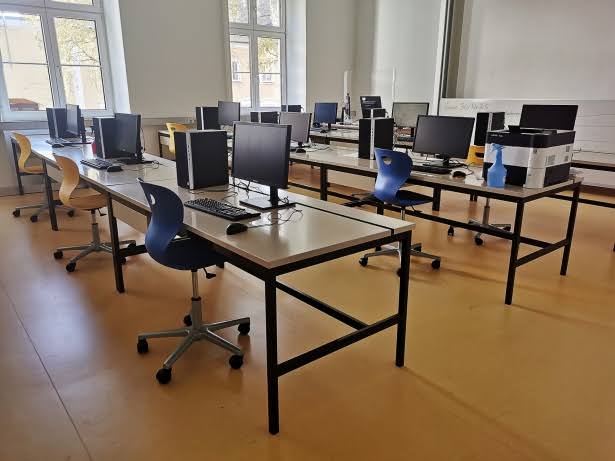
A systems programme, not a software purchase: A full CBT transition for an examination of over twenty million candidates requires secure terminals, calibrated item banks, biometric verification and district-level connectivity — the infrastructure question now before the Court.
India built a payments system the world studies. Assessment is the same class of problem — national scale, zero tolerance for compromise, and a public that must trust the output completely.
By the Numbers
• Scale: a single examination sat by 20 million-plus candidates
• Court ask: CBT roadmap plus data-protection and cybersecurity safeguards
• Requirements: item-bank calibration, biometrics, connectivity, audit trails
• Next hearing: July 27
The read-across for the private sector is real but should be stated carefully, because nothing here is yet a tendered contract. The capability set involved — secure testing platforms, identity and biometric verification, network and data-centre capacity, cybersecurity auditing, and the physical build-out of examination centres in smaller districts — maps onto Indian IT services, systems integration and digital-infrastructure providers that have executed comparable national programmes before. India’s track record with digital public infrastructure, from identity to payments, is precisely the institutional experience that makes a project of this ambition credible rather than fanciful.
The constructive way forward is to treat assessment as national infrastructure and to build it with the standards that implies: open technical specifications, independent security audits published rather than filed, staged rollout with honest pilots, and equity safeguards so that a candidate in a small district is not disadvantaged by connectivity or unfamiliarity with a terminal. Done properly, the investment serves far more than one examination — a secure national assessment platform can carry recruitment tests, university entrance and professional certification for decades. That is the return worth underwriting, and the Court’s insistence on a roadmap rather than a reassurance is what makes it likelier to be built well.