




MJ Akbar
NEW DELHI: His salary was top tier, but it was still a salary, not a lawyer’s treasury. Braj was allotted a dress allowance of a hundred pounds when he left for England to study, but told to avoid Oxbridge, where he could turn into a fop. But there could be no compromise on dress standards. He was instructed to purchase three lounge suits at a cost of 30 guineas from top-of-the-line Henry Poole, although cheaper tailors offered the same quality at Savile Row. He bought a cheaper suit from Austin Reed, but auxiliaries included an opera hat and patent leather shoes. He discovered that times had changed when his Irish graduate valet at the London School of Economics (LSE) stole the Poole suits and all his belongings kept in two suitcases under the bed.
The author’s maternal inheritance was culturally more Indian but politically pro-establishment. Their ancestor was Pandit Ganga Ram, a Kashmiri purohit who settled down in Lahore to serve Punjab’s great Maharaja Ranjit Singh in 1813 and received a jagir, or landed estate. His maternal grandfather was doyen of Lahore; his father was 18 and mother Rameshwari 15 when they were married in 1902.
Flavour of the age
The Dewan was known as Bhaijanji, roughly translated as ‘Respected Elder Brother’. A scholar in Arabic and Persian, he was as familiar with Sanskrit religious texts as he was with the Quran. English became a natural addition to the linguistic repertoire. He was a graduate of Government College in Lahore. Bhaijanji went to the Round Table Conferences of 1930 and 1931 as a representative of Punjab landlords. The Punjab aristocracy may have been pro-British but it spoke to the British with head held high. This was not always true of Indian princes.
The author’s professor at LSE, the eminent academic Harold Laski, narrated an anecdote which indicates the flavour of that age. The Maharajdhiraj of Darbhanga hosted a dinner at the conference where Ramsay MacDonald (Prime Minister) was seated at his right and Laski to the left. The only sentence that the Maharajdhiraj uttered was: “I hope you like the menu…” That was sufficient for the requirements of British imperialism.
The ambience of Fairfields, their Lahore home, matched Anand Bhawan. Family friends included Sir Muhammad Iqbal, Sir Sundar Singh Majithia, Sir Jogendra Singh, Sir Zulfikar Ali Khan of Malerkotla, Sir Umar Hayat Khan Tiwana, Sir Sikandar Hayat Khan, Sir Shadi Lal, Sir Fazl-i-Hussain, Sir Feroze Khan Noon, Sir Ganga Khan: premiers, ministers, members of the Viceroy’s Council, poets, leaders. Mian Azizuddin, aristocrat and heir of a famous vazir at the court of Maharaja Ranjit Singh, was another friend.
Sin and honour
BK Nehru learnt Hindi, Urdu and English from his mother. She taught her son that the highest sin was telling a lie; and the ultimate definition of honour came from the Raghukul Riti of Tulsi Das’ Ram Charit Manas: Praan jaaye par wachan na jaaye. Celebrations at his janeu ceremony in the winter of 1925 were elaborate, with family and friends descending from all corners, including Saleh Tyabji with his family from Rangoon. The puja lasted for a day; the baradari dinners went on for much longer. The Gayatri Mantra was recited into his ear by a priest who warned that it could not be repeated before women or other castes. The iconoclast in him cut off the top knot the next day.
Between the ages of 10 and 16, ‘Papaji’, or father, taught the young Bijju for an hour every morning, during a prolonged shave with the help of a small mirror and two bowls of hot water. The learning was eclectic: The Astronomical Atlas, geometry, algebra, arithmetic, trigonometry, dynamics, 19th-century English poets, fiction, Panini’s Sutras, Hitopadesh, Kalidas’ Raghuvansha, Latin, French, Persian, Diwan-i-Hafiz. This is education as it was once understood. Hindus, notes the author, began to give up Urdu only after the Muslim League, in yet another display of profound stupidity, announced that it would be the language of Indian Muslims. They forgot to check with Indian Bengali or Tamil or Malayali Muslims. Language, like culture, is older than any religion.
His mother was an instinctive reformer who brought her talent and spirit to Allahabad, becoming for a while editor of a Hindi magazine for women, Stri Darpan, with the help of Ramakant Malaviya, eldest son of Madan Mohan. The Malaviyas were close family friends even though caste orthodoxy did not permit them to eat in the home of a Kashmiri Pandit. The better elements of the British mores were incorporated seamlessly into conduct. Bijju, for instance, would not conceive of canvassing when elected class representative at the Allahabad University Union. Such things were not done at Oxbridge. He notes that half-a-century later Benazir Bhutto was nearly disqualified when she gave an innocent sherry party for friends on the eve of being elected President of the Oxford Union.
Assimilation process
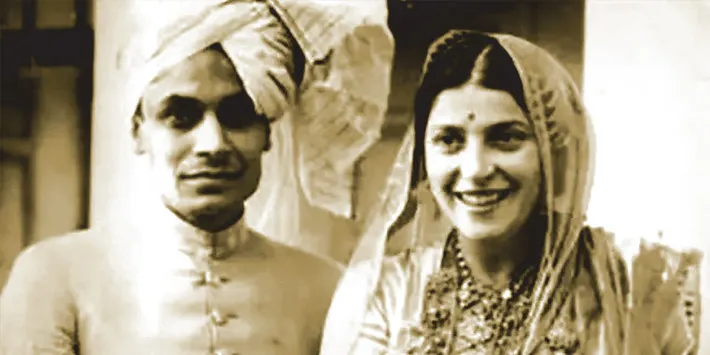
The fascinating process of assimilation took another turn in 1930 when the author fell in love with a Hungarian Jewish fellow student, Fori; the resistance from his father proved to be stronger than from the mother. It took years of what can only be described as bilateral diplomacy before agreement, and then arose an unforeseen hurdle: What would be the marriage ceremony? There was no question of either groom or bride changing faith. When God became a problem, Gandhi proved to be a saviour. He decreed that there was nothing in Hinduism which demanded conversion, and so the marriage could be performed by Hindu rites. This formula was repeated in the more famous marriage of 1942 when Jawaharlal’s daughter Indira married a Parsi, Firoz Ghandy, son of Faredoon Jehangir Ghandy. Gandhi was once again deus ex machina.
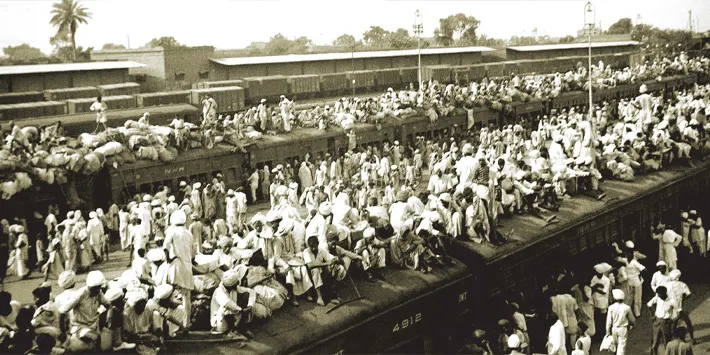
BK Nehru describes the trauma of Partition, the violent disruptor of history, geography and culture, with a thoughtful mind, a secular spirit and a sharp eye; a nightmare which besmirched the dream of his generation, whose barbaric horrors still whisper their brutal incantations in dark corners of the subcontinent’s psyche.
The man who destroyed peace, Muhammad Ali Jinnah, was a political Muslim. He was never a believer Muslim. He had no knowledge of Islam, a mere convenience for his exalted ambitions. One story tells us more than many a tome. Jinnah was travelling with Sir Tej Bahadur Sapru to England by ship. They stopped, as was routine, in Egypt, and went to visit the pyramids. The dragomans asked them if they were Muslims. Both said yes. Sir Tej interjected, in a spirit of friendly teasing, to say that Jinnah was lying. He then recited the kalmia, which proclaims that there is one Allah, and Muhammad is His prophet, to prove his Islamic credentials. Jinnah did not know the kalmia.
“It is one of the bitter ironies of history,” writes BK Nehru, “that a man as modern, as rational, as contemptuous of the laws of his hereditary religion (recall his drinking whisky and eating eggs and bacon for breakfast till his last days as Governor General of Pakistan) should have ended up as the leader of a party based on fundamentalism.” If Jinnah had not died of lung disease in 1948, he would have been assassinated by some Pakistani fundamentalist over bacon and eggs.
Opposed ideologies
BK Nehru compares Jawaharlal and Jinnah, the two Anglicised guardians of opposed ideologies: “The Quaid-e-Azam had no concept of the forces which his words and attitudes had let loose among the followers of his religion. Jinnah, like Jawaharlal, was culturally an Englishman and, like him again, he was also probably an atheist. He continued, even when he occupied Government House in Karachi as Governor General of his Islamic State, to eat bacon and eggs for breakfast and drink his evening Scotch. Such a man could not possibly have foreseen what ultimately happened, any more than could have Jawaharlal, for neither of them understood the essential nature of their respective followings.”
India opted for a civilisational state. Pakistan chose a fundamentalist ideology which restricted ‘purity’ to one faith. In 1947 the ethnic cleansing of Hindus in Pakistan was seen as a national duty, not an aberration.
Bhaijanji was also fortunate in that he did not live to see Partition; he never believed that Punjabis could ever massacre one another. But the poison sown by Jinnah infected the soul of Punjab. Bhaijanji passed away in 1945. He would have died of a broken heart in 1947. BK Nehru reports the tragedy with the philosophical calm of a humanist; he never raised his voice in conversation, he never raises his voice in print.
In 1950 he was posted to Washington, the year Pakistan Prime Minister Liaquat Ali Khan came for his first official visit to America. Pakistan Foreign Secretary Ikramullah and Ghulam Ahmed, both old friends, dropped by for a drink. Ghulam Ahmed was brother of the “notorious Hindu hater Aziz Ahmed”. At three in the morning, when drink had loosened his tongue, Ghulam Ahmed told BK Nehru that the only effective way to deal with the forty million Indian Muslims would be to “kill a few, drive out a few and convert the rest”, just as they had done to Hindus who remained in Pakistan.
Indians did not need to kill Indians. Pakistanis, not satisfied with the genocide of 1947, repeated it in 1971, killing millions of their own countrymen, both Hindus and Muslims, a massacre that led to the birth of Bangladesh. 1971 was the year in which Pakistan died.
BK Nehru describes the trauma of Partition, the violent disruptor of history, geography and culture, with a thoughtful mind, a secular spirit and a sharp eye; a nightmare which besmirched the dream of his generation
India opted for a civilisational state. Pakistan chose a fundamentalist ideology which restricted ‘purity’ to one faith. In 1947 the ethnic cleansing of Hindus in Pakistan was seen as a national duty, not an aberration