




Blitz India Business
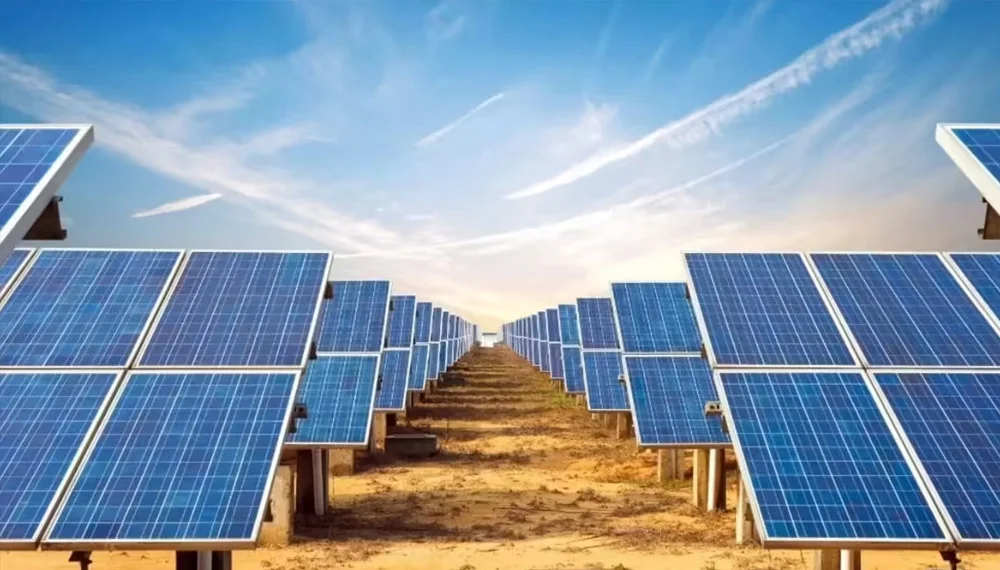
NEW DELHI: Against a crude price that has climbed roughly 30% in a month, the counterweight is being built at a measurable rate. India added a record 29 GW of new solar and wind capacity in the first half of 2026 alone, taking cumulative renewable capacity to about 288.58 GW as of June — solar at 162.15 GW, wind at 57.44 GW and hydropower at 57.24 GW. Non-fossil capacity addition in 2025-26 reached 55.29 GW, the highest in any single year on record, and India now ranks third globally in installed renewable capacity.
The composition of that growth is the commercially interesting part. Solar surged 43%, with rooftop installations expanding rapidly under the PM Surya Ghar scheme — a shift that changes the customer profile of the sector from a handful of utility-scale developers bidding for large tenders to millions of distributed households and small businesses. For manufacturers, financiers and installers, that is a different business with different working-capital dynamics, different distribution requirements and a considerably longer runway. The 500 GW non-fossil target for 2030 is the frame; the run-rate now makes the arithmetic credible.
Run-rate meets target: A record 29 GW of solar and wind added in H1 2026 lifts renewable capacity to about 288.58 GW, with solar up 43% and rooftop growth accelerating — putting the 500 GW non-fossil goal for 2030 within arithmetic reach.
A 30% move in crude is a headline. A record 29 GW in six months is a balance sheet — and it is the second number that changes India’s energy import bill for a decade.
By the Numbers
• H1 2026: record 29 GW of new solar and wind capacity
• Cumulative: ~288.58 GW renewable — solar 162.15, wind 57.44, hydro 57.24 GW
• 2025-26: 55.29 GW of non-fossil additions, a record year
• Target: 500 GW non-fossil by 2030; India third globally
For investors, the value chain reads across in identifiable segments: module and cell manufacturers scaling under localisation incentives, engineering and construction firms with utility-scale order books, rooftop installers and their financing partners, transmission developers connecting resource-rich regions to demand centres, and the storage and power-electronics businesses that the next phase requires. The binding constraints are equally identifiable — grid absorption capacity, the financial health of distribution utilities that sign the offtake contracts, and storage economics — and these are where incremental policy and capital attention is now going.
The constructive read is that India is executing one of the largest energy build-outs anywhere, at a pace that has begun to outrun its own targets. The way forward is to keep capacity growth matched by enabling infrastructure so that generation reaches the meter rather than the curtailment log: transmission ahead of demand, storage procurement at scale, and a continued push on domestic cell manufacturing so more of the value chain is captured onshore. For an economy importing close to 88% of its oil, every gigawatt commissioned is a small, permanent improvement in the terms on which India meets the next supply shock.