




Blitz India Business
NEW DELHI: The Unified Payments Interface processed 23.2 billion transactions worth ₹29.9 lakh crore in May 2026, its highest monthly throughput on record, and averaged around 757 million transactions a day through June. Across FY26 it moved ₹314.23 lakh crore, or roughly $3.56 trillion. It has onboarded 55.49 crore users, runs across 703 banks — against 44 in FY2016-17 — and now accounts for close to half of all real-time digital payment transactions on the planet. The International Monetary Fund has recognised it as the world’s largest real-time payment system by volume.
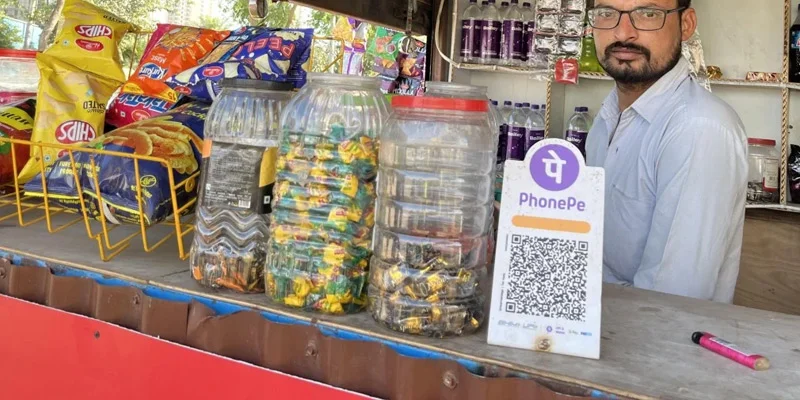
Those numbers are usually cited as an achievement. They are more useful read as an asset. UPI is a piece of national infrastructure with near-universal reach, negligible marginal cost per transaction, and a decade of operational resilience at a scale no comparable system has attempted. The strategic question for India is no longer whether digital payments will work. It is what else can be built on a rail that already reaches into almost every economically active household in the country.
Reach is the asset: a payments rail that touches 55.49 crore users and 703 banks is infrastructure on which credit, insurance and pensions can be distributed at a fraction of conventional acquisition cost.
India built a payments rail and discovered it had built a distribution network. The second fact is worth more than the first.
At a Glance
• Peak month: 23.2 billion transactions worth ₹29.9 lakh crore in May 2026
• Daily average: about 757 million transactions through June
• FY26 value: ₹314.23 lakh crore, roughly $3.56 trillion
• Users: 55.49 crore onboarded as of June 2026
• Banks live: 703, against 44 in FY2016-17
• Global share: close to 50% of the world’s real-time digital payment transactions
• Recognition: identified by the IMF as the world’s largest real-time payment system by volume
• International reach: twelve payment partnerships, including Bhutan, Singapore, the UAE, France, Mauritius, Sri Lanka, Nepal, Qatar, Greece and Cambodia
The most valuable by-product is data that did not previously exist. A small trader with no audited accounts and no collateral now has a verifiable, high-frequency record of receipts. That record is, in credit terms, a substitute for the balance sheet the formal financial system used to demand — and it converts the hardest problem in Indian lending, which is assessing a borrower who has never been assessed, into a tractable one. Cash-flow-based lending to micro-enterprises, distribution of micro-insurance, enrolment into pension products and the disbursement of benefits with a verifiable audit trail are all applications the rail can carry with existing consent architecture.
The structural risks are equally clear and deserve to be named without alarm. Concentration is the first: an economy that routes half its retail transactions through one system has created a single point of failure whose availability requirements are effectively those of the electricity grid, which argues for continued investment in redundancy, offline fallback modes and periodic public stress-testing. Economic sustainability is the second: a zero-cost-to-merchant model that has driven extraordinary adoption still needs a durable answer to who funds the infrastructure at 23 billion transactions a month, and answering it deliberately is better than answering it under pressure. Fraud is the third, and it migrates as fast as the technology does, which makes real-time detection and rapid, standardised redress a permanent operating cost rather than a project. And as the twelve international corridors multiply, interoperability and data-governance standards become a diplomatic exercise as much as a technical one. India built this rail in a decade and gave the world a template. The next decade’s work is turning a payments network into a full financial-inclusion platform — and doing it without ever letting the thing everyone now depends on go down.