Blitz Bureau
NEW DELHI: India is witnessing one of the most significant strategic transformations in its post-Independence history as the country accelerates its march towards defence self-reliance under the vision of Atmanirbhar Bharat.
What was once a long-standing national aspiration is now evolving into a powerful industrial and geopolitical movement aimed at reducing import dependence, strengthening military preparedness, promoting indigenous technology, and positioning India as a rising global defence manufacturing hub.
The transformation comes at a time when the global security environment is becoming increasingly uncertain. Supply-chain disruptions, geopolitical tensions, regional conflicts, and the weaponisation of strategic dependencies have compelled nations across the world to reassess their defence preparedness. For India, the message has become unequivocally clear: national security can no longer rely excessively on foreign military imports.
Against this backdrop, India’s defence self-reliance mission is steadily gaining momentum.
The Government has aggressively pushed indigenous procurement policies, expanded domestic manufacturing capacity, and introduced major structural reforms aimed at creating a self-sustaining defence industrial ecosystem.
For decades, India remained among the world’s largest importers of defence equipment despite possessing one of the largest armed forces globally. Fighter aircraft, artillery systems, missiles, engines, radars, submarines, and advanced defence electronics were largely sourced from overseas suppliers, exposing the country to vulnerabilities related to costs, delays, sanctions, and supply disruptions.
Today, that model is gradually changing.
The Government has aggressively pushed indigenous procurement policies, expanded domestic manufacturing capacity, and introduced major structural reforms aimed at creating a self-sustaining defence industrial ecosystem.
Defence production has crossed record levels in recent years, while the Ministry of Defence has set ambitious long-term targets for manufacturing and exports.
A key pillar of this transformation is the introduction of Positive Indigenisation Lists that prohibit the import of thousands of defence items and mandate their domestic procurement instead.
These lists now cover a wide range of military platforms and equipment, including artillery guns, missile systems, naval vessels, helicopters, armoured vehicles, electronic warfare systems, ammunition, radars, drones, and surveillance technologies.
The SRIJAN portal has further strengthened this process by connecting the armed forces and defence public sector units with domestic manufacturers capable of producing previously imported components and systems.
Indigenous military platforms
India’s growing defence manufacturing capability is increasingly visible through the development of indigenous military platforms.
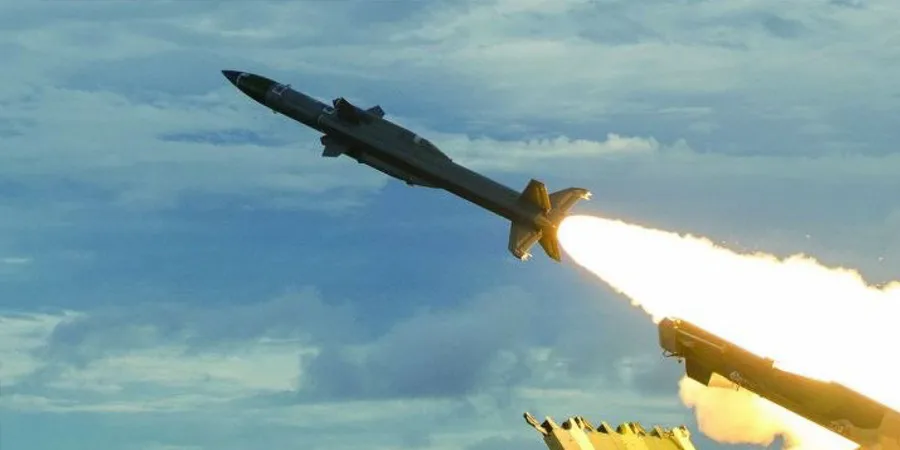
The Tejas Light Combat Aircraft, Akash missile system, Dhanush artillery gun, Pinaka multi-barrel rocket launcher, Advanced Light Helicopter, indigenous aircraft carriers, and domestically built naval warships are emerging as symbols of India’s strategic and technological confidence.
Simultaneously, India is investing heavily in next-generation warfare technologies, including drones, artificial intelligence, cyber warfare systems, autonomous platforms, robotics, electronic warfare capabilities, and space-based defence infrastructure.
This technological shift is crucial because future wars will increasingly be driven by intelligent systems, digital warfare, and precision capabilities rather than conventional firepower alone.
Defence corridors fuel industrial expansion
The defence industrial corridors in Uttar Pradesh and Tamil Nadu are expected to become major engines of India’s defence manufacturing ambitions.
These corridors are designed to attract investments, strengthen supply chains, promote local manufacturing clusters, and encourage collaboration between Indian companies, global manufacturers, startups, and research institutions.
The broader economic impact could also be transformative. Defence manufacturing is increasingly being viewed not merely as a strategic necessity but also as a high-value industrial sector capable of generating employment, boosting advanced manufacturing, strengthening MSMEs, and accelerating technology development across multiple industries.
Strategic autonomy with global partnerships
Importantly, India’s Atmanirbharta strategy is not based on isolationism. Instead, the focus is on strategic autonomy through domestic capability building combined with selective global partnerships.
India continues to collaborate with international defence companies through joint ventures, technology transfers, co-development agreements, and local manufacturing partnerships. However, the emphasis is now firmly on manufacturing within India and developing indigenous technological depth rather than remaining dependent solely on imported finished products.
This balanced approach allows India to strengthen its defence preparedness while simultaneously integrating itself into global defence supply chains.
Challenges remain on the road ahead
Despite remarkable progress, India’s defence self-reliance journey still faces several structural challenges.
The country continues to depend on imports for advanced jet engines, high-end semiconductor technologies, specialised sensors, propulsion systems, and critical aerospace components. Delays in procurement procedures, long testing cycles, limited private-sector integration in certain segments, and gaps in defence research and development continue to slow the pace of transformation.
Experts believe that achieving genuine strategic autonomy will require sustained investments in R&D, stronger industry-academia collaboration, faster decision-making, skilled manpower development, and globally competitive quality standards.
India must also ensure that indigenous platforms are not only manufactured domestically but are also technologically superior, operationally reliable, and globally competitive.
A defining national mission
Nevertheless, the direction of India’s defence transformation is now unmistakable.
The country’s push for Atmanirbharta in defence is gradually evolving into a defining national mission that combines strategic security, technological advancement, industrial growth, and geopolitical influence.
As India aspires to emerge as a leading global power and realise the vision of Viksit Bharat @ 2047, defence self-reliance is becoming one of the strongest pillars of that national ambition.
The success of this mission will ultimately determine not only how India protects its borders, but also how it positions itself in the rapidly changing global strategic order.

Private drivers
India’s private sector is rapidly becoming one of the strongest drivers of the country’s defence transformation. For decades, defence manufacturing remained largely dominated by defence public sector undertakings and ordnance factories. Today, however, private companies, start-ups, and MSMEs are increasingly playing a central role across the defence value chain.
Private firms are now manufacturing drones, missile components, surveillance systems, electronic warfare equipment, aerospace structures, naval systems, armoured platforms, ammunition, and advanced defence electronics. Government reforms, simplified industrial licensing, increased FDI limits, and long-term procurement visibility have significantly improved private-sector participation.
Programmes such as Innovations for Defence Excellence (iDEX) have opened new opportunities for start-ups working on artificial intelligence, autonomous systems, robotics, cyber security, and next-generation warfare technologies.
The defence industrial corridors in Uttar Pradesh and Tamil Nadu are also encouraging large-scale private investments and strengthening local supply ecosystems.
The growing role of private industry is helping India build a more competitive, innovation-driven, and technologically advanced defence manufacturing ecosystem — one that is increasingly capable of supporting both domestic military requirements and global export ambitions.
Imports out, exports in
India’s rapidly growing defence exports are emerging as one of the biggest success stories of the Atmanirbharta mission. From being largely dependent on imports for decades, India is now supplying defence equipment and military systems to an expanding number of countries across Asia, Africa, Europe, and Latin America.
Indian defence exports now include ammunition, radars, surveillance systems, naval equipment, protective gear, missile systems, aerospace components, electronic systems, drones, and patrol vessels.
The BrahMos supersonic cruise missile has become a flagship symbol of India’s growing export capability, while systems such as Akash missiles and Pinaka rocket launchers are also attracting international attention.
The export push carries major economic and geopolitical significance. It strengthens India’s strategic partnerships, enhances global influence, generates foreign exchange earnings, and supports domestic manufacturing growth.
However, sustaining export momentum will require world-class quality standards, competitive pricing, timely deliveries, strong after-sales support, and continuous technological upgrades.
If India successfully addresses these challenges, defence exports could emerge as one of the country’s most powerful strategic and economic growth engines in the coming decade.