


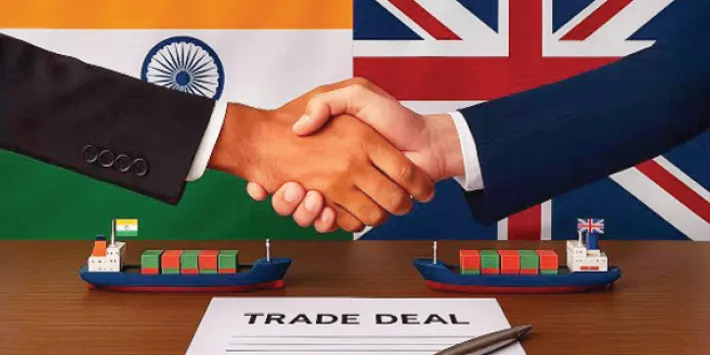


From July 15 the India–UK CETA grants duty-free access to close to 99% of India’s exports to Britain, eliminating tariffs of up to 70% on some processed foods, 21.5% on marine products, 18% on engineering and auto components and 16% on leather and footwear. A companion Double Contribution Convention takes effect the same day, exempting Indian professionals on short UK stints from dual social-security contributions.
The sector map favours labour-intensive and mid-tech exporters — textiles, leather, footwear, marine products, gems and jewellery, sports goods, plus engineering goods, auto parts and organic chemicals. Certificates of origin, issued by authorised bodies in each country, are required to claim preferential treatment; the CBIC rules of origin are now notified.
A tariff line at zero is only worth as much as a firm’s ability to prove origin — compliance capacity, not market access, is now the binding constraint.
By the Numbers
- Live: July 15 (CETA + Double Contribution Convention)
- Coverage: ~99% of India’s exports duty-free
- Tariffs cut: up to 70% food, 21.5% marine, 18% engineering, 16% leather
- Rule: Certificates of origin; cumulation allowed
Cumulation — counting partner-country inputs as originating — helps integrated supply chains, while simple repackaging or relabelling is barred from conferring duty-free status. For firms, the deal is both a market opening and a documentation test that rewards preparation.
The constructive task is capacity-building: origin certification, standards compliance and trade finance for MSMEs, so that duty-free access on paper becomes a widening, sustained export stream in practice.