


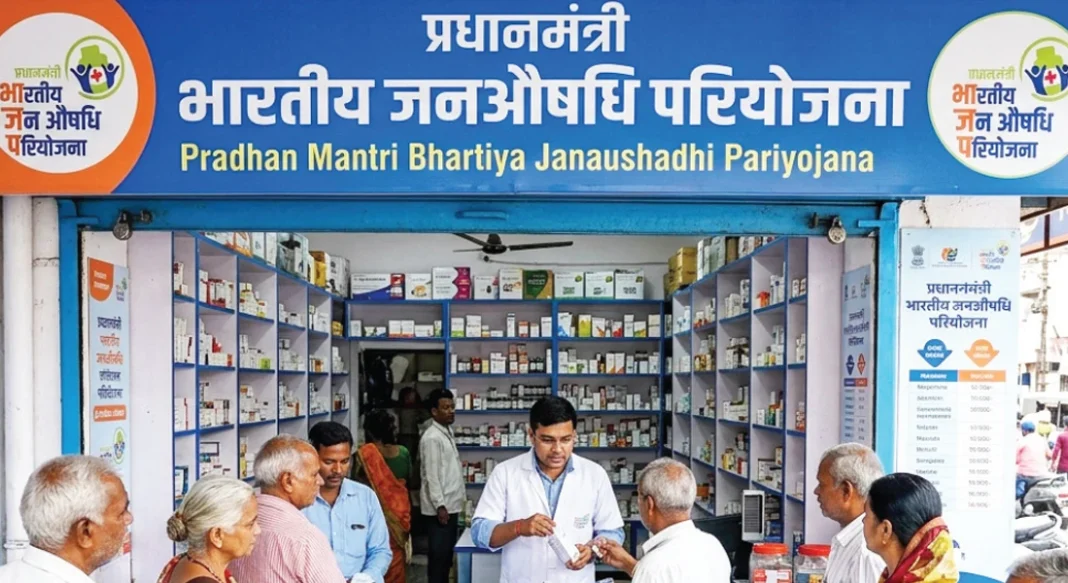


Blitz Bureau
NEW DELHI: Institutional and regulatory requirements for establishing a PMBJK outlet include individuals holding a D Pharma or B Pharma qualification, as well as individuals/organisations employing a qualified pharmacist.
Under the PMBJK, a structured incentive approach supports the financial viability and operational sustainability for Kendra operators. Operators receive a 20 per cent trade margin on the MRP of each drug (excluding taxes). They are also eligible for performance-linked monthly incentives up to a prescribed limit.
In addition, a one-time special incentive is provided to Women, Divyangjan, SC/ST entrepreneurs, and those opening Kendras in aspirational and geographically disadvantaged regions. Therefore, the incentives encourage inclusive participation in expanding access to affordable medicines.
Special Incentives
Special incentives are granted for PMBJK opened by women entrepreneurs, Divyang, Scheduled Caste (SC), Scheduled Tribe (ST), and any entrepreneur opening a Jan Aushadhi Kendra in aspirational districts (backward districts) as notified by the NITI Aayog and in Himalayan, Island territories, and northeastern states. An amount of Rs 2 lakh in addition to normal incentives as applicable is given to these entrepreneurs.
This is a one-time grant for the opening of a new PMBJK, subject to the submission of original bills and restricted to the actual expenditure incurred.
PMBJKs run by entrepreneurs, pharmacists, NGOs, and charitable organisations linked with the Pharmaceuticals and Medical Devices Bureau of India (PMBI) are eligible for incentives of up to Rs 5 lakh. The incentive is provided at 20 per cent of monthly purchases, subject to a maximum of Rs 20,000 per month and in compliance with stocking requirements. It continues until the total limit of Rs 5 lakh is reached.
This benefit also applies to Kendras opened by women entrepreneurs, Divyangjan, SC/ST entrepreneurs, and those established in aspirational districts, Himalayan regions, Island territories, and northeastern states.
Stronger supply chain
The Pharmaceuticals and Medical Devices Bureau of India (PMBI) has undertaken a series of systemic measures to strengthen the supply chain and ensure seamless availability of medicines at JAKs.
An end-to-end, information-technology-enabled supply chain management system has been operationalised, comprising five central warehouses and 41 distributors nationwide, to enhance logistical efficiency and ensure timely medicine distribution.
Since September 2024, the stocking of 200 high-demand medicines at JAKs has been incentivised. This curated basket includes the 100 top-selling medicines and the 100 fastest-moving pharmaceutical products in the broader market.
Additionally, the PMBI continuously monitors 400 fast-moving products and carries out systematic demand forecasting to maintain supply stability. The forecasting mechanism is being progressively digitised to strengthen procurement planning and improve operational efficiency through increased automation.
Widespread access
The Pradhan Mantri Bhartiya Janaushadhi Pariyojana (PMBJP) has become a key pillar in advancing affordable and equitable healthcare by ensuring widespread access to quality generic medicines at substantially lower prices.
Through a steadily expanding network of Jan Aushadhi Kendras, robust quality assurance mechanisms, and digital tools that enhance transparency and convenience, the scheme has helped reduce households’ financial burden of medical expenses nationwide.
By promoting inclusive entrepreneurship and introducing citizen-focused initiatives such as affordable sanitary products and nationwide awareness campaigns, PMBJP goes beyond cost reduction to foster accessibility, trust, and empowerment. As the programme continues to expand its reach, it reinforces the Government’s commitment to delivering reliable, affordable healthcare for all.
The scheme has become a key pillar in advancing affordable and equitable healthcare by ensuring widespread access to quality generic medicines at substantially lower prices.