




Parth Nadpara
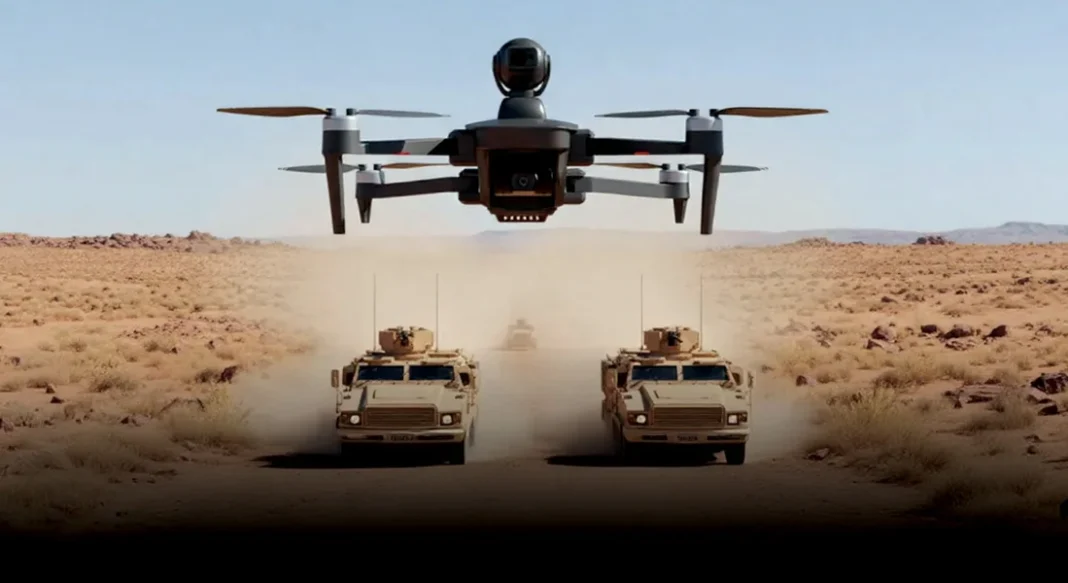
NEW DELHI: India’s drone ecosystem has entered a decisive phase in 2026, evolving from fragmented pilot projects into a critical layer of national infrastructure. What began as a technology experiment is now shaping agriculture, defence, manufacturing, and governance at scale.
Driven by policy liberalisation, the push for Atmanirbhar Bharat, and sustained fiscal incentives, the country is witnessing a structural transformation — one that is steadily repositioning India from a consumer of drone technology to a global producer.
The shift is both strategic and economic. Drones are no longer peripheral tools; they are becoming embedded in the country’s development architecture.
The backbone of India’s drone ecosystem is its fast-growing start-up sector, catalysed by the Production Linked Incentive (PLI) Scheme. What began as a ₹120 crore initiative has evolved into a broader manufacturing push with long-term implications.
Companies such as ideaForge, Garuda Aerospace, IoTechWorld, NewSpace Research, and Dhaksha Unmanned are emerging as key players across sectors.
ideaForge has reported an order book of ₹440 crore and turned profitable in FY26, indicating growing commercial viability. Garuda Aerospace has expanded its footprint in agricultural services and pilot training, training over 2,500 certified pilots while partnering with public sector entities.
IoTechWorld has secured a dominant position in the agricultural segment, particularly under the Drone Didi programme, while NewSpace Research is advancing swarm drone systems and high-altitude pseudo-satellite technologies.
Dhaksha Unmanned has focused on specialised logistics platforms, developing VTOL drones capable of operating in high-altitude regions such as Ladakh.
The backbone of India’s drone ecosystem is its fast-growing start-up sector, catalysed by the Production Linked Incentive (PLI) Scheme. What began as a ₹120 crore initiative has evolved into a broader manufacturing push with long-term implications.
The broader industry impact has been significant. Domestic drone turnover has increased seven-fold since the launch of the PLI scheme. A major policy boost came in September 2025, when GST on commercial drones was reduced to a uniform 5 per cent, lowering entry barriers for businesses.
Import dependence is also declining. The share of foreign components — once as high as 80 per cent in 2021 — has fallen to around 39 per cent in 2025-26, as domestic firms begin manufacturing critical systems such as flight controllers and propulsion units.
Global market
While Chinese companies lead in scale and cost efficiency, and American firms excel in advanced autonomy, India is carving out a distinct niche — high-performance, mission-critical drones designed for demanding conditions.
One of India’s strongest advantages lies in its ability to design for extreme environments. Domestic drones are engineered to operate in high-altitude, low-temperature conditions, making them particularly suited for regions such as the Himalayas. This “Himalayan advantage” has given Indian platforms an edge in defence and logistics applications.
In software and AI, the gap is narrowing quickly. India’s emerging “Drone Stack” is enabling real-time analytics, crop intelligence, and automated targeting systems. However, global leaders still maintain an advantage in fully autonomous navigation and advanced obstacle avoidance.
The most significant challenge remains hardware. Despite progress in localisation, India continues to depend on imports for high-end components, particularly semiconductors and specialised materials. This limits cost competitiveness compared to China’s fully integrated supply chains.
Security & trust
Data security is a defining factor in drone procurement decisions. Indian drones are increasingly preferred in sensitive applications due to strong assurances around data sovereignty and the absence of potential backdoor vulnerabilities. Every layer — from software to communication systems — is subject to domestic oversight.
Government policies have reinforced this trend, with “trusted source” mandates favouring domestic manufacturers. While Indian drones may not always compete on price globally, within India, security and reliability have become decisive advantages.
Additionally, local manufacturing enables faster maintenance and spare part availability, further strengthening the value proposition of domestic companies.
Mission Drone Shakti 2.0
Looking ahead, the Government is preparing to roll out Mission Drone Shakti 2.0, a proposed incentive programme with an outlay of ₹1,600–1,800 crore.
Unlike earlier schemes focused on production, this initiative emphasises research and development. Nearly ₹600 crore is expected to be allocated for critical technologies such as sensors, microchips, and propulsion systems.
The objective is clear: to build deep-tech capabilities and reduce dependence on imports, particularly in high-value components.
India is targeting a $5 billion drone market by 2030, with a strong focus on exports — especially in defence and agricultural applications.
From adoption to ownership
From empowering rural women through drone entrepreneurship to redefining modern warfare and building globally competitive start-ups, the sector reflects a convergence of policy, innovation, and strategic intent.
The shift is unmistakable. India is moving from adopting drones to owning the ecosystem — designing, building, and deploying sovereign aerial systems.
As this trajectory continues, drones are set to become as integral to India’s infrastructure as roads, railways, and digital networks — reshaping how the country farms, secures its borders, and competes globally.
Sowing a new revolution
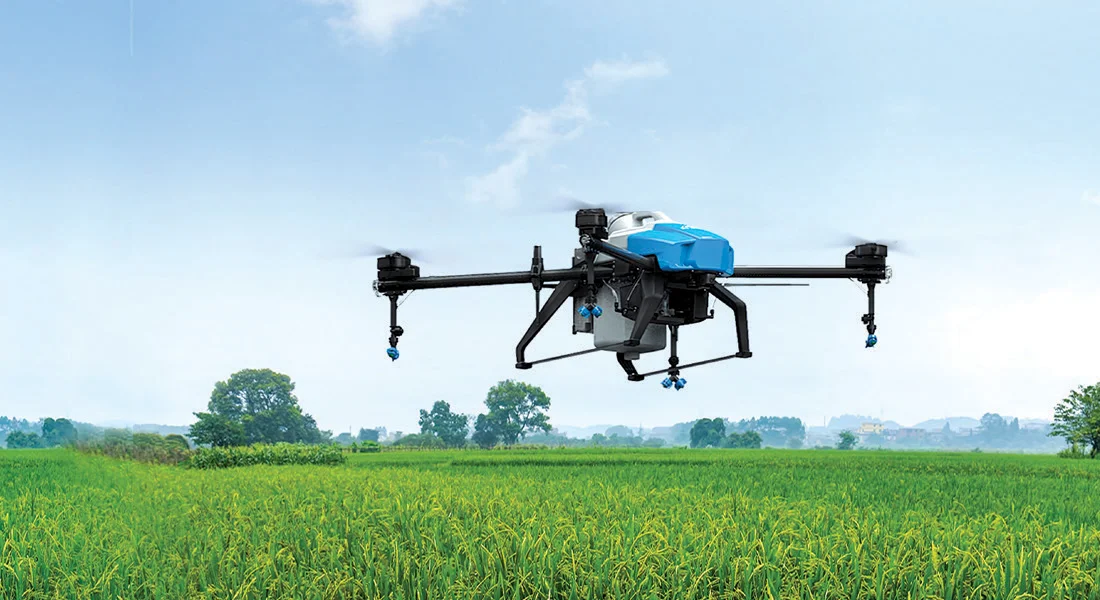
The most visible transformation is taking place in India’s agricultural sector, now the largest civilian adopter of drone technology. The use of drones has moved far beyond basic pesticide spraying to integrated, data-driven farm management.
At the centre of this transition is the Namo Drone Didi Scheme, which has received a sharp boost in the 2026-27 Union Budget, with allocation rising to ₹676 crore — nearly seven times higher than earlier levels.
The programme aims to equip 15,000 women-led Self-Help Groups (SHGs) with drones and training, creating a new generation of rural entrepreneurs.
The impact on productivity and cost efficiency is already evident. Drone-enabled spraying has reduced chemical usage costs by up to 30 per cent , while improving yield consistency by nearly 40 per cent. Precision farming is gradually replacing traditional, input-heavy methods.
The integration of artificial intelligence is further amplifying this shift. The rollout of “Agri Param,” a domain-specific AI model operating in 22 Indian languages, enables drones to deliver real-time crop advisories directly to farmers’ phones. This effectively transforms drones into intelligent decision-support systems.
Affordability has also improved significantly. Entry-level agricultural drones are now available from around ₹3 lakh, with Government subsidies ranging between 40 per cent and 80 per cent for small farmers and Farmer Producer Organisations (FPOs). As a result, adoption is expanding rapidly across states.
Of aerial vision & flying platoons
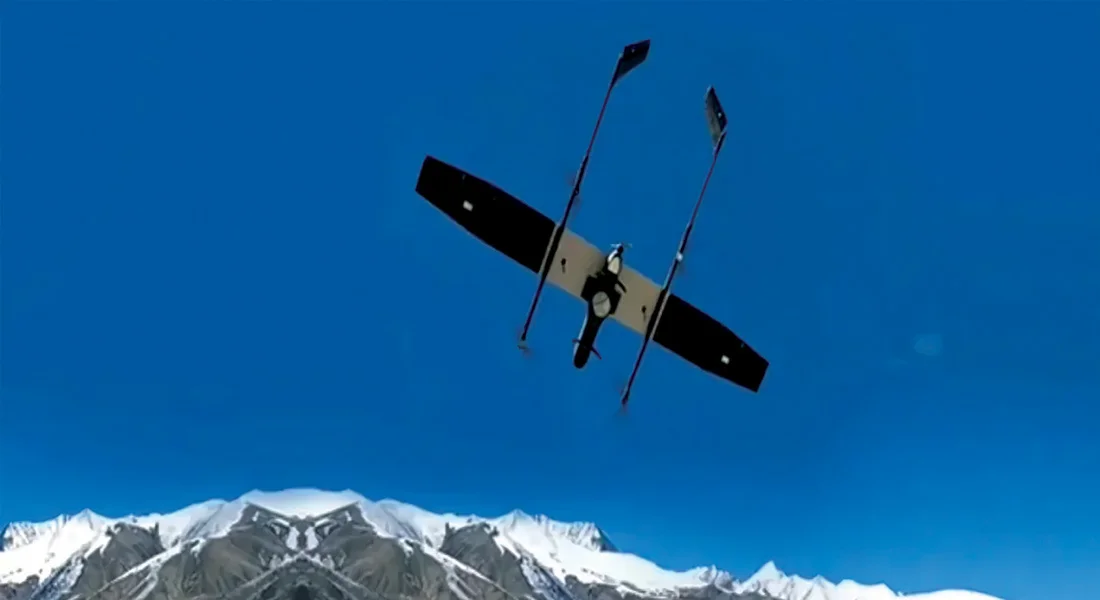
Parallel to agriculture, India’s defence establishment is undergoing a rapid transformation, with unmanned systems taking centre stage in operational planning.
Learning from global conflicts and evolving regional threats, the armed forces have begun implementing a “drone-first” doctrine — prioritising unmanned systems for surveillance, strike capability, and tactical operations.
India has made notable progress in indigenous defence platforms. Systems such as Nagastra-1 (loitering munition), Rustom-2 (MALE UAV), and Archer-NG (armed tactical drone) have been inducted, marking a shift toward self-reliance in aerial warfare capabilities.
A major breakthrough has been in swarm warfare. The Indian Army has demonstrated coordinated deployment of over 100 drones, and in 2026, has begun inducting dedicated “Drone Platoons” across infantry units. This signals a fundamental change in battlefield strategy.
Equally important is the development of counter-drone capabilities. Indigenous systems such as Saksham (AI-based low-altitude defence) and Bhargavastra (counter-swarm rockets) are being deployed to counter hostile UAV threats along sensitive borders.
The procurement strategy reflects this urgency. The Ministry of Defence has cleared emergency contracts worth ₹19.82 billion for loitering munitions and surveillance systems, with a clear tilt toward domestic startups rather than foreign suppliers.
THE TRUST EDGE
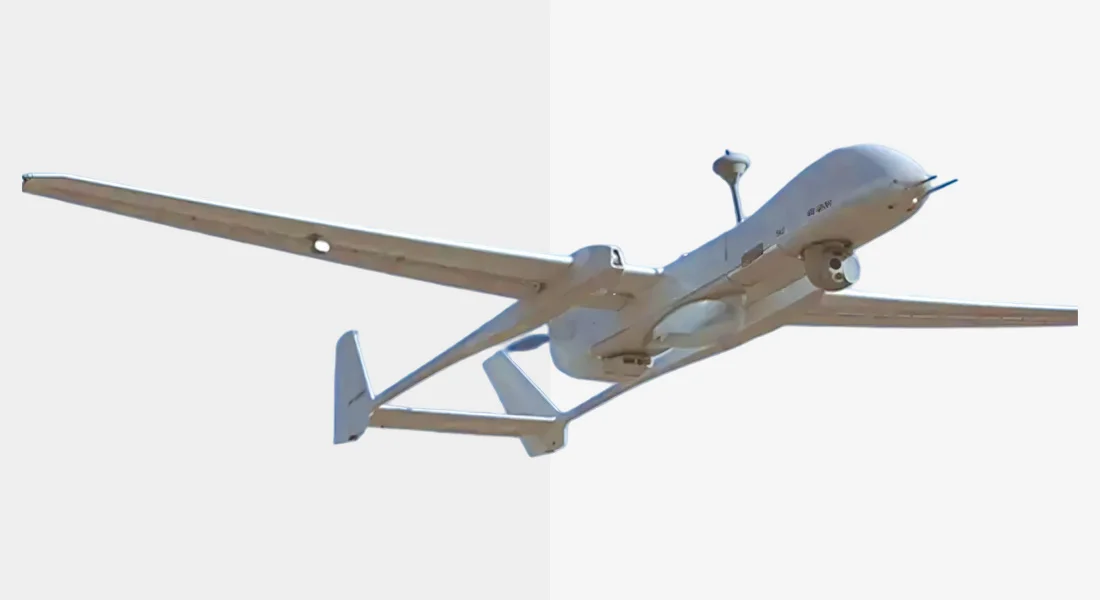
Global drone market is no longer defined solely by price or performance — it is increasingly shaped by trust, reliability, and strategic control. This shift is working in India’s favour.
While Chinese manufacturers dominate the consumer segment with cost-efficient products and American firms lead in advanced autonomy, India has carved out a specialised space in mission-critical applications.
The most significant advantage is durability. Indian drones are designed for extreme conditions — high altitudes, low oxygen levels, and sub-zero temperatures. This makes them particularly suited for defence operations and logistics in challenging terrains such as the Himalayas.
Equally critical is data security. In an era of heightened geopolitical sensitivity, Indian drones offer strong guarantees of data sovereignty. With domestically controlled software and systems, they are increasingly preferred for defence and government use.
In agriculture, Indian drones are setting benchmarks in precision farming. Integrated with AI platforms, they provide real — time crop insights and multilingual advisories, making them highly effective in large, diverse farming environments.
However, challenges persist. India still relies on imports for 30-40 per cent of high — end components, particularly semiconductors. This affects cost competitiveness, especially against Chinese manufacturers with fully integrated supply chains.
In advanced autonomy, global players retain an edge, particularly in obstacle avoidance and GPS-denied navigation. Yet, India is rapidly narrowing this gap through its strong software ecosystem.