





Blitz Bureau
NEW DELHI: As India marches towards its centenary of Independence, the vision of “Insurance for All by 2047” is no longer a distant regulatory aspiration; it is becoming a digital reality.
The Indian insurance landscape is undergoing a tectonic shift, moving from a traditional “push” model — where policies were sold through persistence — to a “pull” model driven by seamless technology, hyper-personalisation, and unprecedented regulatory support.
Despite being the world’s fifth-largest economy, India has historically grappled with one of the lowest insurance penetration rates globally. However, the convergence of the “bima trinity” (bima sugam, bima vistaar, and bima vahak) and a high-octane insur-tech ecosystem is rapidly closing the multi-trillion rupee “protection gap.”
The $100 billion opportunity
The sheer scale of the untapped market is staggering. As of the 2025-26 fiscal year, India’s insurance penetration stands at approximately 4.2 per cent of GDP. While this is a significant jump from a decade ago, it remains well below the global average of roughly 7 per cent.
The “protection gap” — the difference between the amount of insurance that is economically beneficial and the amount actually purchased — is estimated to exceed $1 trillion in India.
This gap is most visible in the “missing middle” — nearly 500 million individuals who fall outside the safety net of Government-sponsored schemes like Ayushman Bharat but find traditional private insurance premiums prohibitively expensive.
This is where the present transformation is most evident. By leveraging the India Stack (Aadhaar, UPI, and account aggregator), insurers are finally able to lower distribution costs enough to make “micro-insurance” viable.
The bima trinity
The Insurance Regulatory and Development Authority of India (IRDAI) has transitioned from a traditional watchdog into a market catalyst. The cornerstone of this shift is bima sugam, a digital protocol often described as the “UPI moment” for the insurance sector.
Bima sugam serves as a centralised marketplace where every insurer, agent, and customer is linked. For the consumer, it eliminates the “asymmetry of information” that has long plagued the industry.
Buying a policy, porting it to another provider, or filing a claim can now be done with a few taps on a smartphone.
Complementing this is bima vistaar, the first-of-its-kind “composite” insurance product. Traditionally, life, health, and property insurance were sold as siloed products.
Vistaar bundles them into a single, affordable package designed specifically for rural and low-income households. To ensure this reaches the last mile, the bima vahak programme has deployed a female-led field force across every gram panchayat, leveraging social trust to drive financial literacy.
Insur-tech: The disruptors
The narrative of “start-ups vs legacy players” has evolved into a collaborative ecosystem. Indian insur-tech start-ups, now valued collectively at over $12 billion, have moved beyond being simple price-comparison websites.
Full-stack innovators: Companies like Acko and Digit Insurance have pioneered “embedded insurance.” Now you don’t “buy” travel insurance; it is embedded into your flight booking.
You don’t “buy” transit insurance for a laptop; it is included in the checkout process. By removing the friction of a separate transaction, these companies have brought millions of first-time buyers into the fold.
The infrastructure play: Firms like Zopper and Riskcovry have become the “plumbing” of the industry. They provide the API infrastructure that allows non-insurance companies — such as banks, retailers, and even ride-sharing apps — to offer insurance products seamlessly. This “insurance-as-a-service” model has expanded distribution far beyond the reach of traditional agents.
The AI edge
Artificial intelligence is the “silent engine” driving the surge. Generative AI and machine learning have solved the industry’s biggest pain point: Claims settlement. Historically, filing a health or motor claim in India was a bureaucratic nightmare involving weeks of paperwork.
Today, players like PolicyBazaar utilise AI-driven “triage agents.” For a motor accident, a customer simply uploads a 360-degree video of the vehicle damage. AI models instantly estimate repair costs and, in many cases, approve the payout before the tow truck even arrives.
In health insurance, AI-powered underwriting now looks at “real-time” data. With the integration of wearable tech, some insur-techs offer dynamic premiums. If a user maintains a healthy lifestyle — tracked via verified steps and sleep data — their premium for the following month is automatically discounted.
This “usage-based insurance” (UBI) is revolutionising how young Indians perceive coverage — not as an annual tax, but as a lifestyle-linked benefit.
The road ahead
While the momentum is undeniable, hurdles remain. The recent spike in medical inflation — averaging 14-15 per cent annually — has made health insurance premiums a heavy burden for many.
As the industry digitises, cybersecurity and data privacy have become paramount. The 2026 transition to Ind AS 117 accounting standards is a step towards global transparency, but it also requires massive technical overhauls for older companies.
However, the trajectory is clear. The Indian insurance sector is no longer a laggard. With a projected growth rate of 7 per cent per year, India is set to become the world’s third-largest insurance market by the end of the decade.
The “untapped opportunity” is finally being tapped, not just by selling policies, but by building trust through technology. As the digital divide narrows, the “protection gap” is closing, ensuring that for the first time in history, a medical emergency or a natural disaster does not mean a descent into poverty for the Indian household.
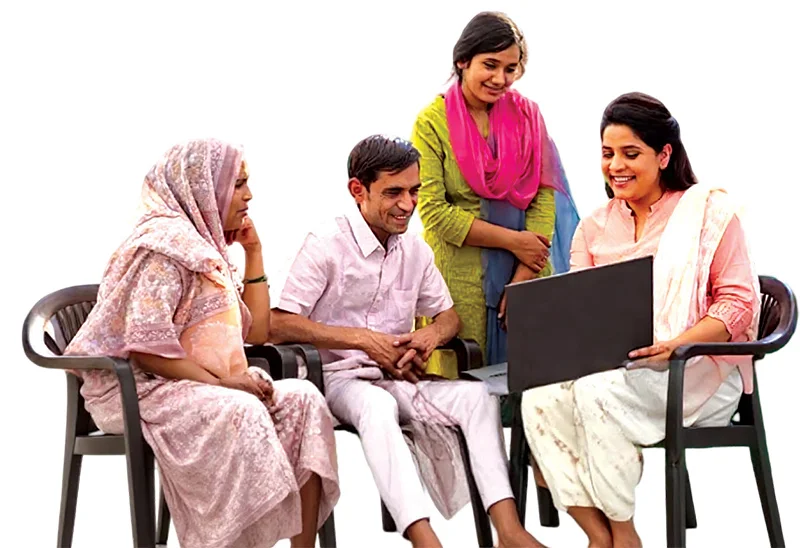
Digital ease
If the 2010s were defined by the democratisation of payments via UPI, the 2020s will be remembered for the democratisation of financial security via bima sugam. Launched as a centerpiece of the IRDAI’s reform agenda, bima sugam is an end-to-end digital platform that integrates all stakeholders in the insurance value chain.
Why it is a game-changer:
Universal access: It serves as a single window for buying, renewing, and claiming policies across life, health, and general insurance.
Cost efficiency: By reducing the reliance on multi-layered commissions and physical paperwork, the platform lowers the operational costs for insurers, which are passed on to consumers as lower premiums.
Claim portability: Much like mobile number portability, bima sugam allows users to switch insurers without losing their accumulated benefits (like “No Claim Bonuses”) or having to undergo fresh medical tests.
The “e-bima” account: Every citizen can now hold their policies in a digital “insurance account,” eliminating the risk of lost physical documents and ensuring that beneficiaries can easily track policies in the event of a policyholder’s death.
Bima Sugam has become the backbone of the “insurance for all” mission, proving that in India, scale and technology are the ultimate tools for social equity.