




Blitz India Business
NEW DELHI: The India-United Kingdom agreement has been in force for five weeks. Read its two tariff-elimination percentages side by side and the shape of the deal — and of the much larger European one waiting behind it — becomes clear.
The India-UK Comprehensive Economic and Trade Agreement entered into force on 15 July 2026. On entry, the United Kingdom eliminates duties on 99 per cent of Indian tariff lines. India, on entry, makes 64 per cent of UK tariff lines eligible for duty-free entry, rising to 85 per cent over a decade. That asymmetry is deliberate and it is the standard architecture of an agreement between a developed and a developing economy: the richer partner opens almost everything immediately, the developing partner phases its opening to give domestic industry time to adjust.
The tariff lines removed on the UK side are where the value sits for Indian exporters, and they are concentrated in labour-intensive sectors. Duties of up to 70 per cent on processed foods, 21.5 per cent on marine products, 18 per cent on engineering goods and auto components, 16 per cent on leather and footwear, 12 per cent on textiles and clothing and 8 per cent on chemicals and pharmaceuticals all go. A 12-point tariff on garments and a 16-point tariff on footwear are decisive margins in industries where an order moves between countries on two or three percentage points.
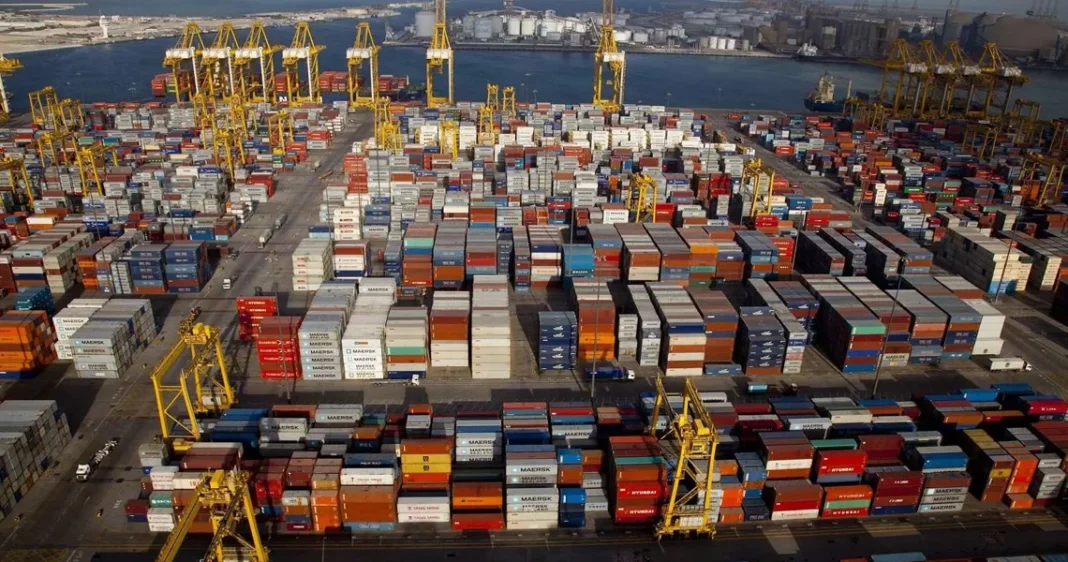
Where 99 per cent lands: The Port of Felixstowe. Under the India-UK Comprehensive Economic and Trade Agreement, in force since 15 July 2026, the United Kingdom eliminates duties on 99 per cent of Indian tariff lines on entry into force.
The smaller agreement is the rehearsal for the larger one. Certification and cold chain built for the British market this year is the cheapest possible preparation for the European market next.
At a Glance
• India-UK CETA: in force 15 July 2026
• UK opening: duties eliminated on 99 per cent of Indian tariff lines at entry
• India opening: 64 per cent of UK lines duty-free at entry, 85 per cent within a decade
• Duties removed: processed foods up to 70%, marine 21.5%, engineering and auto components 18%, leather and footwear 16%, textiles 12%, chemicals and pharma 8%
• 2025 bilateral trade base: about £48 billion
• Projected uplift: £25.5 billion in trade; £5.1 billion a year to India’s GDP
• India-EU FTA: negotiations concluded 27 January 2026, New Delhi
• Still pending: legal scrub, translation, Council signature, Parliament consent, Indian ratification
• Not yet agreed: Investment Protection Agreement and dispute settlement
The scale claim attached to the agreement is a bilateral trade increase of £25.5 billion against a 2025 base of about £48 billion, with UK GDP raised by £4.8 billion and India’s by £5.1 billion annually. Those are modelled projections rather than recorded outcomes and should be read as such; the first genuine read-out is the goods data for the months from August onwards, once the July part-month washes out.
Behind the UK deal sits a much larger one. The European Commission and India concluded negotiations on a free trade agreement in New Delhi on 27 January 2026, closing a file first opened in 2007, suspended in 2013 and relaunched in 2022. The fourteenth and final formal round ran in October 2025, followed by intersessional technical and political work. The resulting free trade area covers roughly two billion consumers.
Concluded is not the same as in force, and the remaining steps are procedural but not quick. The text goes through legal scrubbing and translation into every official EU language; the Commission then proposes signature and conclusion to the Council; the European Parliament must give consent; India must ratify. Two substantive gaps also remain open — the Investment Protection Agreement has not been agreed, and the parties have not settled a dispute-settlement mechanism to enforce the investment rules. For an Indian firm planning European capacity, the investment chapter is often the more consequential half.
For exporters the practical planning point is sequencing. The UK market is open now, in the specific lines listed above, and the capacity to serve it — certification, labelling, cold chain, buyer relationships — is largely the same capacity the European market will require. Building it against UK demand this year is the cheapest possible preparation for EU entry into force. That is the constructive reading of a two-stage opening: the smaller agreement is the rehearsal for the larger one, and India has the rehearsal running.