




Blitz India Business
NEW DELHI: Every automotive segment recorded its best-ever July. The headline went to passenger vehicles at 34.3 per cent. The number that says more about the Indian economy grew at 48.6 per cent, and it costs about ₹60,000.
Society of Indian Automobile Manufacturers data for July 2026 shows domestic passenger vehicle dispatches at 4,57,810 units against 3,40,772 a year earlier, growth of 34.34 per cent. Two-wheeler sales rose 22.58 per cent to 19,23,483 from 15,69,120. Within that, motorcycles grew 20.7 per cent to 10,74,796, scooters 23.7 per cent to 7,98,190 and mopeds 48.6 per cent to 50,497 — and those three sum exactly to the two-wheeler total. Three-wheelers rose 33.37 per cent to 92,560 from 69,403. Total production across passenger vehicles, two-wheelers, three-wheelers and quadricycles reached 33,70,958 units.
The moped number is small in absolute terms — 50,497 units against nearly 1.1 million motorcycles — and that is exactly why its growth rate carries information. Mopeds are the cheapest powered two-wheeler on the market and are bought overwhelmingly in small towns and rural districts, frequently as a first vehicle and frequently for a trade: a milk round, a delivery route, a repair business. Sales of the cheapest category accelerating faster than any other is a statement about incomes at the bottom of the vehicle market. Passenger vehicles growing 34 per cent tells you about credit availability and urban confidence. Mopeds growing 49 per cent tells you about the rural cash economy.
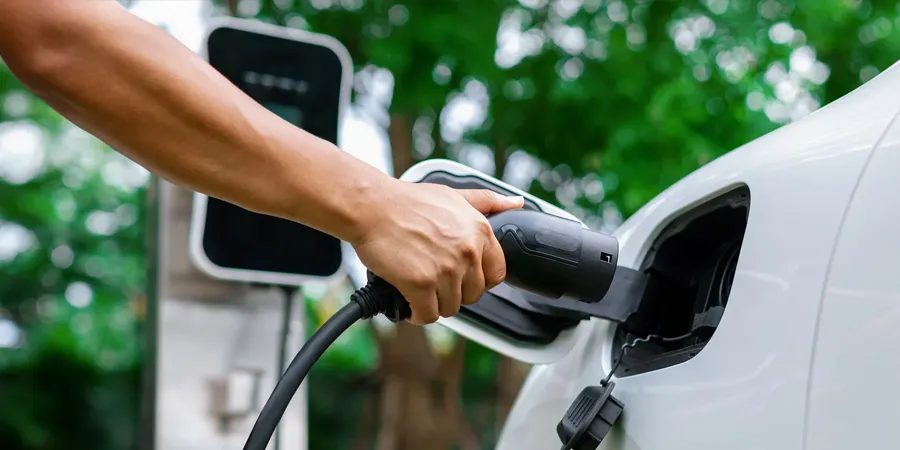
Where the volume is: An electric two-wheeler. Two-wheeler sales rose 22.58 per cent in July 2026 to 19,23,483 units, with mopeds — the cheapest powered category — growing fastest of all at 48.6 per cent.
Passenger vehicles at 34 per cent tells you about urban credit. Mopeds at 49 per cent tells you about the rural cash economy. The smaller number is the more informative one.
At a Glance
• Passenger vehicles: 4,57,810 units, up 34.34 per cent
• Two-wheelers: 19,23,483 units, up 22.58 per cent
• — Motorcycles: 10,74,796, up 20.7 per cent
• — Scooters: 7,98,190, up 23.7 per cent
• — Mopeds: 50,497, up 48.6 per cent
• Three-wheelers: 92,560 units, up 33.37 per cent
• E-rickshaws: 1,132 units, up 7.5 per cent
• E-carts: 538 units, up 16.2 per cent
• Total production (PV, 2W, 3W, quadricycle): 33,70,958 units
Three-wheelers reinforce the reading. Domestic three-wheeler sales rose a third, with e-rickshaws at 1,132 units, up 7.5 per cent, and e-carts at 538, up 16.2 per cent. Three-wheelers are almost never bought for personal transport; they are bought as productive assets by owner-drivers. A third more of them means a third more people financing a livelihood vehicle.
The demand backdrop is favourable but not effortless. Retail inflation at 4.45 per cent in July is a 19-month high, and food inflation at 5.52 per cent bears most heavily on precisely the rural households buying mopeds. The Reserve Bank has held the repo rate at 5.25 per cent, which keeps vehicle finance affordable, and has raised its FY27 growth forecast to 6.7 per cent. A record month on a base of rising food prices is a stronger result than a record month on a base of falling ones.
For the industry the constructive question is capacity for the electric transition at the affordable end. Electric penetration in India has been strongest in three-wheelers and scooters and thinnest where the volume growth now is — entry-level two-wheelers, where battery cost is the largest share of the price. Cell manufacturing capacity coming onstream domestically is what will move that, and it is the same industrial policy argument that governs semiconductors and solar. A moped buyer will switch to electric when the electric one costs the same. Everything else is a subsidy.