




Blitz Bureau
NEW DELHI: Gold crossed $4,550 an ounce and silver topped $67 in global trade on Thursday, both driven by the same weaker dollar that lifted Indian equities. The relationship between the two metals is the number worth watching, and it currently reads 67.9.
The gold-to-silver ratio — ounces of silver required to buy one ounce of gold — is the oldest relative-value measure in commodities, and at $4,550 and $67 it works out to 67.9. A high ratio historically indicates silver is cheap relative to gold; a low one, the reverse. The ratio matters in India more than in most markets because Indian households hold both metals, and because silver has an industrial demand leg — solar, electronics, electrical contacts — that gold does not.
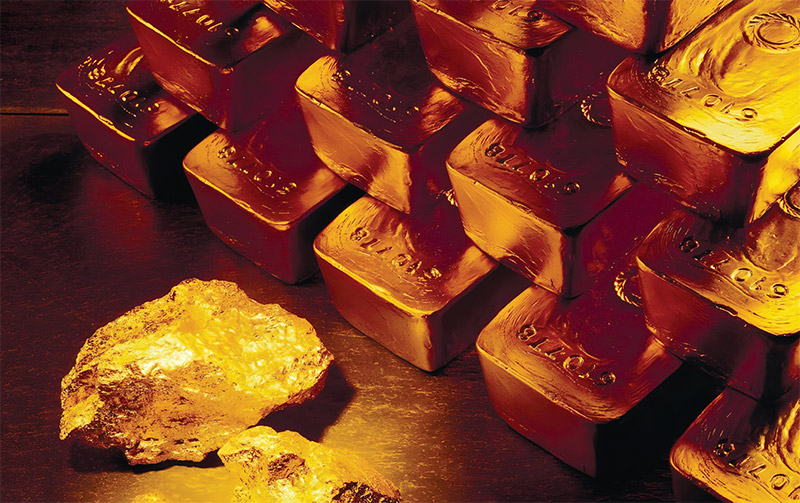
The monetary metal: Gold bullion. A weaker dollar mechanically raises the dollar price of gold without changing its value in other currencies, which is why a dollar-driven rally reads very differently to an Indian buyer than a demand-driven one.
A dollar-driven rally is not the same as a demand-driven rally. For an Indian buyer the question is always what the rupee did on the same day.
At a Glance
• Gold: above $4,550 an ounce in global trade, 20 August
• Silver: above $67 an ounce
• Gold-to-silver ratio: about 67.9
• Driver: a weaker dollar after the US Treasury acted to contain global bond yields
• Same-day equity effect: Sensex +0.82%, Nifty +0.64%
• Rupee: firmer on the session
• Silver’s industrial leg: solar photovoltaics, electronics, electrical contacts, brazing alloys
• Indian seasonality: festival and wedding demand builds from late September
The mechanism behind Thursday’s move is worth separating from the price. Gold is quoted in dollars, so when the dollar weakens the dollar price rises even if nothing has changed about how much gold the world wants. That is a currency effect, not a demand effect. The distinction is not academic for an Indian buyer: if the rupee strengthens against the dollar on the same day — as it did — part of the dollar-price rise does not reach the domestic price at all.
Silver’s position is structurally different from gold’s, and the difference has widened over the past five years. Roughly half of global silver demand is industrial, and the fastest-growing component of that is solar photovoltaics, where silver paste is used in cell metallisation. India’s own solar build-out therefore creates domestic industrial demand for a metal that Indian households also buy as a store of value — an unusual overlap that does not exist for gold.
For the domestic market the calendar is about to matter. Festival and wedding buying builds from late September, and jewellers typically stock through August and early September. A rally that arrives before the stocking season raises the cost of that inventory, which usually shows up as a wider making-charge structure rather than as a visibly higher metal price at the counter.
The reasonable position for a reader is to treat this as a currency story until the dollar stabilises. If the Treasury’s intervention holds and yields settle, a dollar-driven metals rally tends to give back part of the move. If it does not hold, the same weak-dollar logic that lifted gold on Thursday continues to apply. Neither outcome is forecastable from one session, and the ratio at 67.9 is the cleaner thing to track than either price alone.