




Blitz Bureau
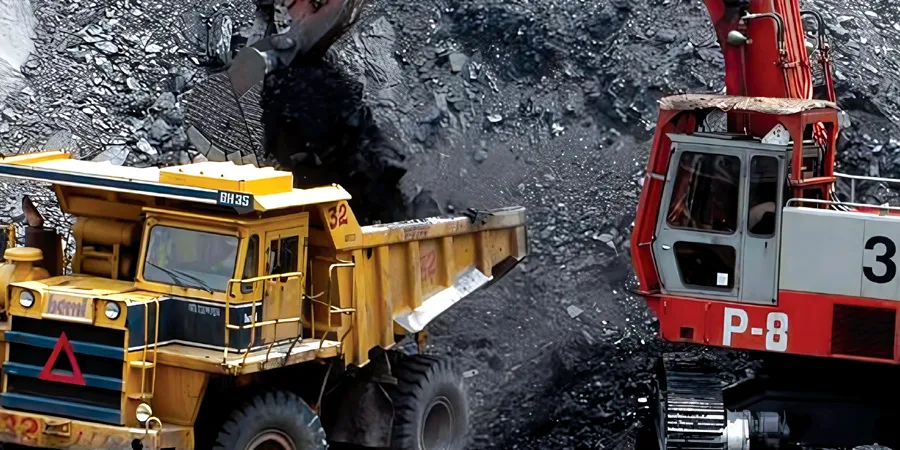
NEW DELHI: The Union Cabinet has launched a massive ₹37,500-crore incentive package for coal gasification to reduce India’s ₹2.77 lakh crore dependence on imported LNG, ammonia, and methanol.
Amid mounting disruptions in global energy markets and rising risks to oil and gas supplies through the Strait of Hormuz, the Union Cabinet recently approved a ₹37,500-crore incentive scheme for coal gasification projects aimed at cutting India’s ₹2.77 lakh crore import dependence on LNG, ammonia, methanol, fertilisers and other industrial feedstock.
The scheme, one of the biggest interventions in India’s coal-to-chemicals sector, is expected to catalyse investments of ₹2.5-3 lakh crore and support gasification of 75 million tonne of coal as the Government pushes to reduce exposure to volatile global fuel markets and supply chain disruptions triggered by the ongoing West Asia conflict.
Announcing the decision after the Cabinet meeting chaired by Prime Minister Narendra Modi, Union Information and Broadcasting Minister Ashwini Vaishnaw said the move was aimed at strengthening long-term energy self-reliance.
“We all know about the current geopolitical situation. So we have to take all the decisions to become Atma Nirbhar. In this context, a big decision on coal gasification was taken today,” Vaishnaw said.
“An outlay of ₹37,500 crore has been kept for this scheme, and there will be an investment of around ₹3 lakh crore in this, and the projects will be put up for gasifying 75 million tonne of coal,” he added.
From imports to atma nirbharta
The Government said the programme would accelerate India’s target of gasifying 100 million tonne of coal by 2030 and support domestic production of synthetic natural gas (SNG), methanol, ammonia, hydrogen and fertiliser feedstock.
“At present, more than 50 per cent of the LNG is imported, it will be reduced. The urea which we import will also start manufacturing in India. Ammonia is 100 per cent imported today. With this development, new avenues for ammonia production will open. Methanol is currently 80-90 per cent imported that will also be made in India,” Vaishnaw said.
Funding architecture
The incentive scheme will provide financial support of up to 20 per cent of plant and machinery costs through a competitive bidding mechanism linked to project milestones.
Financial support for any single project will be capped at ₹5,000 crore, while incentives for a single product category will be capped at ₹9,000 crore. Total support available to a single corporate group across projects will be capped at ₹12,000 crore.
The Government estimates that utilisation of 75 million tonne of coal and lignite under the programme could generate annual revenues of around ₹6,300 crore in addition to downstream GST and tax collections.
India holds one of the world’s largest coal reserves at 401 billion tonne along with 47 billion tonne of lignite reserves. Coal continues to account for more than 55 per cent of India’s total energy mix.
Vaishnaw said India’s coal reserves were sufficient for nearly 200 years, making coal gasification an important pillar of long-term energy resilience.
The latest scheme builds on the National Coal Gasification Mission launched in 2021 and the earlier ₹8,500-crore incentive package approved in January 2024, under which eight projects worth ₹6,233 crore are already under implementation.
Commenting on the move, Atanu Mukherjee said the scheme marked a shift from short-term energy management towards long-term structural transformation.
“The real challenge is not just managing price shocks when they occur, but structurally reducing the sources of import dependence over time,” Mukherjee said, adding that coal gasification could become a key pillar of India’s energy resilience architecture if backed by the right technology, financing structures and downstream industrial integration.
Lessons from China
The closure of the Strait of Hormuz has sent the vast Asian chemicals industry into a tailspin. Deprived of the likes of Qatari natural gas and Saudi Arabian oil, the region’s fertiliser and plastics plants are slowing production or even shutting down. Everywhere but China, that is, reports Bloomberg.
In petrochemicals, China is unique. As well as a traditional industry that uses oil and gas as feedstock, it has parallel output that relies on its abundant domestic coal. Unsurprisingly, India and other regional powers want to copy and paste the Chinese method. This won’t be easy — or climate friendly.
The consequences will be global. China and India together consume 70 per cent of the planet’s coal, so any extra use will keep the dirtiest fossil fuel in demand for longer. More consumption means more CO2 emissions and more warming.
The Chinese coal-to-chemicals industry is a huge contributor to this. Take urea, an important nitrogen fertiliser that’s used in rice and corn farming. China produces about 80 per cent of this stuff from coal, while India manufactures almost all of its own urea from oil and gas.
Despite its massive scale, this Chinese industry has gone largely under the radar. Yet it consumes about 380 million metric tonne of coal as feedstock. If it were a country, it would rank as the third-largest consumer of coal, behind China and India, and ahead of the US, Japan and other top coal users.
India has pledged nearly $4 billion to quickly start up a coal-to-chemicals business, aiming to process as much as 75 million tonne of the fossil fuel into fertilisers, plastics and other synthetic products by 2030. The Government will cover 20 per cent of the building cost for new plants and will help earmark coal reserves for forthcoming projects, guaranteeing long-term supply.
The nascent industry offers India the same advantages that attracted China decades ago. First, it enhances energy security. India is rich in coal, so every tonne of petrochemicals it produces this way is one that doesn’t need foreign oil and gas. Second, using coal to make fertilisers improves the country’s food security, another Government priority.
Then there are the economic benefits, lowering the import bill of oil and gas and thus the pressure on the country’s foreign exchange. Finally it’s a novel way to use domestic supplies that supplements the coal industry’s traditional consumers — power plants, steel furnaces and cement companies — thus prolonging its life. Mining the fossil fuel employs about 750,000 people in India, and it’s a vital source of jobs in several states.
Still, replicating the Chinese model won’t be easy for India. The first problem is the feedstock itself: Domestic Indian coal has too much ash to be easily converted into chemicals. Another drawback is the technology.
China has spent the last couple of decades reinventing the original extraction process — called the Fischer-Tropsch synthesis after the two German chemists who patented the technique a century ago. India doesn’t have the same knowhow, particularly in more advanced areas where coal is converted into methanol to produce goods such as olefins, used to make plastics.
Money is an obstacle, too. Without more Government support, companies will struggle to make fertilisers and other products that remain competitively priced when natural gas and oil prices drop (or if they do).
India launched its original coal-to-chemicals blueprint in 2020 but didn’t get much built. In 2024, after gas prices rose it offered money to kickstart projects, but few companies took the subsidies. Now it has quadrupled the financial support and, for the first time, the private sector looks ready.
If New Delhi is successful, it would give coal another unexpected life extension.
And where things stand today is already somber. Global demand for the fossil fuel climbed to a historic high last year, and everything suggests it will hit another record in 2026 and stay close to its highs for several years more. The oil crises of 1973 and 1979 were a huge boost for coal, particularly among the most industrialised nations, with many using it to replace oil for electricity generation. This time it’s about chemicals, but the impact of the Hormuz shock threatens to be similar.
Not an easy synthesis
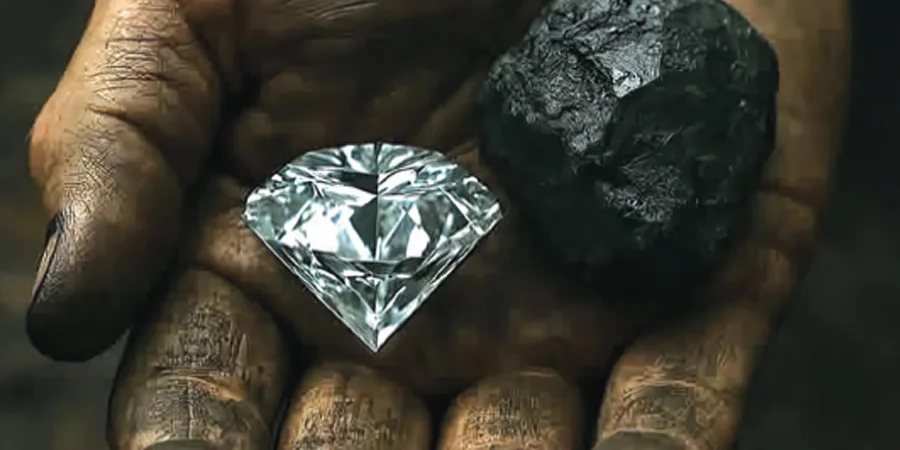
The Fischer-Tropsch (FT) synthesis is an established catalytic process that converts a mixture of carbon monoxide (CO) and hydrogen (H) —collectively known as syngas — into liquid hydrocarbons.
Developed in the 1920s by German researchers Franz Fischer and Hans Tropsch, the technology serves as the backbone for coal-to-liquids (CTL) and gas-to-liquids (GTL) plants.
The core chemistry involves a series of polymerisation reactions on the surface of a catalyst (typically iron or cobalt). Depending on the operating temperature, FT synthesis is categorised into:
High-temperature FT (HTFT): Operating at 300 – 350 degree celsius with iron catalysts to produce gasoline and light olefins.
Low-temperature FT (LTFT): Operating at 200 – 240 degree celsius to produce heavy parameters, waxes, and high-quality diesel.
Why FT synthesis is challenging for India
While India possesses vast coal reserves, utilising domestic coal for FT synthesis presents severe technological, economic, and environmental bottlenecks.
High ash content of Indian coal: The primary hurdle is the poor quality of Indian coal. Unlike the high-grade coal found in South Africa or the US, domestic Indian coal is notorious for its high ash content (often ranging from 35 per cent to 50 per cent) and low calorific value.
Gasification hurdles: Standard entrained-flow gasifiers, which produce the clean syngas required for FT synthesis, struggle with high-ash coal because the massive amount of molten slag erodes the reactor linings.
Catalyst poisoning: The high concentration of abrasive ash and trace impurities (like sulfur and arsenic) acts as a severe catalyst poison, rapidly deactivating the expensive iron or cobalt catalysts used in the FT reactor.
Unfavourable H2 : CO ratio For efficient FT synthesis, the ideal syngas feed requires an H2 : CO molar ratio of approximately 2:1. Gasifying high-ash, high-moisture Indian coal yields a “lean” syngas with a significantly lower ratio, often closer to 0.6:1 or 1:1.
To rectify this, India must heavily rely on the water-gas shift (WGS) reaction.
While the WGS reaction successfully boosts hydrogen levels, it converts a massive portion of the carbon into CO2 before it ever reaches the FT reactor, drastically lowering the overall carbon efficiency of the plant.
Staggering capital costs
FT synthesis plants are among the most capital-intensive chemical facilities in the world. They require a massive upstream gasification unit, an extensive syngas clean-up system, the FT synthesis core, and complex downstream refining units.
Given the low efficiency dictated by Indian coal quality, the capital expenditure per barrel of synthetic fuel or chemical produced becomes commercially unviable without heavy government subsidies, especially when competing with cheaper imported crude oil.
Severe environmental footprint
Converting coal to chemicals via FT synthesis is exceptionally carbon- and water-intensive. Because so much carbon is rejected as CO2 during the syngas adjustment phase, a CTL plant emits more than double the greenhouse gases of a conventional petroleum refinery.
India is already highly water-stressed, and an FT plant requires immense quantities of water for steam generation and cooling, creating a major environmental bottleneck.
The latest scheme builds on the National Coal Gasification Mission launched in 2021 and the earlier ₹8,500-crore incentive package approved in January 2024, under which eight projects worth ₹6,233 crore are already under implementation.