




Blitz India Business
NEW DELHI: The most consequential number for rural demand this season has been moving in the right direction. Kharif sowing stood at 658.19 lakh hectares as of July 17, against 700.47 lakh hectares a year earlier — a shortfall of 42.28 lakh hectares, or 6.04%. What matters is the trajectory rather than the level: that gap had been close to 16% in the week ended July 10 and around 23% at the end of June, when a delayed monsoon onset held back planting. Sowing has since picked up sharply, and by mid-July roughly 60% of the normal full-season area of about 110.44 million hectares had been covered.
The crop mix is where the nuance sits, and it is not uniform. Rice — the largest kharif crop and the anchor of the foodgrain position — is close to flat, at 166.41 lakh hectares against 167.83 lakh a year ago, a decline of well under a percentage point. Pulses tell a harder story, down 15.08% to 69.23 lakh hectares from 81.52 lakh, a category where India’s import dependence makes any acreage shortfall directly relevant to food inflation later in the year. The headline recovery is therefore real, but concentrated in cereals rather than spread evenly.
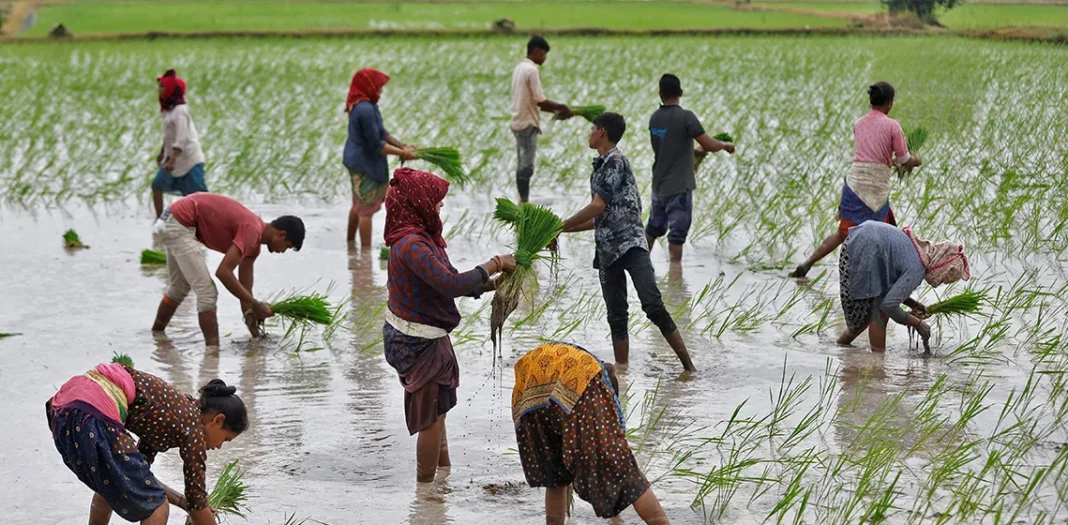
The gap closing: Kharif area at 658.19 lakh hectares to July 17 narrowed the year-on-year shortfall to 6.04%, from nearly 16% a week earlier — with rice near flat and pulses down 15.08%.
A monsoon that arrives late but arrives fully is an inconvenience. One that arrives late and leaves early is a budget problem. So far, this is the first kind.
By the Numbers
• Kharif area (to July 17): 658.19 lakh ha vs 700.47 lakh ha — −6.04%
• Trajectory: gap narrowed from ~16% (week to July 10) and ~23% in late June
• Rice: 166.41 lakh ha vs 167.83 lakh ha — −0.84%
• Pulses: 69.23 lakh ha vs 81.52 lakh ha — −15.08%
For analysts the read-through runs through rural consumption, which remains one of the larger swing factors in the domestic demand picture. A recovering kharif acreage supports farm incomes into the festive quarter, which in turn supports the categories most levered to rural wallets — two-wheelers, entry-level consumer durables, fast-moving consumer goods, agri-inputs and rural-focused lenders. The pulses shortfall points the other way, toward a food-inflation risk that would need watching in the second half if it is not offset by imports or a strong rabi season. Reservoir levels and the distribution of rainfall through August will matter more than the acreage number itself.
The constructive way forward is the unglamorous agenda that converts a recovered season into a resilient one.
Timely availability of quality seed and fertiliser as late sowing compresses the calendar; irrigation and micro-irrigation that reduce dependence on the timing of the monsoon’s onset; better price signals and procurement for pulses and oilseeds so acreage follows genuine national need rather than habit; and warehousing and market linkage that let a good harvest reach buyers without distress sales. A gap that closed from 23% to 6% in three weeks shows the system responding well. Building the buffers that make the next delayed onset a smaller event is the work that follows.