




Blitz India Business
NEW DELHI: An announced outlay is not a spending schedule, and the difference matters to anyone modelling an order book. Divide ₹84,084 crore by the years to FY 2030–31 and the annual run-rate becomes visible — and so does the question of which supply chain absorbs it. The Cabinet has approved ‘Samudra Manthan’, the National Offshore Exploration Scheme of the Ministry of Petroleum and Natural Gas, at ₹84,084 crore for implementation up to FY 2030–31, targeting reserve accretion above 600 million metric tonnes of oil equivalent.
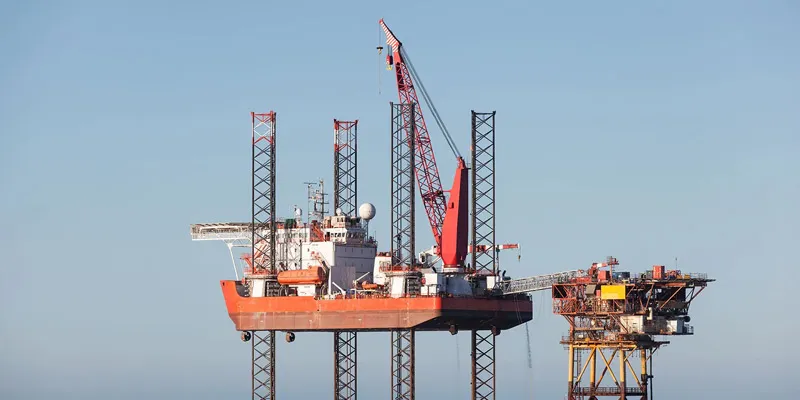
Spread evenly, the outlay implies an average of roughly ₹16,800 crore a year of programme spending — though offshore programmes are never spread evenly, and the composition tells you the likely shape. Seismic acquisition, processing and interpretation come first and are relatively cheap; drilling follows and is where the money concentrates. Deepwater and ultra-deepwater exploratory wells are the single most capital-intensive line item in upstream oil and gas, with day rates for drillships and semi-submersibles that dominate any exploration budget. Scientific drilling in frontier basins adds wells with a deliberately low commercial hit-rate, funded because the information is valuable even when the well is dry. Then comes common offshore production and evacuation infrastructure — the shared platforms and pipelines — and an integrated Oil and Gas Manufacturing and Services Zone.
Where the rupees go: seismic is cheap and comes first; deepwater drilling is where an offshore programme’s capital concentrates, and where the supply chain is most import-dependent.
The services zone is the clause that decides whether this programme leaves behind an industry or only a set of wells.
At a Glance
• Outlay: ₹84,084 crore to FY 2030–31 — an implied average of about ₹16,800 crore a year
• Type: a central sector scheme of the Ministry of Petroleum & Natural Gas
• Target: reserve accretion above 600 MMTOE
• Capital-heavy line: deepwater and ultra-deepwater exploratory drilling
• Shared asset: common offshore production and evacuation infrastructure
• Localisation vehicle: an integrated Oil & Gas Manufacturing and Services Zone
• Policy backdrop: almost the entire offshore acreage opened to exploration; contractual framework modernised; National Data Repository strengthened
For anyone tracking the industrial consequence rather than the energy one, the services zone is the clause to watch. Offshore exploration is among the most import-dependent activities in the Indian economy: rigs are chartered from a small global pool, subsea trees and control systems come from a handful of international suppliers, and specialist vessels are foreign-flagged as a matter of course. Every rupee of the drilling budget therefore leaks abroad unless a domestic supply base exists to capture it. A manufacturing and services zone is the standard instrument for building one — co-locating fabrication, subsea equipment assembly, and the engineering and inspection services around a guaranteed multi-year order flow. If it works, the durable asset created by this programme is a capability India can sell into other offshore basins, independent of what any individual well finds.
The sequencing risk is worth naming constructively, because it is manageable. Seismic data must be acquired, processed and lodged in the National Data Repository before the drilling budget is committed; a programme that drills ahead of its own data spends its most expensive rupees on its least-informed wells. Equally, the common evacuation infrastructure has to be planned around where discoveries are likely, not where they have already been made, which requires the seismic phase to lead by a clear margin. Get the order right — survey, then infrastructure, then drilling — and a marginal discovery that would never have justified its own pipeline becomes a producing field. That, rather than the headline outlay, is the mechanism by which ₹84,084 crore turns into barrels.