




Blitz India Business
Every Budget brings fresh announcements. Every election produces new welfare schemes. Every government unveils another flagship programme to transform India’s economy or improve the quality of life. Yet the single most important reform that could change how Indians live every day continues to languish in the absence of empowerment of local governments.
The roads we drive on, the water we drink, the drains that overflow during the monsoon, the garbage that piles up on street corners, the parks our children play in and the permits businesses require are not the responsibility of the Central Government. They are functions of municipal governments. If these institutions fail, no amount of grand national policymaking can compensate.
India has spent decades debating economic reforms, tax reforms, labour reforms and judicial reforms. Far less attention has been paid to governance reform at the level where citizens actually encounter the State.
More than 30 years have passed since the 73rd and 74th Constitutional Amendments sought to create a genuine third tier of Government. The vision was simple: devolve powers, finances and functions to elected local bodies so that decisions could be taken closer to the people they affect. That promise remains only partially fulfilled.
Across much of India, municipalities continue to function as administrative extensions of state governments rather than autonomous institutions. Their revenues are inadequate, their staffing is thin, and their powers are often circumscribed by state departments that retain control over planning, transport, housing and public utilities.
Cities need empowered mayors with fixed tenures, professional municipal cadres, greater fiscal autonomy, transparent budgeting and stronger citizen participation. Governance should move from administrative control to accountable local leadership.
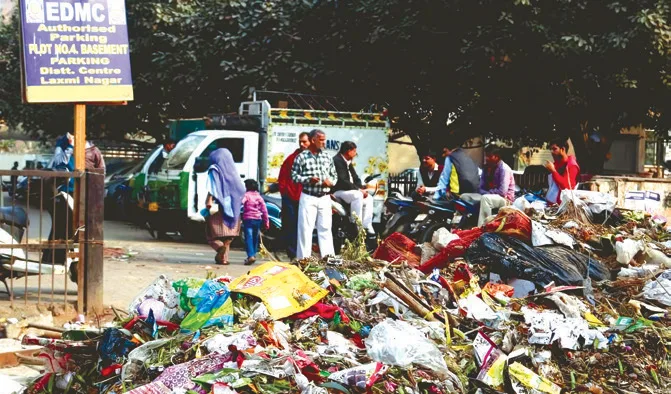
The result is visible in almost every Indian city. Roads are dug up repeatedly because agencies fail to coordinate. Monsoon flooding has become an annual ritual rather than an exceptional event. Solid waste management struggles to keep pace with expanding urban population. Building approvals remain cumbersome even as illegal construction flourishes. Urban planning is reactive instead of anticipatory.
This institutional weakness comes at a particularly inopportune moment. India is urbanising at an unprecedented pace. Within two decades, an estimated half a billion Indians will live in towns and cities. Simultaneously, the country is investing heavily in expressways, airports, industrial corridors, metro rail systems and logistics networks.
But infrastructure alone does not make a city liveable. Singapore’s success did not emerge merely from modern buildings, nor did Tokyo’s efficiency result solely from massive investment. Both were built on capable local institutions that planned, coordinated and maintained urban services with professionalism and accountability.
India’s municipalities remain financially constrained. Property tax collections are inefficient, user charges rarely reflect the cost of services, and dependence on grants discourages long-term planning. Urban local bodies account for only a small fraction of public expenditure compared with their counterparts in most advanced economies. Cities expected to generate national growth cannot remain financially dependent on higher governments for routine functions.
The solution is not another Centrally sponsored scheme. It is genuine devolution. Cities need empowered mayors with fixed tenures, professional municipal cadres, greater fiscal autonomy, transparent budgeting and stronger citizen participation. Governance should move from administrative control to accountable local leadership.
India often speaks of becoming a developed nation by 2047. That aspiration will not be realised by adding more schemes to an already crowded policy landscape. It will depend on whether our institutions become capable of delivering basic public services efficiently and consistently. India’s rise will be determined by whether the country’s municipalities are finally allowed and trusted to govern.