




Parth Nadpara
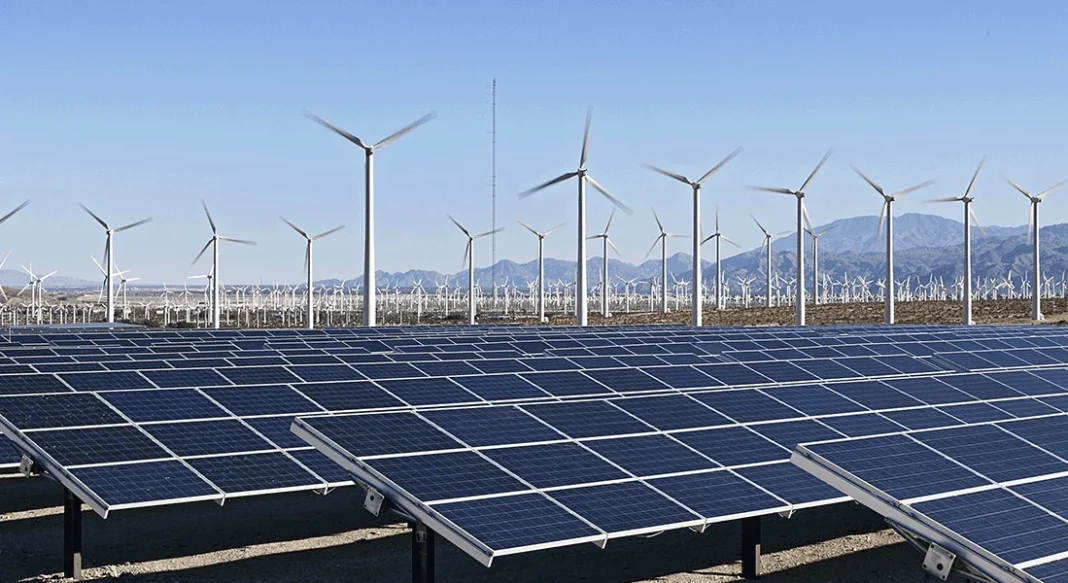
NEW DELHI: The war in Iran is exposing the world’s reliance on fragile fossil fuel routes, lending urgency to calls for hastening the shift to renewable energy.
Fighting has all but halted oil exports through the Strait of Hormuz, the narrow waterway that carries about a fifth of the world’s oil and liquefied natural gas, or LNG. The disruption has jolted energy markets, pushing up prices and straining import-dependent economies.
Cheaper alternative
Unlike during previous oil shocks, renewable power is now competitive with fossil fuels in many places. More than 90 per cent of new renewable power projects worldwide in 2024 were cheaper than fossil-fuel alternatives, according to the International Renewable Energy Agency.
Asia, where most of the oil was headed, has been hit hardest, but the disruptions also are a strain for Europe, where policymakers are looking for ways to cut energy demand, and for Africa, which is bracing for rising fuel costs and inflation.
Oil is used in many industries beyond generating electricity, such as fertilizer and plastics production. So most countries are feeling the impact, while those with more renewable power are more insulated since renewables rely on domestic resources like sun and wind, not imported fuels.
The energy shock is familiar to wealthy countries in Europe and East Asia. In 2022, some European governments tried to cut dependence on fossil fuels. But many soon focused on finding new fossil fuel suppliers instead, said Pauline Heinrichs, who studies climate and energy at King’s College London.
Germany rushed to build LNG terminals to replace Russian gas with mostly American fuel while the energy transition, including efforts to cut demand, slowed, she said.
Europe’s excess spending on fossil fuels since the Russia-Ukraine War amounted to about 40 per cent of the investment needed to transition its power system to clean energy, according to a 2023 study.
In import-dependent Japan, policy responses to past shocks have focused on diversifying fossil fuel imports rather than investing in domestic renewables, said Ayumi Fukakusa of Friends of the Earth Japan.
Solar and wind make up just 11 per cent of Japan’s energy production, on a par with India but behind China’s 18 per cent, according to Ember. Japan’s energy use is much lower than both nations.
South Korean President Lee Jae-myung said the crisis could be “a good opportunity” to shift faster to renewable energy.
Africa may be especially exposed because many countries rely on imported oil to run their transport and supply chains. It makes strategic sense for African countries to build their long-term energy security by investing in cleaner energy, said Kennedy Mbeva, a research associate at the Centre for the Study of Existential Risk at the University of Cambridge.
Pakistan’s solar boom has preempted more than $12 billion in fossil fuel imports since 2020 and could save another $6.3 billion in 2026 at current prices.