





India’s data centre gold rush
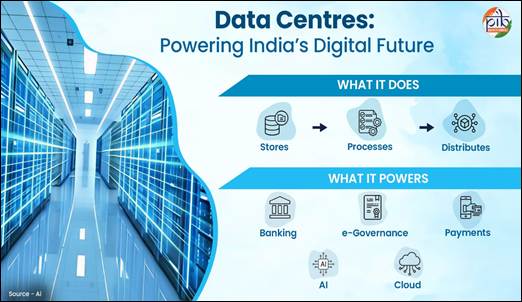
New Delhi, 14 September Sixty gigawatt-scale questions sit behind one number. India’s data centres had 1.57 GW of installed power capacity in August 2026. They are expected to need about 8 GW by 2030 and, on the Central Electricity Authority’s reckoning, as much as 17 GW by 2031-32. Against that, about $70 billion is already being invested in the sector and a further $90 billion of projects has been announced — $160 billion of capital chasing an asset class that, four years ago, could not borrow like one.
What changed the cost of money
The Union Budget of 2022-23 placed data centres on the harmonised list of infrastructure. The consequence is narrow and large at the same time: a data centre can now be financed the way a national highway, an airport or a power grid is financed — longer tenor, lower spread, lenders whose mandates permit infrastructure and not much else.
The Union Budget of 2026-27 added a second instrument aimed at a different party. Eligible foreign cloud service providers using India-based data centre infrastructure get a tax holiday running to 2047, applicable from tax year 2026-27 to 2046-47 — 21 tax years, on this desk’s count. The target is not the builder of the shed but the hyperscaler deciding which country’s shed to fill.
The capacity arithmetic
Installed capacity was about 375 MW in 2020 and 1,570 MW in August 2026. That is 4.19 times in six years, or a compound rate of 26.95% a year on this desk’s calculation. To reach 8 GW by 2030 the sector must multiply by 5.10 again in roughly four years — which means the required annual rate goes up, not down, even though the base is four times larger.
The CEA’s 17 GW for 2031-32 is 10.83 times the August 2026 figure. That is a power-planning number before it is a technology number, and it is why the backgrounder devotes as much space to electricity and water as to servers.
The chips and components behind it
Three allied programmes carry the supply side. The Cabinet approved the second phase of the Semicon India programme on 15 July 2026 with an outlay of ₹1,27,500 crore under the India Semiconductor Mission. The IndiaAI Mission runs on ₹10,371.92 crore. The Electronics Components Manufacturing Scheme has had its allocation raised from ₹22,000 crore to ₹40,000 crore — an increase of ₹18,000 crore, or 81.8%. The PLI 2.0 scheme for IT hardware covers servers themselves.
On the energy side the backgrounder points to the green energy open access rules, the Green Energy Corridor scheme, the National Green Hydrogen Mission and the solar park and high-efficiency module programmes. It also names the SHANTI Act of 2025, which extends the nuclear framework to small modular and micro reactors with data centres and artificial intelligence named among the intended users.
The standards nobody reads until they matter
The Bureau of Indian Standards has published efficiency standards through its technical committee LITD 31, which covers cloud computing, information technology and data centres: power usage effectiveness, carbon usage effectiveness, cooling efficiency ratio and water usage effectiveness. The Bureau of Energy Efficiency’s building codes — ECBC 2017 and ECSBC 2024 — carry provisions that reach data centre infrastructure.
Those four ratios are what a lender will eventually price. A facility with a poor water usage effectiveness in a water-stressed district is a credit question, not only an environmental one, and the standards exist before the loans do.
Blitz Data Card
New Delhi At a glance Installed data centre power capacity about 375 MW (2020) and 1.57 GW (August 2026) · projection about 8 GW by 2030 · CEA estimate up to 17 GW by 2031-32 · about $70 billion being invested · $90 billion of projects announced · Semicon 2.0 outlay ₹1,27,500 crore, approved 15 July 2026 · IndiaAI Mission ₹10,371.92 crore · ECMS allocation raised from ₹22,000 crore to ₹40,000 crore · NIC national data centres at four cities and 37 centres in State capitals.
What India gains
Data held and processed in India rather than abroad, and an infrastructure classification that lets the building of it be financed at infrastructure rates rather than corporate ones.
Commercial coal mining finds its pace
New Delhi, 14 September Upfront and premium payments from allotted commercial coal mines came to about ₹3,090 crore in 2025-26, the Ministry of Coal stated in a release of 14 September 2026. The 147 blocks auctioned since 2020 across nine States are projected to yield about ₹47,500 crore a year at full running, so the year’s collection is 6.5% of the projection on this desk’s arithmetic — the ordinary gap between a mine awarded and a mine producing.
Production is closing that gap. Output from commercial mines alone went from 12.55 million tonnes in 2023-24 to 23.51 million tonnes in 2024-25, a rise of 87%. Commercial and captive blocks together crossed 200 million tonnes for the first time in 2025-26, at about 210 million tonnes against 28.8 million a decade earlier.
For a State treasury the relevant point is the structure rather than the total: revenue share, royalty, District Mineral Foundation and National Mineral Exploration Trust contributions and GST arrive as five separate streams, and only the DMF is ring-fenced to the mining district.
India doubles down on electronics manufacturing
New Delhi, 14 September The Electronics Components Manufacturing Scheme has had its allocation raised from ₹22,000 crore to ₹40,000 crore, according to the Press Information Bureau backgrounder of 14 September 2026 — an increase of ₹18,000 crore, or 81.8% on this desk’s calculation.
It sits alongside the second phase of the Semicon India programme, approved by the Cabinet on 15 July 2026 with an outlay of ₹1,27,500 crore under the India Semiconductor Mission, and the IndiaAI Mission’s ₹10,371.92 crore. The PLI 2.0 scheme for IT hardware covers servers and is aimed, in the backgrounder’s own framing, at cutting import dependence and making India a trusted node in global supply chains.
NISAR opens India’s all-weather eye in space
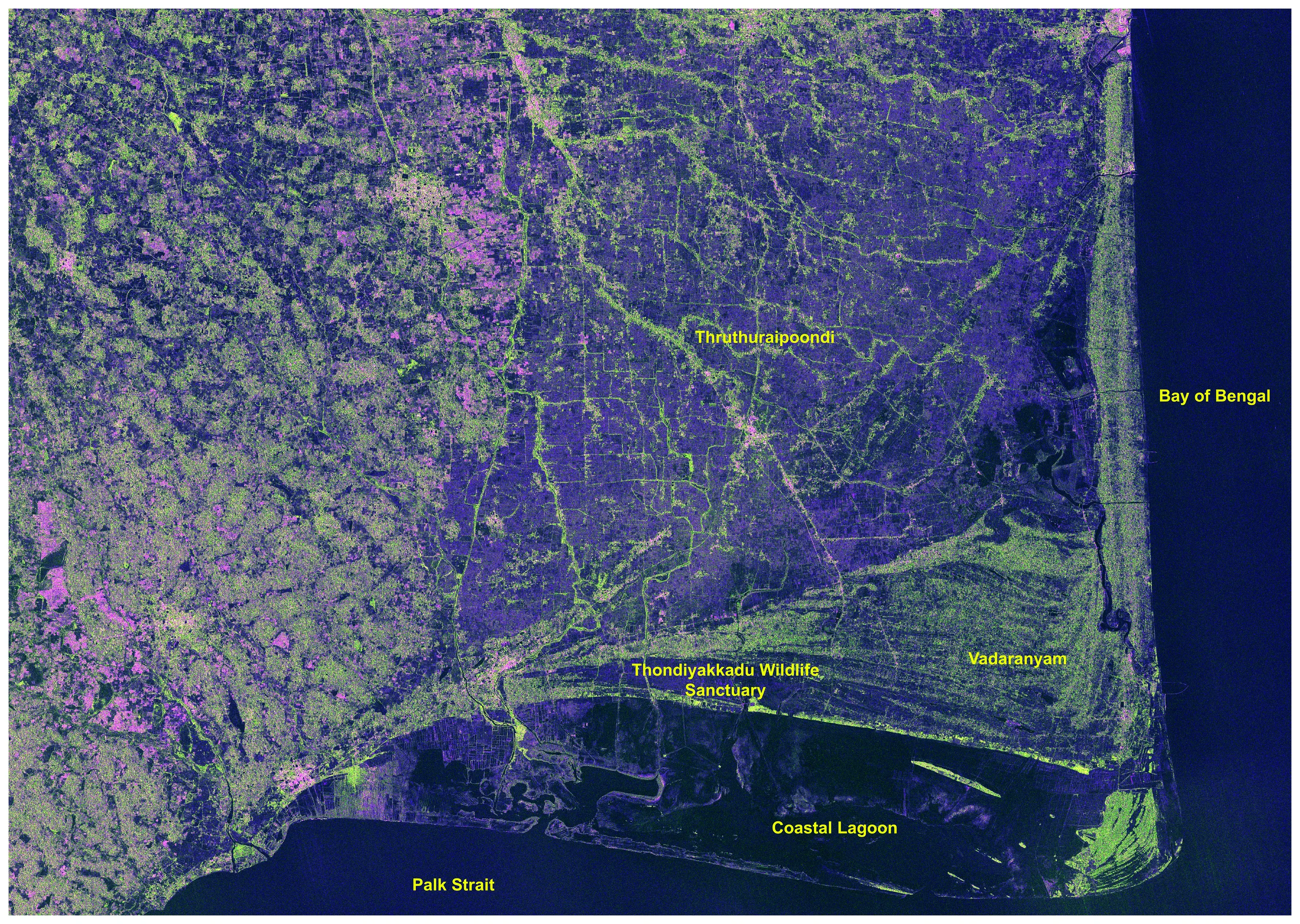
Bengaluru, 14 September The Indian Space Research Organisation has released NISAR S-band SAR data products, its own site recorded on 14 September 2026. NISAR is the radar satellite ISRO built with NASA; the S-band payload is the Indian one, and the two agencies have marked a year of the mission in orbit.
S-band radar penetrates cloud and works at night. For an economy whose crop losses and landslides happen in the monsoon, that is the difference between measuring damage while it is occurring and estimating it afterwards. Insurers, disaster authorities and irrigation departments are the users who stand to gain most.
The same site records that GSLV-F17 placed EOS-05 in its intended orbit after a launch at 02:55 AM IST on 4 September 2026, and that the third and final orbit-raising manoeuvre is complete. What ISRO has not yet posted is the access route and pricing for the NISAR products — the detail that decides whether a State agriculture department can build a workflow on them.
Tamil Nadu’s audit scorecard goes public
Chennai, 14 September Five reports of the Comptroller and Auditor General of India were tabled in Tamil Nadu on 8 September 2026, on the audit report list published at cag.gov.in and read on 14 September 2026.
Four are performance audits: educational scholarship schemes for Scheduled Caste, Scheduled Tribe and other scheduled category students; the Smart City Mission in Tamil Nadu; and the Jal Jeevan Mission in the State. The other two are the report on State Revenues for the period ended March 2024 and the report on State Finances for 2024-25.
The State Finances report is the one a lender or a rating desk opens first, because it is the audited account of a State that carries one of the larger subnational borrowing programmes in the country.
This desk has not opened the reports themselves and carries no finding from them. They are recorded here because they are now public documents with a tabling date, and because each performance audit has been published in Tamil as well as English.