Blitz India Business
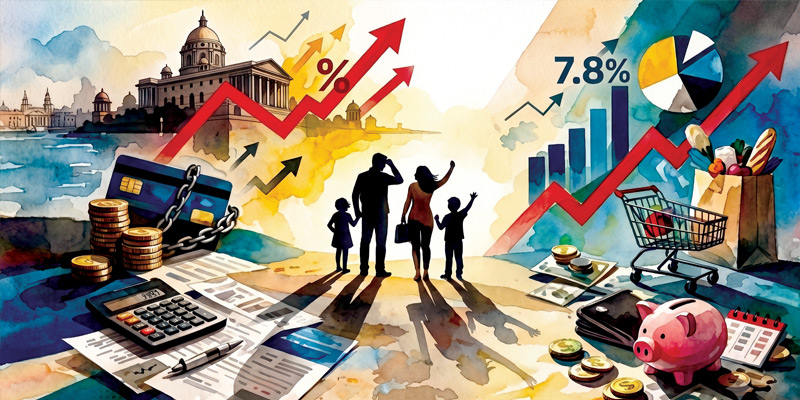
NEW DELHI: Prime Minister Narendra Modi’s confidence in India’s economic prospects has received a powerful endorsement from the latest NSO growth data. The economy expanded by 7.8 per cent in the April-June quarter, well above 7.1 per cent that most economists predicted and the RBI’s 7 per cent estimate. This strengthens the case that India may be entering a rare Goldilocks moment – a phase of robust growth, relatively contained inflation and interest rates stable enough to support demand and investment.
The latest GDP numbers provide genuine grounds for optimism. Growth is no longer being driven by a single engine. Consumption remains resilient, investment has strengthened, manufacturing is expanding and services continue to provide substantial momentum. Manufacturing grew 9.2 per cent, while real GVA expanded 8.2 per cent. The acceleration in investment is particularly significant.
Private investment rising
For much of the post-pandemic period, India’s expansion was characterised by strong Government capital expenditure but a relatively hesitant private sector. That equation now appears to be changing. Stronger private investment would make growth more durable because it creates productive capacity, jobs and future demand rather than merely boosting current activity.
Consumption is also holding up. Household spending remains an important pillar, supported by resilient urban demand and relatively favourable financial conditions. The challenge is to broaden this momentum, particularly across rural India, where stronger incomes will be essential for sustaining consumption.
Latest GDP numbers provide genuine grounds for optimism. Growth is not being driven by a single engine. Consumption is resilient, investment has strengthened, manufacturing is expanding & services continue to provide momentum.
Price pressures manageable
The second element is that while consumer inflation is no longer at the exceptionally low levels seen earlier, price pressures remain considerably more manageable than during the inflation shocks of recent years. With the RBI keeping the repo rate at 5.25 per cent and retaining a neutral stance, monetary conditions are neither restrictive enough to choke credit and investment nor excessively loose enough to risk overheating.
This creates a relatively favourable environment for businesses and households. Companies can plan investments with greater certainty, banks can continue extending credit and borrowers are less likely to face sudden increases in financing costs.
Modi’s confidence is thus one of optimism. The latest NSO numbers suggest that India has a valuable window in which growth is strong, inflation manageable and monetary conditions supportive.
External vulnerabilities linger
In this context, the Prime Minister’s call to reduce gold buying and overseas spending reveals why this optimism must be qualified. GDP growth and the balance of payments tell different stories. Gold is largely imported, while overseas holidays and destination weddings involve substantial foreign-exchange outflows without adding to domestic productive capacity. At a time when the rupee remains under pressure and oil prices are volatile, such spending can aggravate external vulnerabilities.
The biggest risk is oil. A prolonged oil-price shock could simultaneously push up inflation, widen the import bill and weaken the rupee, forcing the RBI to choose between supporting growth and containing price pressures. Global interest rates pose another risk. Higher US yields can trigger capital outflows and currency pressure across emerging markets, limiting India’s monetary flexibility.
Sustainability of numbers vital
There is also the question of the quality and durability of growth. A 7.8 per cent quarterly expansion is impressive, but one quarter does not establish a trend. India needs sustained private investment, productivity gains and better-quality job creation to convert cyclical momentum into a durable high-growth trajectory. Government infrastructure spending has created an important foundation; the private sector must increasingly take over as the principal driver of capacity creation.
India nevertheless has something many major economies currently lack: relatively high growth combined with improving macroeconomic stability. Domestic demand is resilient, infrastructure has strengthened, manufacturing is expanding and the financial system is considerably stronger than a decade ago.
The task now is to use that window wisely: build productive capacity, attract private investment, create better jobs and broaden consumption while protecting the economy from oil, geopolitical and global financial shocks. India may indeed have entered its Goldilocks moment. The challenge is ensuring that it lasts.