Sukumar Sah
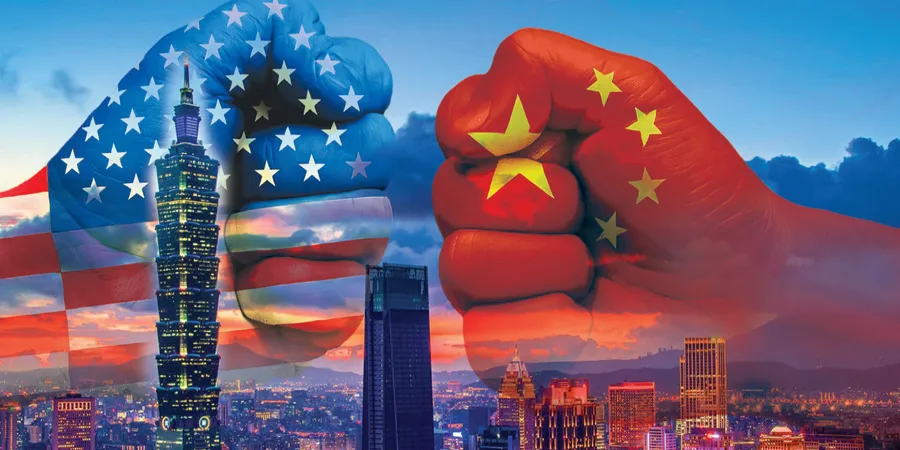
NEW DELHI: The world today is far more economically vulnerable to a Taiwan crisis than it was to the Russia-Ukraine war. Ukraine disrupted food, fertiliser and energy markets; Taiwan has the potential to paralyse the technological nervous system of the global economy itself. Persistent tensions between the United States and China over the self-governed island raise the question not whether the issue is serious, but whether governments and markets fully understand the scale of the disruption if even a limited conflict could unleash.
Taiwan sits at the centre of the global semiconductor industry. The island produces more than 60 per cent of the world’s semiconductors and nearly 90 per cent of the most advanced chips used in smartphones, Artificial Intelligence systems, automobiles, defence equipment and data centres. Dependence on Taiwanese chipmaker TSMC has become so overwhelming that semiconductors are now widely described as the ‘new oil’ of the global economy.
Manufacturing choke
A military confrontation in the Taiwan Strait – or even a blockade, cyberattack or disruption to shipping routes – could rapidly choke global manufacturing. Cars, consumer electronics, telecom equipment, cloud infrastructure and industrial machinery would face severe shortages. Factories across continents could slow or shut down within weeks, reviving inflationary pressures that many economies are still struggling to contain.
For India, the consequences could be especially severe. Despite the Government’s push for semiconductor manufacturing and supply-chain diversification, India remains heavily dependent on imported electronics components and chip-based systems. From smartphones and telecom networks to automobiles and defence equipment, the country’s industrial ecosystem remains deeply tied to East Asian supply chains.
A Taiwan conflict would accelerate the fragmentation of the global economy into competing geopolitical blocs. Trade, technology and supply chains would become instruments of strategic rivalry rather than economic efficiency
A Taiwan crisis would hit India through multiple channels simultaneously. The first would be a supply shock. Electronics manufacturing, one of India’s fastest-growing sectors, could face immediate disruption because of shortages of critical semiconductor components. Automobile production could once again experience chip-related slowdowns similar to those seen during the pandemic years.
Fragmentation threat
The second impact would come through energy markets. Any confrontation involving China and the United States would likely destabilise shipping routes across the Indo-Pacific, driving crude oil prices sharply higher. India, which imports more than 85 per cent of its crude oil requirements, would face renewed inflationary pressures, fiscal strain and pressure on the rupee.
The third impact would be financial instability. Global investors usually retreat from emerging markets during periods of geopolitical uncertainty. A Taiwan crisis could trigger capital outflows, stock market volatility and currency pressures across Asia, including India.
But the larger concern lies beyond immediate economics. A Taiwan conflict would accelerate the fragmentation of the global economy into competing geopolitical blocs. Trade, technology and supply chains would increasingly become instruments of strategic rivalry rather than economic efficiency. The era of hyper-globalisation that shaped the post-Cold War world could gradually give way to economic nationalism, strategic decoupling and deeper geopolitical distrust.
Taiwan is no longer just a distant geopolitical dispute confined to East Asia. Its stability has become central to the functioning of the global economy and modern globalisation itself. The Taiwan Strait sits at the heart of critical technology supply chains, international trade networks and semiconductor production that power industries worldwide. Any conflict or disruption there would rapidly spread far beyond the region, affecting fuel prices, financial markets, manufacturing and everyday consumer goods across continents.
In today’s deeply interconnected world, peace in the Taiwan Strait is not merely a regional concern but a global economic necessity.


