




Blitz Bureau
NEW DELHI:
When the International Monetary Fund trimmed India’s FY27 growth projection to 6.4% this month, the reason it gave was energy prices. The World Bank, holding at 6.6%, flagged rising input costs from the same source. Neither institution questioned India’s domestic fundamentals. Both, in effect, marked down an economy for something that happens in oil markets several thousand kilometres away. That is worth sitting with, because it identifies the single largest external claim on Indian growth — and, unusually among macro risks, it is one a country can spend its way out of.
The mechanics are unforgiving. India imports the large majority of the crude it consumes, so a rise in the barrel price is a straightforward transfer of national income abroad. It widens the current account deficit, pressures the rupee, raises the landed cost of everything moved by road, and feeds into the inflation print that determines the RBI’s room to support growth. Every one of the channels by which an external shock reaches an Indian household runs through the import bill. Which is why the relevant counter-programme is not monetary or fiscal. It is physical: build enough domestic energy that the barrel matters less.
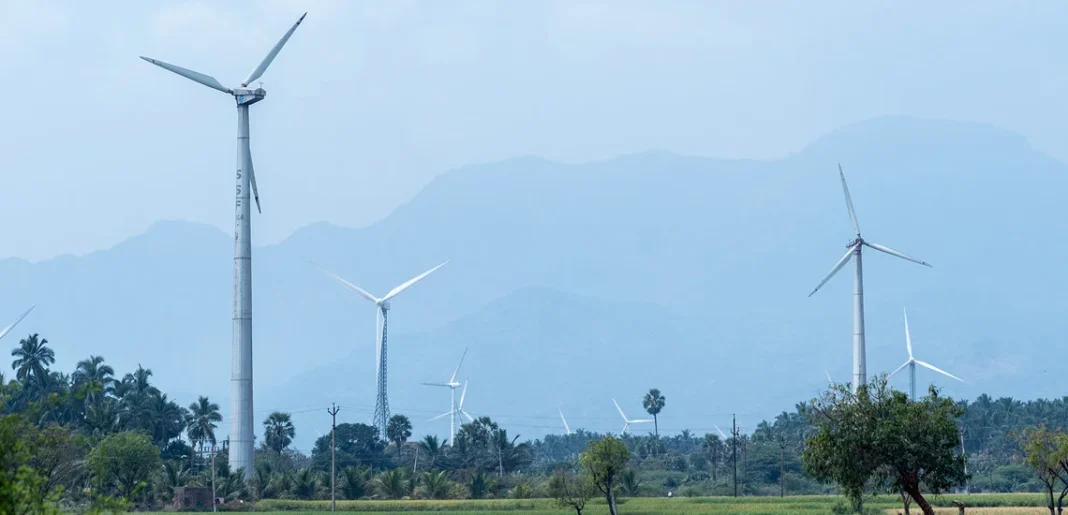
Capacity is macro policy: every gigawatt of domestic generation narrows the channel through which an external price shock reaches Indian households — installed renewable capacity has almost quadrupled since 2014.
A country cannot hedge the oil price forever. It can, over a decade, stop needing to — and India is now spending at the rate that makes that possible.
At a Glance
• Installed renewable capacity: 288.58 GW at June 30, 2026, from 76.38 GW in 2014
• Composition: solar 162.15 GW; wind 57.44 GW; large hydro 57.24 GW; bio power 11.75 GW
• Including nuclear: total non-fossil capacity 297.36 GW (nuclear 8.78 GW)
• H1 2026: a record 29 GW of solar and wind added
• Investment: $45.72 bn of FDI into renewables between FY2014 and FY2026
• Target: 500 GW of non-fossil capacity by 2030; India ranks third globally on installed renewable capacity
• Forecast context: IMF FY27 at 6.4% citing energy prices; World Bank at 6.6%
On the electricity side the numbers now describe a genuine structural shift rather than an aspiration. Installed renewable capacity reached 288.58 GW at the end of June, close to four times the 76.38 GW of 2014, with solar at 162.15 GW, wind 57.44 GW, large hydro 57.24 GW and bio power 11.75 GW. Including 8.78 GW of nuclear, non-fossil capacity stands at 297.36 GW against a 500 GW target for 2030 — and a record 29 GW of solar and wind was added in the first half of 2026 alone, which is the annual rate the target actually requires. The sector has drawn $45.72 billion of foreign direct investment across the period. This is no longer a policy hope; it is an asset class with a build rate.
The honest gap is that electricity is not where most of the oil goes, and this is where the constructive agenda has to concentrate. Crude is consumed overwhelmingly as transport fuel and petrochemical feedstock, and solar capacity does not displace diesel in a truck. The instruments that do are identifiable and already under way: electrification of two- and three-wheelers, where India has moved fastest and where EV penetration has already passed 12% of retail registrations; freight’s shift from road to rail and to dedicated corridors, which is the single largest available reduction in transport fuel intensity; battery and charging infrastructure at a density that makes electric commercial vehicles viable on trunk routes; green hydrogen for the industrial heat and fertiliser feedstock uses that electrification cannot reach; and continued expansion of the strategic petroleum reserve, which does not reduce consumption but converts a price spike from an emergency into an inconvenience. The additional requirement, less discussed and equally important, is storage and transmission — 300 GW of variable capacity is only as useful as the grid’s ability to move and time-shift it. India has done the difficult, capital-intensive work of building the generation. Turning that into insulation from the oil price means finishing the transmission, the storage and the transport transition — and each gigawatt-hour that shifts from an imported barrel to a domestic electron is a permanent upgrade to the country’s growth forecast, not a cyclical one.