From Pink Metro to ring metro: PM inaugurates new stretch in Delhi

Blitz Bureau

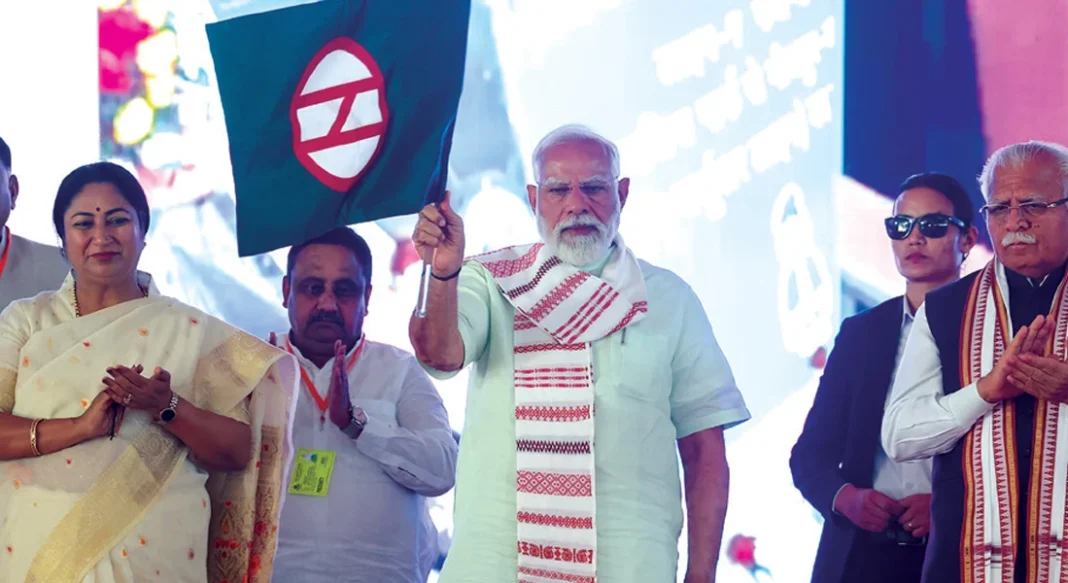
NEW DELHI: Prime Minister Narendra Modi on March 8 inaugurated the 12.3-km Majlis Park–Maujpur-Babarpur stretch of the Pink Line and the 9.9-km Deepali Chowk–Majlis Park extension of the Magenta Line and laid the foundation stone for three new corridors under phase V (A) of the Delhi Metro project.

The entire Pink Line stretch now becomes a circular line, making it the country’s first operational ring metro network. Services began at 3 pm, according to a report in India Today.

The Majlis Park–Maujpur-Babarpur section features nine stations, all elevated, and is expected to strengthen connectivity between north and northeast Delhi. The stations are: Majlis Park, Burari, Jagatpur-Wazirabad, Soorghat, Sonia Vihar, Khajuri Khas, Bhajanpura, Yamuna Vihar and Maujpur-Babarpur.

The new Pink Line corridor also features key infrastructure elements – a new bridge over the Yamuna and a double-decker viaduct that carries both a metro line and a road flyover.

PM Modi also inaugurated the Deepali Chowk–Majlis Park corridor, an elevated extension of the Magenta Line that will connect localities such as Madhuban Chowk, Uttar Pitampura–Prashant Vihar, Haiderpur Badli Mor and Bhalaswa. There are a total of seven stations on this stretch.

Parts of the Magenta Line corridor reach a height of around 28.36 metres, making it one of the highest elevated sections in the Delhi Metro network. With this addition, the line’s total length will expand to nearly 49 km. Currently, the Botanical Garden-Krishna Park Extension stretch of the corridor is operational.

The new Pink and Magenta Line corridors – which are part of development projects worth around Rs 33,500 crore – are expected to significantly improve last-mile connectivity and reduce travel time for thousands of daily commuters across the national capital.

PM Modi also laid the foundation stone for three new Delhi Metro corridors under phase V-A of the Delhi Metro project. These include the Ramakrishna Ashram Marg–Indraprastha corridor, the Aerocity–Indira Gandhi International Airport Terminal-1 corridor, and the Tughlakabad–Kalindi Kunj corridor.

The 9.9-km Central Vista corridor from Ramakrishna Ashram Marg to Indraprastha will be built underground and is expected to improve connectivity to key government and cultural landmarks in central Delhi, including India Gate, Central Secretariat and Bharat Mandapam.

The Aerocity–Terminal 1 extension will be a 2.26-km underground stretch with a new station linking the Golden Line to the domestic airport terminal, while the 3.9-km Tughlakabad–Kalindi Kunj extension will be an elevated corridor connecting areas in south Delhi and improving access from Faridabad and Ballabhgarh to the airport through the existing Violet Line.

Delhi Chief Minister Rekha Gupta said the metro expansion marks a major step toward a faster, smoother and environmentally friendly public transport system in the national capital. She added that the projects will reduce pressure from private vehicles on roads while helping curb pollution.

Along with the metro projects, PM Modi inaugurated and laid the foundation stones of development projects worth around Rs 33,500 crore in Delhi.

Along with the metro projects, the Prime Minister also inaugurated and laid the foundation stone for redevelopment works worth around Rs 15,200 crore under the General Pool Residential Accommodation (GPRA) programme. The redevelopment at Sarojini Nagar, Netaji Nagar, Kasturba Nagar and Sriniwaspuri will provide over 9,350 modern flats for government employees along with around 48 lakh square feet of office space.

Before the programme, PM Modi visited the newly constructed GPRA type-5 quarters in Sarojini Nagar and handed over keys to female allottees.

Overall, these development projects, including the opening of two metro corridors, are aimed at strengthening urban infrastructure and improving public transport in Delhi.

PM Modi also laid the foundation stone for three new Delhi Metro corridors under phase V-A of the Delhi Metro project. These include the Ramakrishna Ashram Marg–Indraprastha corridor, the Aerocity–Indira Gandhi International Airport Terminal-1 corridor, and the Tughlakabad–Kalindi Kunj corridor.

Latest News

Hope for best but prepare for worst

Blitz Bureau NEW DELHI:The weak and erratic start to this...

US turns to Indian pharma

Blitz Bureau NEW DELHI:The United States Food and Drug Administration...

From policy paralysis TO VIKSIT BHARAT

Blitz Bureau NEW DELHI:India has made remarkable progress since 2014....

Carbon looms over cotton

Blitz Bureau NEW DELHI:In Tiruppur, the southern cluster that has...

From white revolution to white elephants

Blitz Bureau NEW DELHI:On a sweltering June afternoon in Jaipur,...

Topics

Hope for best but prepare for worst

Blitz Bureau NEW DELHI:The weak and erratic start to this...

US turns to Indian pharma

Blitz Bureau NEW DELHI:The United States Food and Drug Administration...

From policy paralysis TO VIKSIT BHARAT

Blitz Bureau NEW DELHI:India has made remarkable progress since 2014....

Carbon looms over cotton

Blitz Bureau NEW DELHI:In Tiruppur, the southern cluster that has...

From white revolution to white elephants

Blitz Bureau NEW DELHI:On a sweltering June afternoon in Jaipur,...

Data centre for searching minerals

Blitz Bureau NEW DELHI:The Geological Survey of India will establish...

$35-$40 bn can be raised via deposit scheme: PNB

Blitz Bureau NEW DELHI:Punjab National Bank expects the banking sector...

RBI bans misleading sales tactics in lending

Blitz Bureau NEW DELHI: The Reserve Bank of India on...
spot_img