


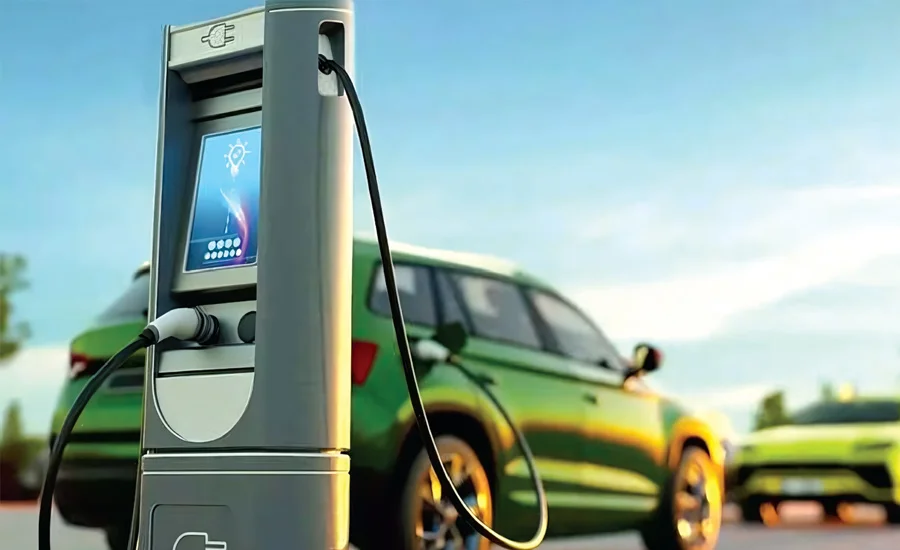


The number is a first. India’s electric-vehicle retail sales reached a record 3,06,220 units in June, crossing three lakh in a month for the first time and lifting EV penetration past 12% of all vehicles sold, according to dealer body FADA. Year-on-year, EV sales were up about 63% — growth that ran well ahead of the broader market.
The mix shows a shift that is broad, not narrow. Electric two-wheelers rose about 75% to 1,93,735 units; electric passenger cars more than doubled to a record 31,823, with Tata Motors holding close to a 38% share on 12,187 sales; and electric commercial vehicles grew fastest of all, up more than 160%. The overall market was strong too, with total retail up 21.8% to 2.56 million units — the best June on record.
Penetration past 12% is the level at which suppliers stop piloting and start building. The demand signal for a domestic battery supply chain just got a lot louder.
For the sector, scale changes the calculus. Volume at this level improves the economics of localising cells, batteries and power electronics, and strengthens the case for charging infrastructure as a stand-alone business. The open questions are familiar — charging density beyond the metros, financing and residual values for used EVs, and a battery supply chain still reliant on imported inputs — each a hurdle for makers, financiers and policymakers to work through together.
The constructive read is that a record month is a demand signal the supply side can now build against. The way forward is to convert penetration into permanence — domestic battery and component manufacturing, denser charging, and stable policy that lets buyers and investors plan across years. Handled well, June’s milestone becomes the base of a home-built electric-mobility industry and a structural cut in the oil-import bill.